Conex Storage Buildings vs Standard Containers
By Outback Shipping Containers · Published September 7, 2026 · Last updated October 20, 2026
Conex Storage Buildings vs Standard Containers
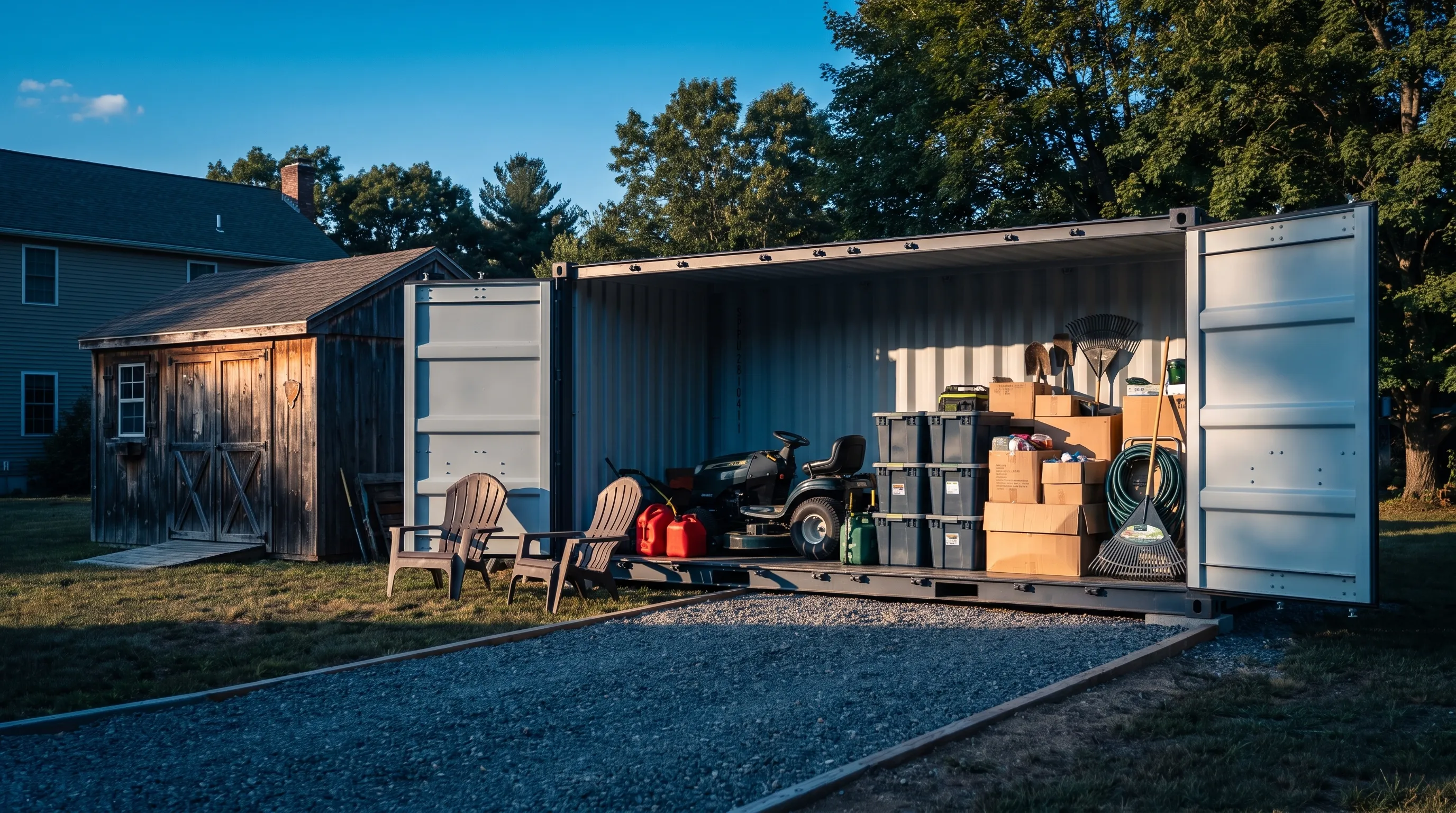
Conex storage buildings are best when you need a storage space customized for access, workflow or long-term site use. Standard containers are best when you need secure, weather-resistant storage fast with minimal changes. Both start with an ISO-style steel cargo container, but conex storage buildings add building-like features such as side doors, vents, insulation, windows, shelving, electrical rough-ins or multiple connected boxes.
Quick Answer: Pick a standard container for fast, secure storage. Pick a conex storage building when the container must work more like a shop, warehouse, equipment room or permanent outbuilding.
Key Takeaways
- Standard containers are the simpler buy if you need basic storage for tools, inventory, feed, furniture or job-site materials.
- Conex storage buildings cost more in most cases because they add design, modifications, site work and sometimes permits.
- A WWT or CWO container can be excellent for storage, but that does not make it code-ready for occupancy.
- Door style matters. End doors work for long items, while open-side units make loading pallets, mowers and wide equipment much easier.
- Always confirm delivery access, local rules, drainage and foundation needs before you buy.
What Counts as Conex Storage Buildings?
Conex storage buildings are storage structures made from one or more shipping containers. Some are simple. A single 20ft container with vents, a lockbox and shelving may be enough for a farm, contractor or homeowner.
Others are more involved. A business might combine two 40ft containers with a roof between them to create a covered equipment bay. A property owner might add roll-up doors, windows and insulation so the space works as a shop. A builder might turn a high cube container into a storage and office combo.
The key point is simple: the container becomes part of a building plan. The plan may include access, workflow, lighting, insulation, security and code review.
If you are new to the term conex box, the broader first-time buyer guide to Conex containers explains common sizes, conditions and inspection terms before you compare building options.
How standard containers differ
A standard container is usually an unmodified dry storage container. It has corrugated steel walls, wood or bamboo flooring, corner castings and cargo doors on one end. Standard 20ft and 40ft units were designed as intermodal containers, meaning they can move by ship, rail and truck when properly certified.
For storage, that plain design is often an advantage. You get a secure steel box with fewer parts to maintain. It can sit on a gravel pad, concrete piers, railroad ties or a slab as long as the site drains well and supports the weight.
A standard container is not the same as a finished building. It may not have insulation, ventilation, windows, personnel doors, electrical work or interior framing. If you need those features, you are moving into container conversion territory.
Conex Storage Buildings vs Standard Containers at a Glance
The best choice depends on how you will use the space. A homeowner storing holiday bins has different needs than a contractor loading tools every morning. A ranch storing feed has different needs than an Airbnb host planning a container cabin or a small business building a parts room.
| Factor | Standard container | Conex storage building |
|---|---|---|
| Main purpose | Basic secure storage | Storage plus workflow, access or building features |
| Common sizes | 10ft, 20ft, 40ft, 40ft high cube, 45ft high cube | Often based on 20ft or 40ft units, sometimes multiple containers |
| Access | Usually end cargo doors only | Can include side doors, roll-up doors, personnel doors or connected bays |
| Speed | Often faster to source and deliver | Slower if design, modifications or site work are needed |
| Cost drivers | Size, condition, delivery distance and market supply | Container cost plus modifications, labor, foundation and permits |
| Permits | May be minimal for temporary storage, but local rules vary | More likely if permanent, occupied, connected to utilities or on a foundation |
| Best fit | Tools, furniture, inventory, seasonal storage, job-site materials | Shops, farm storage, equipment rooms, retail units, offices or mixed-use space |
| Flexibility | Easy to relocate in many cases | Less mobile after utilities, framing or foundations are added |
A standard container wins when simplicity matters. It is also easier to resell because the buyer pool is broad.
Conex storage buildings win when the box needs to support daily movement, staff access or a more permanent site plan. They are also better when end-door-only access would slow you down.
Cost, Delivery Speed and Permits
A standard container has fewer cost layers. You pay for the unit, delivery and site prep. Prices vary by size, condition, location and freight lane, so current online pricing matters more than national averages.
As one real pricing snapshot from Outback product data, a used 20ft Conex shipping and storage container listing showed $1,095. That number should not be treated as a fixed market price. Condition, color, region, delivery distance and inventory can all change the final quote.
Conex storage buildings add more line items. You may pay for openings, doors, vents, insulation, framing, electrical rough-in, paint, roofing between containers or engineering. A simple vented storage build may stay close to the base container cost. A finished shop or office can cost much more than the container itself.
Delivery speed also changes. A standard dry container can often move as one piece once the truck route and site access are confirmed. A modified building may need fabrication time, crane coordination or staged delivery.
Federal and state road rules can affect the delivery plan. The Federal Highway Administration overview of truck size and weight rules explains why weight, route and equipment limits matter for freight movement. Your delivery team should confirm the right truck, clearances and unloading method for your site.
Permits are the area where many first-time buyers get surprised. A temporary storage container may be allowed with few requirements in one county and restricted in another. HOAs, zoning setbacks, floodplain rules and fire access rules can also apply.
Once a container becomes a permanent building, workshop, office, shipping container home or customer-facing space, expect more review. Electrical, plumbing, insulation, foundations and occupancy can trigger building permits. Always check with your local building department before ordering modifications.
Which Option Fits Your Site and Use Case?
A good comparison starts with the job the container must do. Do not start with size alone. Start with access, weather exposure, how often people enter the space and whether the unit may move later.
| Use case | Better starting point | Why |
|---|---|---|
| Home storage | Standard 10ft or 20ft container | Simple, secure and compact for furniture, tools or seasonal items |
| Construction job site | Standard 20ft or 40ft container | Fast deployment and strong security for tools and materials |
| Farm or ranch storage | Standard or open-side container | End doors work for supplies, side access helps with feed, parts and equipment |
| Workshop | Conex storage building | Better access, ventilation, lighting and work zones |
| Small business inventory | Standard or modified container | Depends on loading style, shelving and daily picking needs |
| Office plus storage | Conex storage building | Needs insulation, doors, windows, power and code review |
| Remote property build | Conex storage building | Can combine secure storage with phased cabin, shop or utility use |
For storage-only jobs, do not overbuild. A WWT standard container can solve the problem with less cost and less planning. Add shelves, a lockbox and basic ventilation first.
For workflow-heavy jobs, do not underbuild. If your crew has to unload every item just to reach the back wall, the cheapest standard container may cost you time every day. A side-opening unit or a planned building layout can pay for itself in reduced handling.
If you want layout inspiration without turning this article into a design catalog, Outback has a separate guide with conex building ideas for storage, shops and offices.
Specs to Check Before You Buy
Container specs are not trivia. They affect delivery, permits, storage volume and whether the unit fits your site.
A 20ft standard container is easier to place in tight driveways and small lots. A 40ft container offers much more storage per foot of width, but it needs more truck access and more level ground. A high cube adds one extra foot of exterior height, which helps if you plan to insulate the ceiling or store taller equipment.
| Container type | Typical exterior size | Typical empty weight | Typical storage volume | Best for |
|---|---|---|---|---|
| 10ft standard | 10 ft L x 8 ft W x 8 ft 6 in H | Varies by build | About half a 20ft unit | Small residential storage and tight sites |
| 20ft standard | 20 ft L x 8 ft W x 8 ft 6 in H | About 4,800 to 5,000 lb | About 1,100 to 1,170 cu ft | Home, farm and job-site storage |
| 40ft standard | 40 ft L x 8 ft W x 8 ft 6 in H | About 8,000 to 8,500 lb | About 2,350 to 2,400 cu ft | Bulk storage and commercial inventory |
| 40ft high cube | 40 ft L x 8 ft W x 9 ft 6 in H | About 8,500 to 8,900 lb | About 2,650 to 2,700 cu ft | Taller equipment, conversions and insulated builds |
Exact tare weight, payload capacity and internal dimensions vary by manufacturer, age, door style and repairs. Check the data plate and product listing before you commit.
ISO container standards help explain why common cargo container dimensions are so consistent across the industry. The ISO freight container technical committee covers the standardization work behind intermodal container systems. For buyers, that means a 20ft or 40ft unit follows a common size family, even though individual specs still vary.
Condition grade matters just as much as size. WWT means wind and watertight for storage use. CWO means cargo-worthy, usually suitable for freight movement if the proper inspection and documentation are in place. A one-trip container is newer and has made one loaded trip from the factory or origin point, so it usually has less wear than a used unit.
For a deeper size breakdown, use the standard container size guide for storage and builds before deciding between 20ft, 40ft or high cube.
Open-Side Containers Can Be the Middle Ground
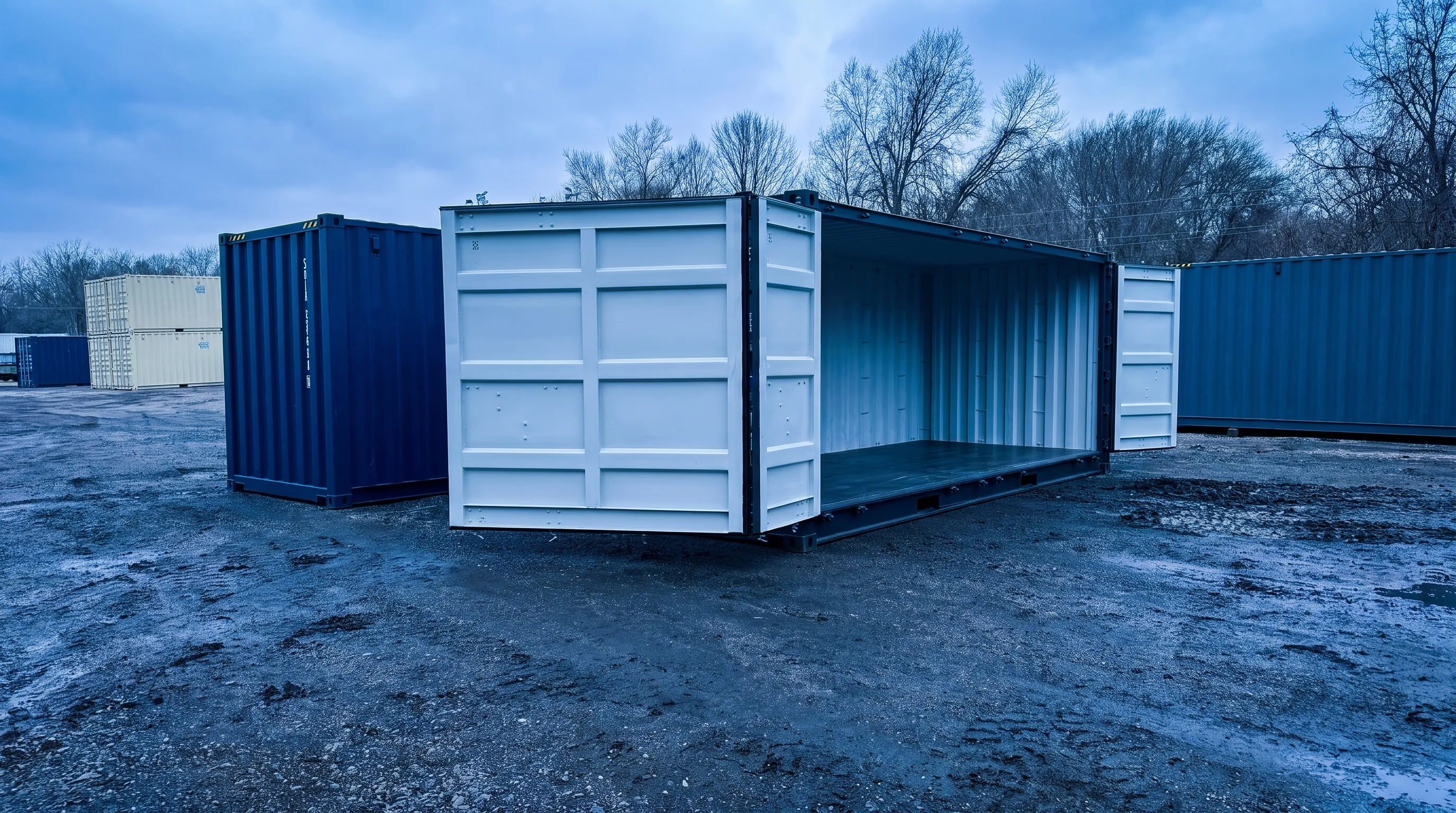
Many buyers think the choice is only a plain box or a full custom building. Open-side containers create a useful middle ground. They keep the basic container form but add full-length side access, which can make loading wide or heavy items much easier.
This matters for contractors, farms, event companies and small warehouses. Pallets, mowers, pipe, lumber, cabinets and equipment can be loaded from the side instead of through one narrow end opening.
Outback lists options such as the 20ft Open Side New Shipping Container, unit SPRU281041-1, described as a gray 20ft open-side shipping container with full-length side doors and a wind & watertight build. Another similar option is the 20ft Open Side New Shipping Container, unit FAMU017521-2, also described as a gray 20ft open-side unit with full-length side doors and wind & watertight protection.
If wide loading is your main issue, compare open-side inventory before planning a full custom conex storage building. You may get the access you need with fewer modifications.
Open-side units are not the right answer for every buyer. More doors mean more seals, hinges and locking points to inspect over time. But for daily loading, they can be far more practical than standard end doors.
Site Prep and Long-Term Maintenance
Good site prep protects the container and the cargo inside it. Poor site prep causes doors to bind, floors to stay damp and water to pool under the steel frame.
Start with level ground. A gravel pad with good drainage works for many storage uses. Concrete piers or a slab may be better for long-term buildings, heavy equipment or sites with soft soil.
Leave airflow under the unit when possible. Containers can rust faster when they sit directly on wet soil. Keep vegetation trimmed back so the walls can dry after rain.
Plan delivery access before the truck arrives. Many tilt-bed deliveries need a long, straight approach, at least 100 ft for a 20ft container and 120 ft for a 40ft unit (see the site-access table in our Shipping Policy). Exact clearance depends on the truck, trailer, slope, trees, power lines and turn radius.
Condensation deserves attention in both standard containers and conex storage buildings. Steel reacts to temperature swings. If warm moist air meets a cool ceiling, water can drip onto stored goods.
Common fixes include vents, desiccants, raised pallets, insulation, dehumidifiers and better air movement. For a workshop, office or storage of moisture-sensitive inventory, address condensation during the design stage instead of after damage appears.
Security is another long-term issue. Standard cargo doors are strong, but the lock is often the weak point. Use a quality lockbox or protected hasp, inspect door gaskets and keep the locking rods clean and greased.
If you may need the unit for only a limited time, buying is not the only path. Outback Shipping Containers is the main sales site, and LeaseLink Containers is the leasing arm. Compare the total cost, timeline and flexibility before choosing ownership or leasing.
Frequently Asked Questions
Are Conex storage buildings cheaper than standard containers?
Usually no. A standard container is the lower-cost starting point because it has fewer changes. Conex storage buildings can cost more because they may include doors, vents, insulation, windows, partitions, foundations or engineering. Compare the total installed cost, not just the container price.
Do I need a permit for a Conex storage building?
Maybe. Permit rules vary by city, county, state, zoning district and HOA. Temporary storage may be treated differently from a permanent building. Foundations, utilities, occupancy, electrical work and public access often trigger review. Ask your local building department before ordering modifications or site work.
How long does a standard shipping container last as storage?
A well-drained site, working door seals and basic rust control can give a storage container a long service life. Actual life depends on age, prior use, climate and maintenance. Inspect the roof, corner posts, floor, door gaskets and underside before buying any used unit.
Is a used container good enough for a storage building?
Often yes, if the structure is sound and the condition matches the job. WWT used containers work well for many storage needs. For heavy modifications, occupied spaces or code-reviewed builds, ask whether a newer one-trip or CWO unit makes more sense.
What size container is best for storage, 20ft or 40ft?
Choose 20ft for tighter sites, residential storage and easier delivery. Choose 40ft when you need more volume and have room for truck access and placement. A 40ft high cube adds height, which helps with tall items, racking or insulated conversions.
Can I move a Conex storage building later?
A plain standard container is easier to move than a modified building. Once you add utilities, interior finishes, attached roofs, foundations or multiple connected units, relocation becomes harder and more expensive. If future movement matters, keep the design simple and discuss lifting points with your supplier.
Choose the Box That Matches the Job
Standard containers solve a lot of storage problems with less cost, less planning and faster delivery. Conex storage buildings make sense when you need better access, more daily usability or a long-term site improvement.
If you are comparing sizes, conditions or open-side options, start with current inventory and delivery support from Outback Shipping Containers. You can review new, used and custom options, confirm availability and plan a delivery setup that fits your site.
About Outback Shipping Containers
This guide was prepared by the Outback Shipping Containers team, based on the questions our customers ask us most when buying, modifying and taking delivery of shipping containers. Learn more about us.
Ready to find your container?
Browse our in-stock shipping containers, container homes and custom builds, or ask our team for a free quote with delivery to your site.