Standard Container Size Guide for Storage and Builds
By Outback Shipping Containers · Published July 20, 2026 · Last updated October 18, 2026
Standard Container Size Guide for Storage and Builds
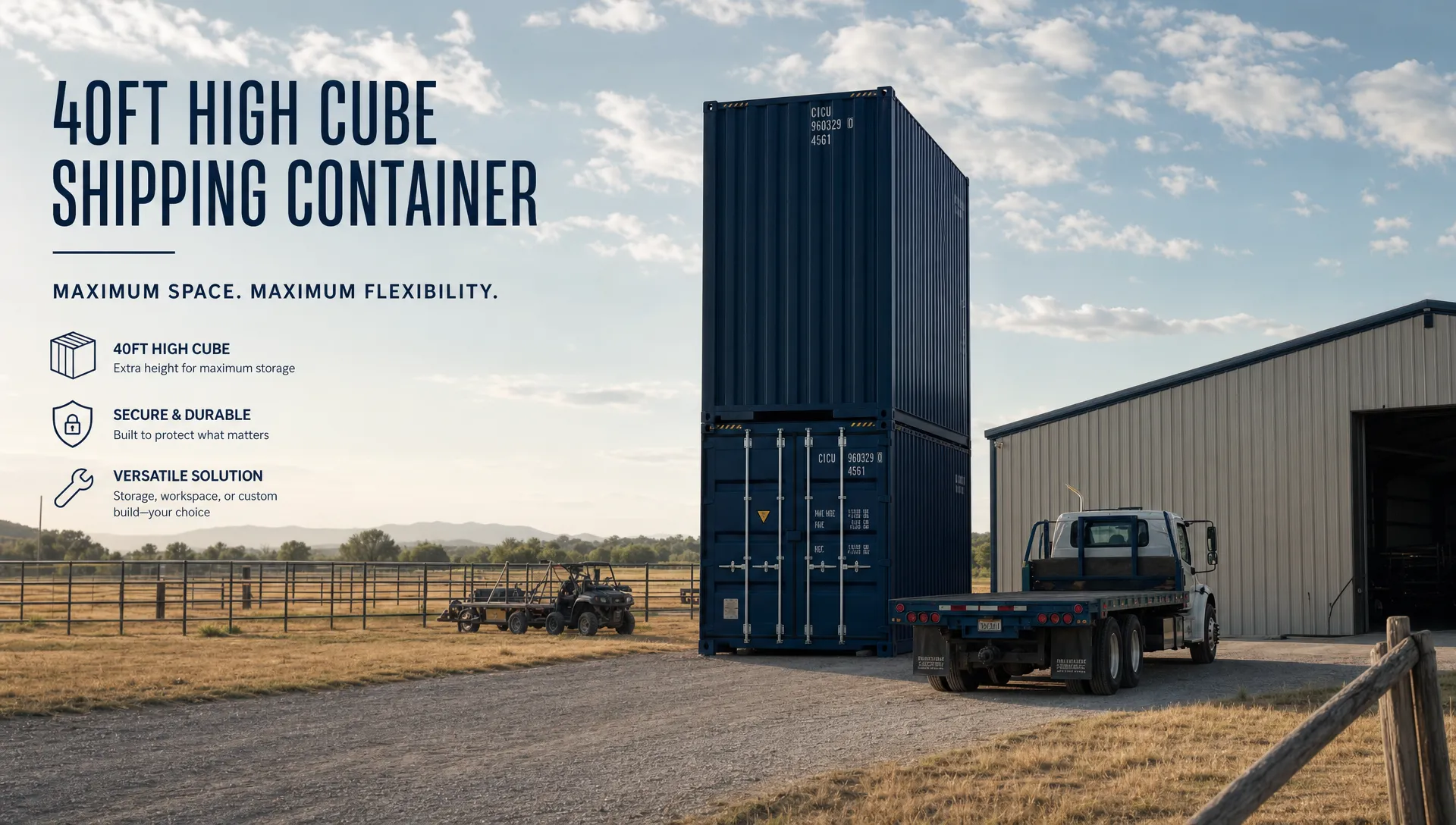
The standard container size most buyers mean is either 20ft or 40ft long, 8ft wide, and 8ft 6in tall. High cube containers keep the 8ft width but add one foot of height, reaching 9ft 6in outside. For storage, a 20ft container is the safest first choice for many homes, farms, and job sites. For builds, a 40ft high cube often gives the best mix of floor area and headroom.
Quick Answer: A standard shipping container is usually 8ft wide and 8ft 6in tall, with common lengths of 10ft, 20ft, and 40ft. Choose 20ft for compact storage, 40ft for bulk storage, and 40ft high cube for container homes, offices, workshops, and other conversions.
Key Takeaways
- 20ft and 40ft dry containers are the most common ISO container sizes in the United States.
- A high cube container is 9ft 6in tall outside, which helps when you add insulation, flooring, HVAC, and ceiling finishes.
- A 40ft container offers about twice the floor footprint of a 20ft unit, but it needs more delivery space.
- Always confirm interior dimensions, tare weight, payload capacity, and condition grade before buying.
- For storage, WWT condition is often enough. For transport or builds, CWO, one-trip, or refurbished units may be a better fit.
Standard Container Size Chart for Storage and Builds
Most cargo container dimensions come from ISO Series 1 freight container standards. The ISO 668 Series 1 freight container standard defines core classification, dimensions, and ratings used across intermodal container transport.
That said, real-world measurements can vary slightly by manufacturer, age, door style, flooring, and modifications. Always ask for the exact specs and photos of the unit you are buying.
| Container type | Exterior size L x W x H | Approx. interior size L x W x H | Approx. interior floor area | Approx. door opening W x H | Approx. interior volume |
|---|---|---|---|---|---|
| 10ft standard | 10 ft x 8 ft x 8 ft 6 in | 9 ft 3 in x 7 ft 8 in x 7 ft 10 in | 71 sq ft | 7 ft 8 in x 7 ft 5 in | 560 cu ft |
| 20ft standard | 20 ft x 8 ft x 8 ft 6 in | 19 ft 4 in x 7 ft 8 in x 7 ft 10 in | 148 sq ft | 7 ft 8 in x 7 ft 5 in | 1,172 cu ft |
| 40ft standard | 40 ft x 8 ft x 8 ft 6 in | 39 ft 5 in x 7 ft 8 in x 7 ft 10 in | 303 sq ft | 7 ft 8 in x 7 ft 5 in | 2,390 cu ft |
| 40ft high cube | 40 ft x 8 ft x 9 ft 6 in | 39 ft 5 in x 7 ft 8 in x 8 ft 10 in | 303 sq ft | 7 ft 8 in x 8 ft 5 in | 2,690 cu ft |
| 45ft high cube | 45 ft x 8 ft x 9 ft 6 in | 44 ft 5 in x 7 ft 8 in x 8 ft 10 in | 341 sq ft | 7 ft 8 in x 8 ft 5 in | 3,040 cu ft |
The exterior size tells you how much pad space you need. The interior size tells you what will actually fit inside. The door opening matters if you plan to load pallets, equipment, ATVs, appliances, or shop tools.
Do not assume every 10ft container is built the same way. Many 10ft units are cut-down containers or specialty builds rather than standard intermodal equipment. They can be excellent for tight sites, but you should confirm the structure, forklift pockets, corner castings, and floor condition.
For 20ft, 40ft, and 40ft high cube units, the 8ft width is the key constant. Inside, the usable width is closer to 7ft 8in. If you add framing, insulation, plumbing, and wall finishes, the finished interior width can shrink to about 7ft 2in to 7ft 4in depending on the wall system.
Which Standard Container Size Fits Your Storage Needs?
Storage buyers usually care about four things: space, access, security, and delivery fit. Bigger is not always better. A 40ft conex box may offer more room per delivery, but it can be harder to place on a tight driveway, ranch road, or urban job site.
10ft containers: best for tight spaces
A 10ft container works well when you need secure storage but have limited room. Homeowners use them for tools, seasonal items, motorcycle gear, landscaping supplies, and renovation materials. Small businesses use them for inventory overflow or event equipment.
The tradeoff is availability. Because 10ft units are less common than 20ft and 40ft containers, pricing and lead times can vary more by market. If your site can fit a 20ft container, compare both options before deciding.
20ft containers: the most flexible storage size
A 20ft standard container is the most practical starting point for many first-time buyers. It gives about 148 sq ft of usable interior floor area and over 1,100 cu ft of volume. It is large enough for household storage, contractor tools, farm supplies, and small equipment, yet still compact enough for many residential and job-site locations.
This size is also easier to deliver than a 40ft unit. A tilt-bed truck still needs room to unload, but the total required straight-line space is usually more manageable.
40ft containers: best for bulk storage
A 40ft standard container doubles the exterior footprint of a 20ft unit. It is a strong fit for palletized inventory, construction materials, hay and feed supplies, commercial records, retail fixtures, and multi-room home storage.
The main question is not just whether you need the space. It is whether you can access the full length. If you load a 40ft container from one end only, items at the back can become hard to reach. Many buyers solve this with shelving, a center aisle, lighting, or a roll-up door modification.
| Storage need | Best starting size | Why it fits |
|---|---|---|
| Home renovation storage | 20ft | Fits tools, cabinets, appliances, and boxed household goods without taking over the whole driveway |
| Farm or ranch supplies | 20ft or 40ft | 20ft works for tools and feed, while 40ft works for bulk seasonal storage |
| Construction job site | 20ft | Easier to place, secure, and relocate as the project changes |
| Large commercial inventory | 40ft | More cubic volume and better cost efficiency when delivery access is good |
| Compact urban storage | 10ft or 20ft | Better fit for tight lots, alleys, and limited staging areas |
Best Container Sizes for Builds and Conversions
For container conversion projects, size affects comfort more than many buyers expect. A shipping container home, office, cabin, workshop, or pool is not just an empty steel box. Once you add insulation, electrical, plumbing, windows, doors, framing, finishes, and mechanical systems, the usable space changes fast.
Container homes and tiny homes
For homes and ADUs, 40ft high cube containers are popular because they provide 320 sq ft of exterior footprint and extra height. That one additional foot is valuable. It helps preserve headroom after adding floor insulation, ceiling insulation, lighting, and ducts.
A 20ft container can work for a small studio, hunting cabin, backyard office, or bunkhouse. It is easier to transport and place, but the finished layout will be tight. You need to plan every inch.
A 40ft standard container can also work, but the 8ft 6in exterior height can feel low after interior buildout. If local code, budget, and availability allow, high cube is usually the smarter shell for living space.
Offices and workshops
For a job-site office, 20ft is often enough for a desk, plan table, storage cabinet, and small seating area. A 40ft container office gives more room for multiple desks, a meeting area, a plan review wall, or a combined office and tool room.
High cube units are helpful when you want better lighting, more insulation, or overhead storage. Contractors also like the extra door height when moving tall equipment in and out of a workshop.
If you are planning a construction office layout, review these portable container office floor plans for construction before choosing between 20ft and 40ft.
Pools, cabins, and retail units
Container pools are usually built from 20ft or 40ft containers. The right size depends on yard space, swim area, depth, decking, equipment placement, and local permitting. A 20ft pool is easier to fit in smaller backyards. A 40ft pool gives a more traditional lap-style feel.
Cabins and short-term rentals often start with one 40ft high cube container or two combined modules. Retail units can use 20ft, 40ft, or custom layouts depending on customer flow, display walls, storage, and service counters.
Permits and zoning rules vary by city, county, and state. Before you buy a container for a build, ask your local building department what codes apply to foundations, setbacks, utilities, egress, insulation, fire safety, wind loads, and occupancy.
20ft vs 40ft vs High Cube: Practical Comparison
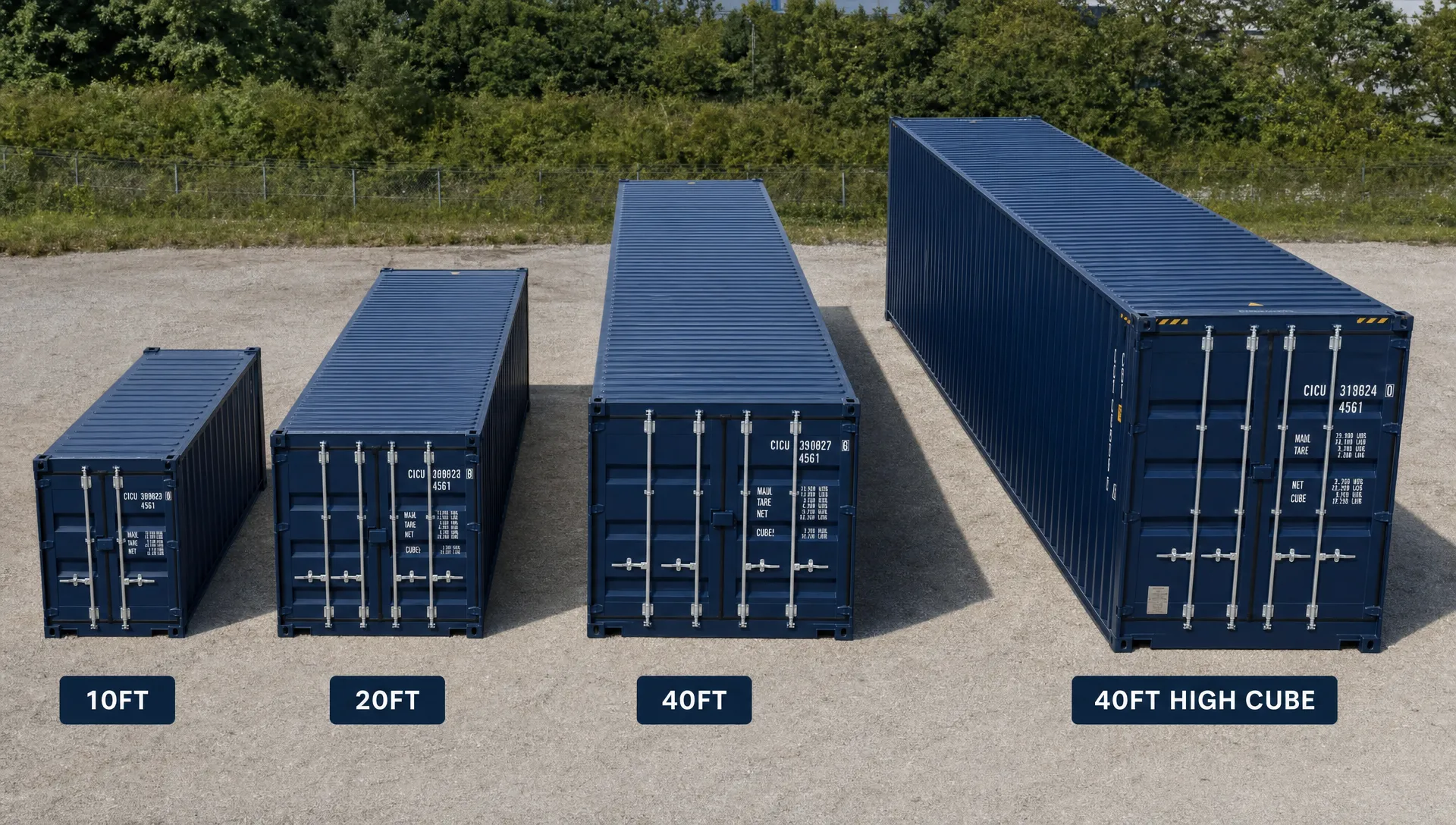
The best container size depends on what you are doing with it. The 20ft unit wins on maneuverability. The 40ft unit wins on volume. The 40ft high cube wins for most finished builds because the extra height is hard to replace later.
| Factor | 20ft standard | 40ft standard | 40ft high cube |
|---|---|---|---|
| Exterior footprint | 160 sq ft | 320 sq ft | 320 sq ft |
| Interior volume | About 1,172 cu ft | About 2,390 cu ft | About 2,690 cu ft |
| Site access | Easier | More demanding | More demanding, plus taller delivery profile |
| Best use | Home storage, tools, small office, compact workshop | Bulk storage, inventory, larger job sites | Homes, offices, cabins, workshops, custom builds |
| Finished build comfort | Tight but workable | Better floor area, lower ceiling | Best headroom for finishes and insulation |
For storage, compare the cost of space, not just the sticker price. A 40ft container often provides more storage volume for each delivery trip, but it only makes sense if your site can use the extra length.
For builds, think in finished dimensions. A bare 40ft high cube may have about 8ft 10in of interior height. After floor assembly, ceiling insulation, and finishes, you may end up closer to a normal room height. A standard-height container gives you less margin.
For first-time buyers comparing budget, condition, and delivery, the 2026 shipping container cost guide is a helpful next step because prices change with size, grade, inventory, location, and modifications.
Weight, Payload, Delivery, and Site Prep Basics
Container size is not only about length and height. Weight matters for delivery, foundations, cranes, forklifts, and the load you plan to store inside.
Each container should have a data plate that lists ratings for that specific unit. The numbers below are typical planning figures for dry containers, not a substitute for the plate on the container you buy.
| Container type | Typical tare weight | Common max gross rating | Typical payload capacity |
|---|---|---|---|
| 10ft standard | 2,500 to 3,000 lb | Varies by build | Varies by build |
| 20ft standard | 4,800 to 5,100 lb | About 67,200 lb | About 62,000 lb |
| 40ft standard | 8,000 to 8,600 lb | About 67,200 lb | About 58,000 to 59,000 lb |
| 40ft high cube | 8,500 to 9,000 lb | About 67,200 lb | About 58,000 lb |
| 45ft high cube | 9,500 to 10,500 lb | Varies by unit | Varies by unit |
Tare weight is the empty container weight. Payload capacity is the weight the container can carry. Max gross rating is the tare weight plus payload.
For static storage, you may never approach the rated payload. For dense materials, machinery, stone, tile, liquids, or metal stock, weight can add up quickly. Spread loads across the floor and ask a qualified engineer if you plan to store very heavy items or modify structural members.
Delivery planning is just as important as the container itself. A tilt-bed truck sets the container down while pulling forward, so it needs a straight unloading path. Many 20ft deliveries need 100ft of straight clearance, while many 40ft deliveries need 120ft. The exact need depends on truck type, slope, soil, approach angle, and driver judgment.
Plan for a clear route, firm ground, overhead clearance, and enough room for the truck to turn around. Branches, wires, fences, soft soil, tight gates, steep driveways, and low culverts can all stop a delivery.
State and local transport rules can also affect routing and permits. The Federal Highway Administration truck size and weight overview is a useful starting point, but final delivery requirements depend on your route and carrier.
Before your container arrives, use a simple prep plan. Level compacted gravel, concrete piers, railroad ties, or engineered foundations can all work depending on use. For a full checklist, review Outback Shipping Containers’ shipping container site prep guide before scheduling delivery.
Need help narrowing the size before you commit? Outback Shipping Containers supplies new, used, and custom units nationwide, and you can start comparing options through shipping containers with nationwide delivery when you are ready to request pricing.
Container Condition, Cost, and Buying Notes
A 20ft container and a 40ft container can share standard dimensions, but condition can be very different. That condition affects price, appearance, lifespan, and suitability for storage or conversion.
One-trip containers are usually the cleanest option. They have made one cargo move from the manufacturer and often have fewer dents, cleaner floors, better paint, and newer door seals. They are often preferred for container homes, offices, pools, retail units, and projects where appearance matters.
Cargo worthy units, often shortened to CWO or CW, are used containers that are suitable for loaded transport when properly certified. Wind and watertight units, often shortened to WWT, are commonly used for static storage because they keep weather out but may have more dents, patches, rust, and wear.
As-is containers are the highest-risk option. They may have holes, bad floors, door problems, structural damage, or water intrusion. They can be useful for certain projects, but first-time buyers should be cautious.
If you are unsure what grade fits your use, compare the differences in this shipping container condition grades guide before buying.
Price depends on size, condition, age, local inventory, delivery distance, modifications, taxes, and market demand. A lower container price can still cost more overall if delivery is difficult, the unit needs repairs, or the dimensions do not fit your project.
When comparing quotes, ask for these details in writing:
- Container size, type, and height, such as 20ft standard or 40ft high cube
- Condition grade, such as one-trip, CWO, WWT, refurbished, or as-is
- Delivery cost and unloading method
- Photos of the actual unit when available
- Door, floor, roof, and gasket condition
- Modification scope if you are ordering a build
This is where transparent pricing matters. The right quote should separate the container cost from delivery and any modifications, so you can make a fair comparison.
Frequently Asked Questions
What is the most common standard shipping container size?
The most common standard shipping container sizes are 20ft and 40ft dry containers. Both are usually 8ft wide and 8ft 6in tall outside. The 40ft high cube is also common and adds one foot of height, making it popular for container homes, offices, and workshops.
How big is a 20ft shipping container inside?
A typical 20ft standard container has interior dimensions of about 19ft 4in long, 7ft 8in wide, and 7ft 10in high. That gives about 148 sq ft of floor area and about 1,172 cu ft of volume. Exact measurements can vary slightly by manufacturer and unit condition.
Is a 40ft container better than a 20ft container?
A 40ft container is better when you need bulk storage or more floor area for a build. A 20ft container is better for tight sites, smaller budgets, and easier delivery. If you are building a living or working space, a 40ft high cube often gives the best headroom.
What size shipping container is best for a home?
A 40ft high cube is often the best starting shell for a shipping container home because it provides more length and height. The extra height helps after insulation, flooring, and ceiling finishes are installed. Smaller 20ft units can work for studios, cabins, offices, or add-on modules.
Do I need a permit for a shipping container on my property?
Permit rules vary by city, county, and state. Some areas allow temporary storage containers with few limits, while others regulate placement, setbacks, foundations, appearance, or occupancy. For container homes and offices, expect building code review. Always check with your local building or zoning department before ordering.
What is the difference between a standard and high cube container?
A standard container is usually 8ft 6in tall outside. A high cube container is 9ft 6in tall outside. Both are typically 8ft wide. That extra foot makes high cube units better for conversions because insulation, floors, lights, and ceiling finishes reduce interior height.
Choosing the right size is easier when you match the container to the site, load, and long-term use. If you want a second set of eyes on dimensions, condition, delivery, or build planning, Outback Shipping Containers can help you compare new, used, and custom container options for nationwide delivery.
About Outback Shipping Containers
This guide was prepared by the Outback Shipping Containers team, based on the questions our customers ask us most when buying, modifying and taking delivery of shipping containers. Learn more about us.
Ready to find your container?
Browse our in-stock shipping containers, container homes and custom builds, or ask our team for a free quote with delivery to your site.