Shipping Container Pool vs Inground Cost: 2026 Prices
Analyze shipping container pool vs inground cost for 2026. Save on installation and maintenance with our breakdown of prefab vs custom concrete prices.…
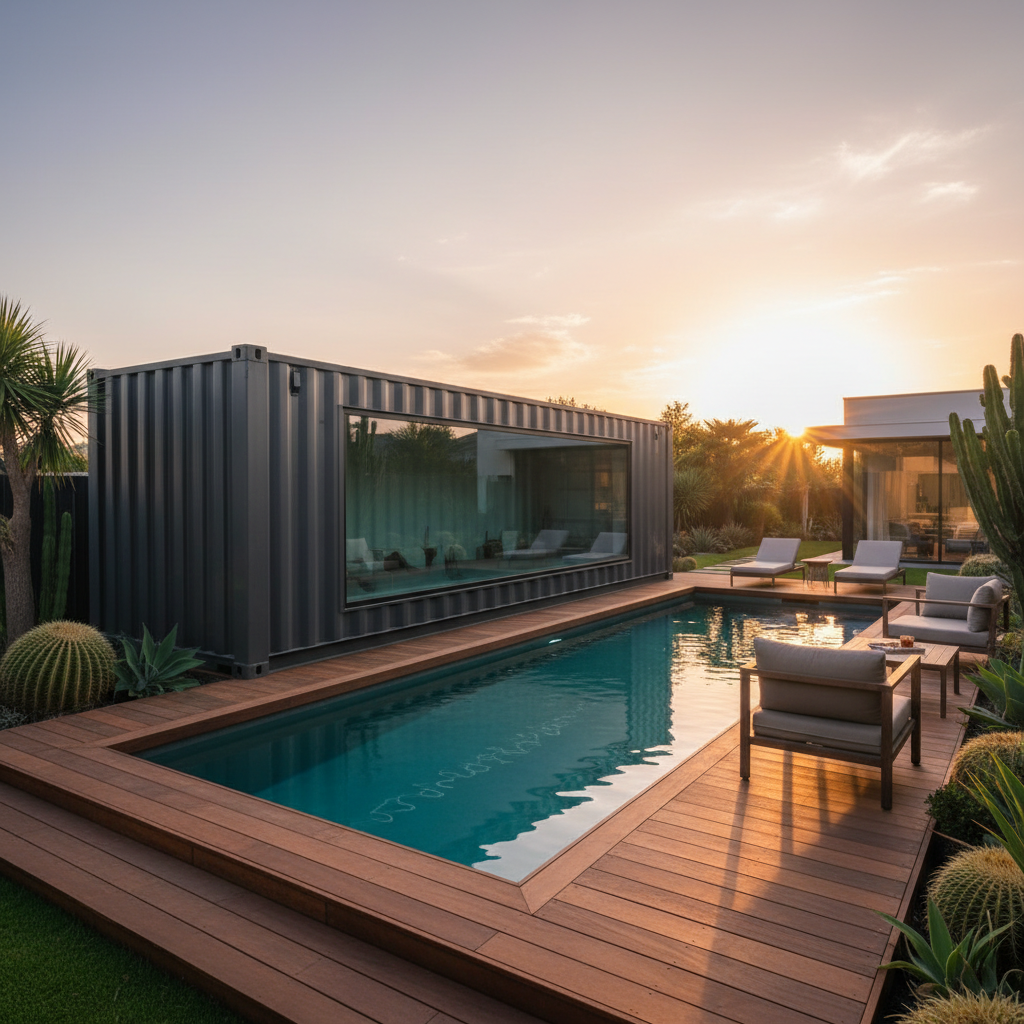
For years, the American dream of a backyard oasis meant months of excavation, concrete trucks, and a six-figure bill. However, as we move through August 2026, many homeowners are weighing the shipping container pool vs inground cost to see if the prefab revolution can save their summer budget. While a traditional inground pool offers limitless shapes, the rising cost of skilled labor and raw materials like gunite has pushed many buyers toward the efficiency of Corten steel. Understanding the nuance between these two options requires looking past the initial sticker price at the lifecycle costs of delivery, site prep, and chemical maintenance.
Table of Contents
- shipping container pool vs inground cost: Breaking Down Shipping Container Pool Prices 2026
- Site Prep and Hidden Fees: The Inground Reality
- Long-Term Maintenance and Durability
- Resale Value and Portability
- Component-Level Cost Analysis: Steel Shells vs. Gunite Shells
- Permitting, Zoning, and Utility Integration Expenses
- Energy Efficiency and Heating Cost Comparison
- Frequently Asked Questions
- Ready to Build Your Backyard Retreat?
- Explore Related Products & Guides
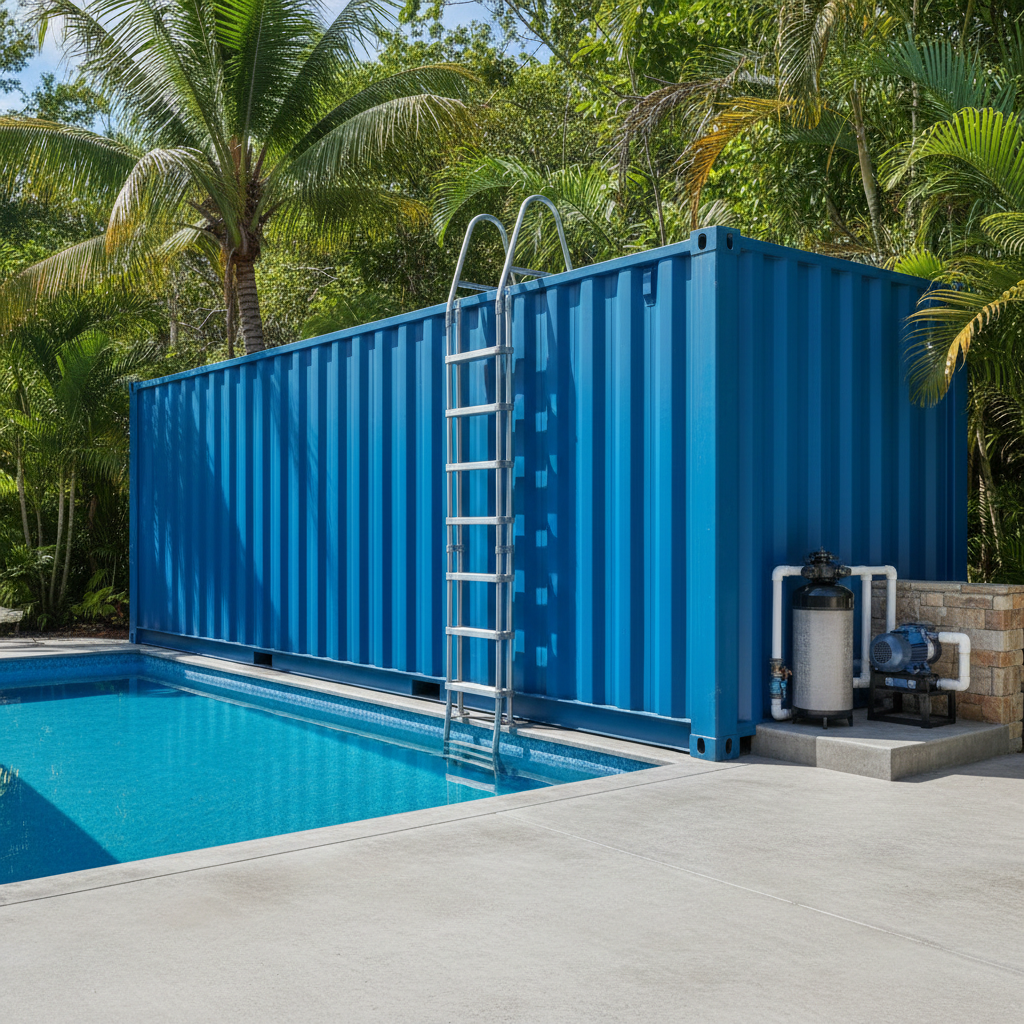
shipping container pool vs inground cost: Breaking Down Shipping Container Pool Prices 2026
When analyzing shipping container pool prices 2026, the baseline usually starts with the container shell itself. A 40ft High Cube shipping container provides the skeletal structure, which is then reinforced, lined with fiberglass or vinyl, and fitted with filtration systems. In today's market, a fully outfitted 12M / 40FT Anthracite Container Pool typically ranges from $35,000 to $55,000. Contrast this with a custom concrete inground pool of similar dimensions, which often starts at $85,000 and can easily exceed $120,000 depending on the soil conditions and finish.
| Feature | Shipping Container Pool | Traditional Inground (Concrete) |
|---|---|---|
| Average Base Cost (2026) | $30,000 - $60,000 | $80,000 - $150,000+ |
| Installation Timeline | 1 - 3 Days | 3 - 6 Months |
| Maintenance Effort | Low (Fiberglass/Liners) | High (Acid washes/Resurfacing) |
| Portability | Yes (Can be moved) | No (Permanent fixture) |
| Permit Complexity | Medium (Modular/Prefab) | High (Major Construction) |
Site Prep and Hidden Fees: The Inground Reality
One of the largest drivers of the shipping container pool vs inground cost gap is site preparation. Traditional pools require massive excavation, which can be derailed by hitting bedrock or high water tables. Conversely, an above ground vs inground container pool decision significantly impacts your budget. A container pool can sit on a simple gravel pad or a reinforced concrete slab, similar to the foundations discussed in our conex house legal guide. This reduces labor costs by up to 70% compared to a full inground dig.
Important: Always check your local AHJ (Authority Having Jurisdiction) for container pool permit fees. While the pool is prefab, electrical and plumbing connections usually require licensed contractors and specific inspections that can add $2,000–$5,000 to your total project cost.
Modpool vs Concrete Pool Cost
Comparing a premium brand like Modpool vs concrete pool cost shows that even at the high end of container modifications, you are likely saving money. Most Modpool-style units include integrated heaters and swim jets. If you were to add a swim-jet system to a concrete pool, the mechanical installation alone could cost an extra $10,000. In 2026, the 'all-in' nature of container units provides a price certainty that traditional contractors—prone to 'change orders'—rarely match.
Long-Term Maintenance and Durability
The container swimming pool maintenance cost is another victory for the prefab sector. Concrete pools are porous, requiring more chemicals to balance pH and regular brushing to prevent algae. Shipping container pools typically use non-porous liners or fiberglass inserts. This reduces chemical consumption by roughly 30%. Furthermore, while a concrete pool needs resurfacing every 10–15 years (costing $10k+), a container pool primarily needs its exterior Corten steel checked for corrosion, much like how you would winterize a container home.
- Reduced chemical usage due to non-porous surfaces.
- Smaller water volume leads to lower heating costs (especially with insulated units).
- Exterior maintenance limited to paint touch-ups on the Corten shell.
- Easier access to plumbing and pumps compared to buried lines.
Resale Value and Portability
A common question is whether shipping container pool resale value holds up. While an inground pool is a permanent part of the real estate, it can actually be a deterrent for certain buyers. A container pool is technically personal property. If you sell your home, you can potentially transport the container to your next property. This unique portability protects your $50,000 investment in a way that a hole in the ground never can.
Component-Level Cost Analysis: Steel Shells vs. Gunite Shells
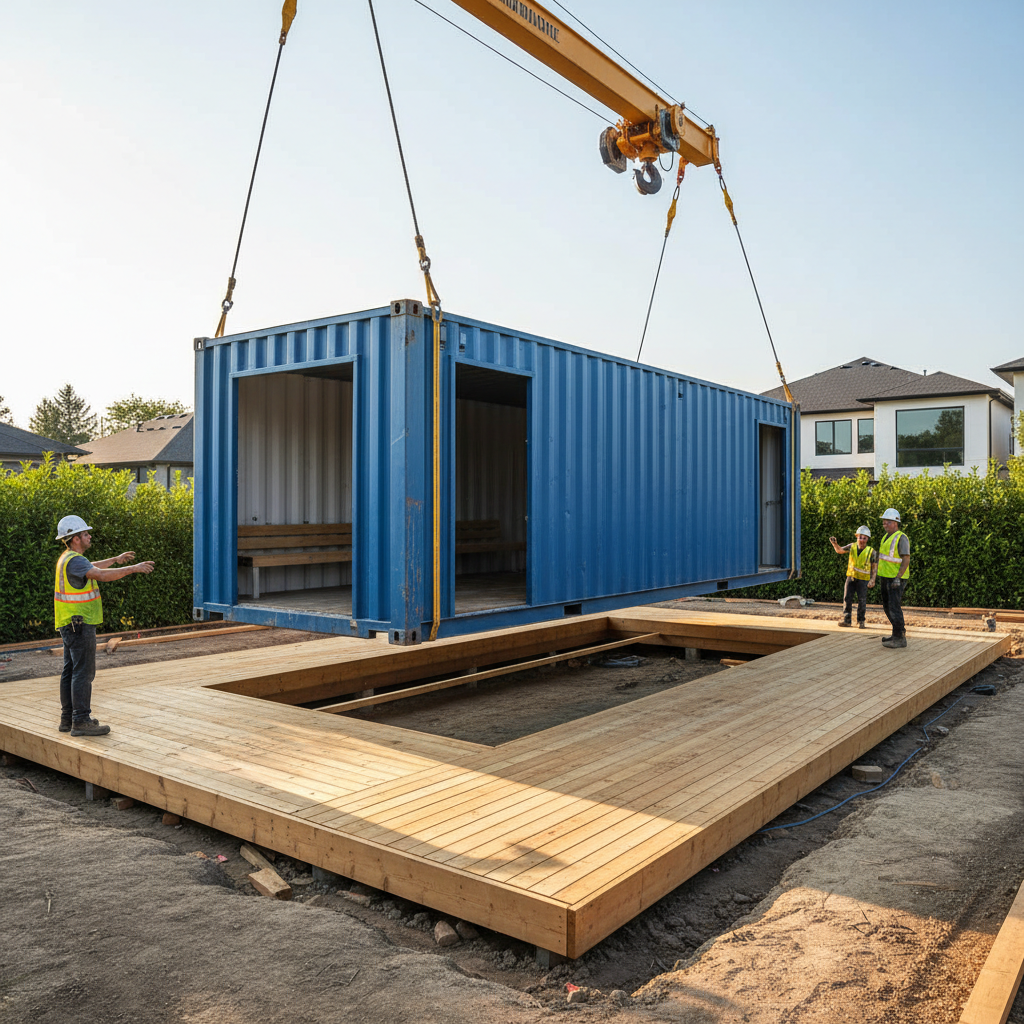
To understand the price gap in 2026, you must look at the raw material lifecycle. A shipping container pool starts with a Corten steel ISO container, which typically costs between $4,500 and $7,000 for a 'one-trip' unit. The conversion process adds structural reinforcement, interior welding for a custom stairs or bench, and a high-performance epoxy coating or vinyl liner. In contrast, an inground gunite pool requires a massive excavation crew, steel rebar grid installation, and a specialized nozzle team to spray concrete. The labor-to-material ratio for gunite is nearly 70/30, whereas container pools lean toward a 40/60 split because the structural shell is prefabricated in a controlled factory environment.
Geography plays a massive role in the final invoice. For an inground pool, if your soil is rocky or has a high water table, your excavation costs can double overnight. Container pools, especially when installed above-ground on a gravel pad or concrete piers, bypass these subterranean risks. You are essentially paying for a finished product rather than a complex construction project that occurs in your backyard over the course of three to six months.
| Feature | Modpool/Container (20ft) | Traditional Inground (Small) | Premium Inground (Large) |
|---|---|---|---|
| Average Shell Cost | $28,000 - $35,000 | $45,000 - $60,000 | $85,000+ |
| Installation Labor | $3,000 - $8,000 | $15,000 - $25,000 | $35,000+ |
| Filtration System | Included (Built-in) | Separate $5k - $9k | Separate $12k+ |
| Timeline | 2-4 Weeks | 3-6 Months | 6-10 Months |
Tip: If you live in a region with 'expansive soil' (like Texas or parts of the Southeast), a container pool on a pier foundation can save you over $10,000 in future repair costs compared to a gunite shell that may crack under soil pressure.
Permitting, Zoning, and Utility Integration Expenses
Homeowners often overlook the 'soft costs' that differ significantly between these two types of installations. Traditional inground pools are viewed as permanent structural alterations to the land, which often triggers a reassessment of property taxes in many US counties. Because a shipping container pool is technically a modular, relocatable structure, some jurisdictions classify it as 'personal property' or a 'temporary structure,' potentially keeping your annual tax bill lower. However, this varies wildly by state and requires a consultation with your local building department before you cut a check.
Utility hookups are the second major expense. A container pool usually arrives with a 'plug-and-play' mechanical room built into the back 4 feet of the container. This means your electrician and plumber only need to run lines to a single point. For an inground pool, the pump, heater, and filter are usually housed in a separate equipment pad away from the water, requiring long trenches and significantly more piping and conduit, which can add $2,500 to $5,500 to the total cost.
- Structural Engineering Stamp: $500 - $1,500 (Required for container pools on decks)
- Electrical Trenching (per linear foot): $15 - $30
- Gas Line Installation (for heaters): $1,200 - $2,800
- Permit Filing Fees: $400 - $2,500 depending on municipality
- Crane Rental (for container placement): $1,500 - $3,500
Tip: Always check your HOA bylaws. Many HOAs have specific language banning 'above-ground pools' but lack language regarding 'modular steel containers.' You may need to present the container as a 'custom architectural feature' to gain approval.
Energy Efficiency and Heating Cost Comparison
The thermal properties of a shipping container pool differ greatly from a concrete pool. Steel is an excellent conductor of heat, which can be a double-edged sword. In the summer, an uninsulated container pool will warm up faster than a gunite pool. In 2026, most high-end container pool manufacturers are using closed-cell spray foam insulation between the steel shell and the liner. This creates a thermos-like effect that retains heat far more efficiently than the earth surrounding an inground pool, which acts as a heat sink, constantly pulling warmth away from the water.
For those looking to include a spa or hot tub feature, the container pool wins on energy costs. Most container models offer a 'divider' option where you can heat a small section of the pool to 100+ degrees in under an hour. To achieve this with a traditional inground pool, you must install a separate integrated spa, which typically adds $15,000 to $20,000 to the initial construction cost and requires a much larger heater (400,000 BTU) compared to the smaller, more efficient units used in modular builds.
- Select a dark-colored liner to increase passive solar gain and reduce heating bills.
- Ensure the container base is insulated to prevent thermal bridging with the concrete pad.
- Invest in an automated pool cover; it is the single most effective way to reduce chemical loss and heat dissipation in both pool types.
- Compare the 'coefficient of performance' (COP) of the heat pump included with the container pool versus standard pool heaters.
Important: In colder climates (USDA Zones 4-6), a container pool without adequate insulation can see monthly heating bills 30% higher than a traditional inground pool due to the exposure of the steel walls to the air.
Container delivery near you
We deliver to every state in the lower 48 plus Alaska and Hawaii. These local pages list pricing, metro coverage and typical lead times for the areas we run into most:
- Shipping containers near me — how we source from the depot closest to your ZIP code
- Shipping containers in Florida — pricing and delivery to Jacksonville and Miami
- Shipping containers in Georgia — pricing and delivery to Atlanta and Savannah
- Shipping containers in North Carolina — pricing and delivery to Charlotte and Raleigh
- Shipping containers in Arizona — pricing and delivery to Phoenix and Tucson
- Shipping containers in Washington — pricing and delivery to Seattle and Spokane
- Shipping containers Houston — local yard stock and lead times
Frequently Asked Questions
Based on our years of experience in the modification industry, these are the most common questions buyers ask when comparing their options.
Ready to Build Your Backyard Retreat?
Deciding on the shipping container pool vs inground cost involves balancing your immediate budget with your long-term lifestyle goals. If you value a fast installation, lower maintenance, and the ability to take your pool with you if you move, a container-based solution is the clear winner in 2026. If you are ready to compare inventory or discuss a custom build for your project, our team can pull matching units from our nationwide depots to get your project started before the next season hits.
Explore Related Products & Guides
Frequently Asked Questions
Is a container pool cheaper than inground?
Yes, in almost all scenarios. A container pool typically costs 30% to 50% less than a traditional concrete inground pool when accounting for excavation, labor, and finishing materials.
How much does a 40ft container pool cost in 2026?
In 2026, a fully-featured 40ft container pool ranges from $45,000 to $65,000. This includes the shell, lining, filtration, and often integrated heating or lighting.
Do container pools add value to your home?
They add recreational value, but unlike an inground pool, they are often classified as 'removable' or personal property. This can be an advantage as it may not increase your property taxes as significantly as a permanent structure.
What is the average life expectancy of a container pool?
With proper maintenance of the Corten steel and the interior liner, a container pool can last 20-25 years. The steel is the same industrial grade used in one-trip shipping containers designed for harsh ocean environments.
Are container pools cheaper to maintain than traditional pools?
Yes. Because they usually feature fiberglass or vinyl interiors, they require fewer chemicals to balance and no expensive resurfacing (plastering) every decade.
How long does it take to install a container pool vs inground?
A container pool can be set and running in 1-3 days once the site is prepped. A traditional inground pool typically takes 3-6 months to complete from the first dig.