Complete Guide
By Outback Container Experts · Published July 18, 2026 · Last updated October 17, 2026
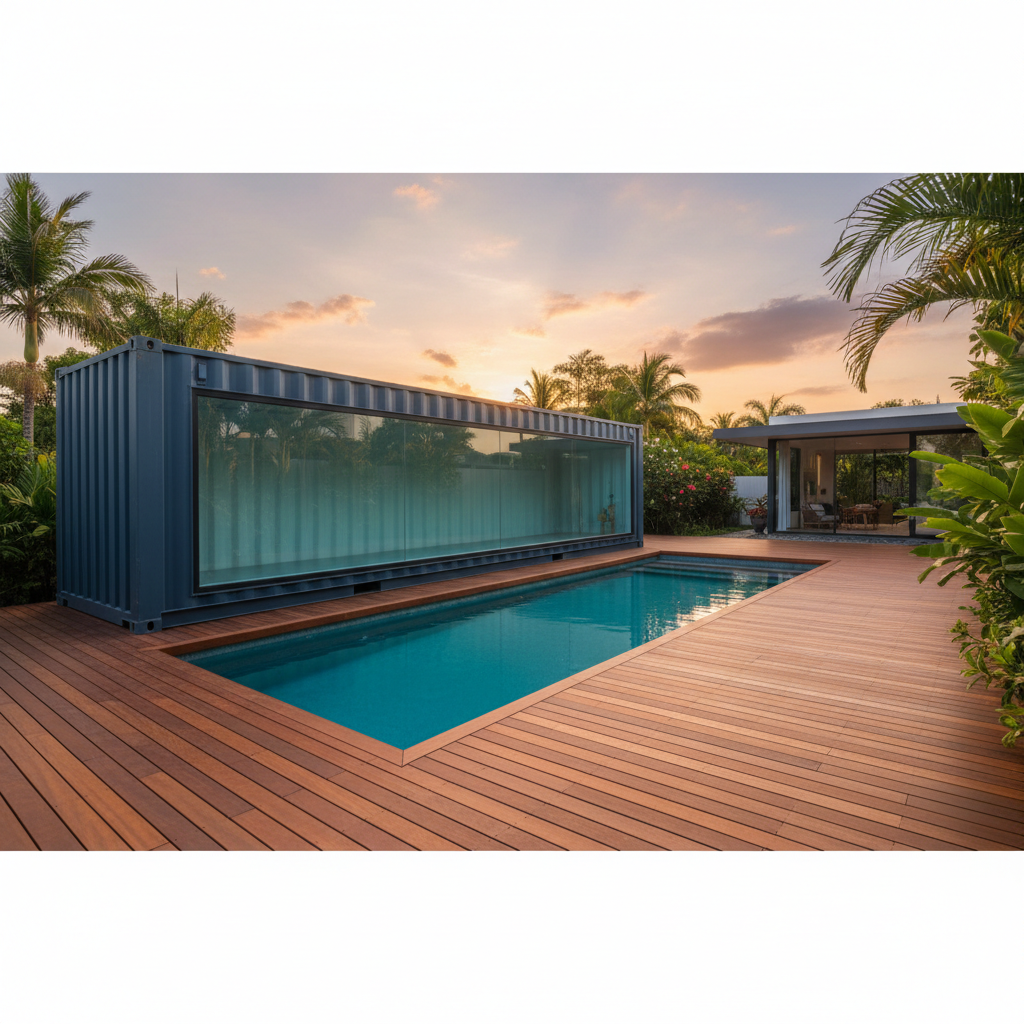
Most homeowners wait six to nine months for a traditional shotcrete or gunite pool to be excavated and cured. However, the shipping container pool manufacturing process turns that timeline on its head, delivering a ready-to-use aquatic unit in a fraction of the time. If you are researching how a container pool is built step by step, you likely already know that these units are prized for their portability and industrial-chic aesthetic. But what happens inside the fabrication shop determines whether your investment lasts five years or fifty.
Table of Contents
- how a container pool is built step by step: Phase 1: Selecting and Stripping the Shell
- Phase 2: Structural Reinforcement for Container Pools
- Phase 3: Container Pool Plumbing and Electrical
- Phase 4: Interior Finishes and Waterproofing
- Phase 5: Exterior Protective Coatings
- Frequently Asked Questions
- Ready to Start Your Backyard Transformation?
- Explore Related Products & Guides
how a container pool is built step by step: Phase 1: Selecting and Stripping the Shell
The foundation of any high-quality build is a 20ft New Shipping Container or a 40ft High Cube. While you can technically use a used container, most premium manufacturers insist on 'one-trip' units. These containers have virtually no rust or structural fatigue, which is critical when you consider that a full 40ft pool will hold roughly 80,000 pounds of water.
The first actual step in the shop is stripping the unit. The original marine-grade plywood flooring is removed. While this wood is durable, it is often treated with pesticides for international transit, making it unsuitable for a pool environment. Once the floor is out, the steel interior is grit-blasted to white metal to prepare for the corrosion resistance coating.
Phase 2: Structural Reinforcement for Container Pools
A standard ISO container is designed to carry weight on its four corner castings, not to hold outward hydraulic pressure. Without structural reinforcement for container pools, the corrugated walls would 'belly out' or bow once filled with water. Builders solve this by welding a heavy-duty steel tube frame around the top perimeter of the container.
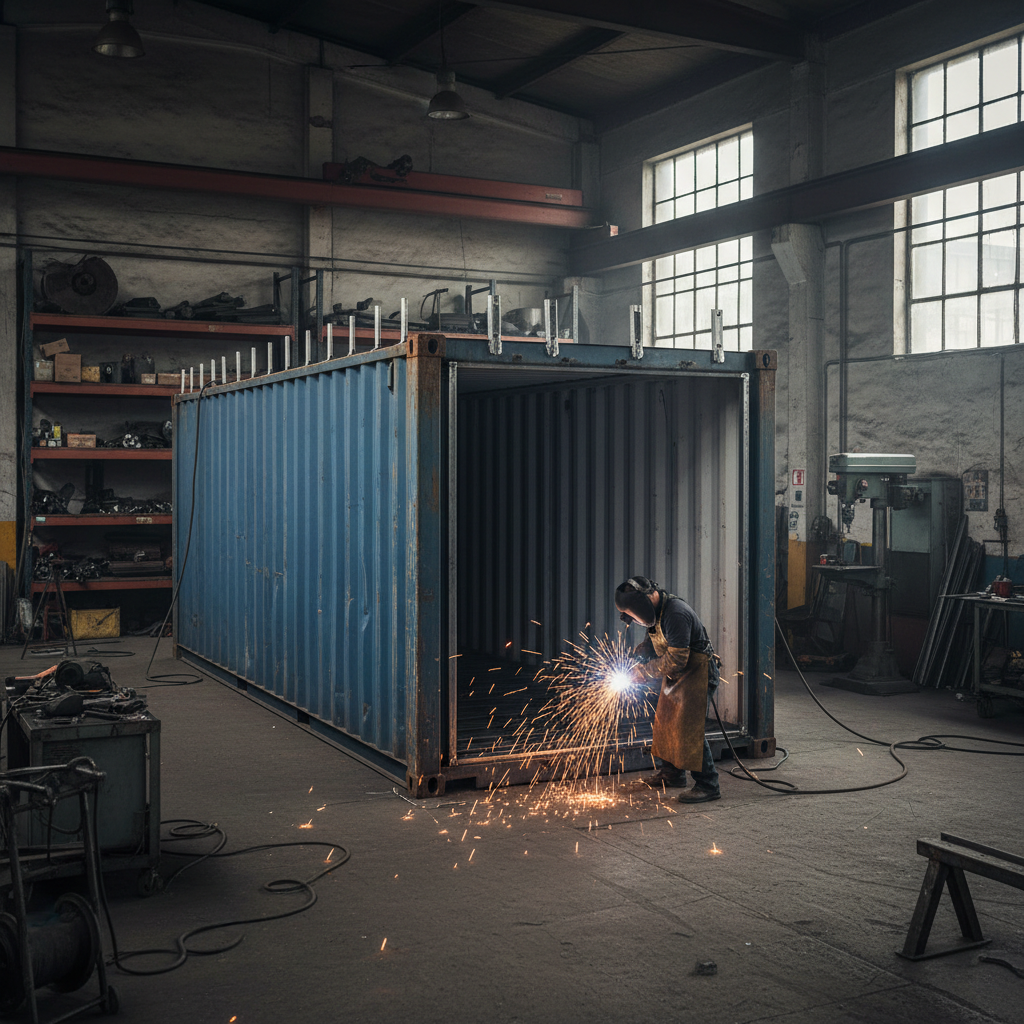
- Upper Rim Reinforcement: 2x6 inch hollow structural sections (HSS) welded to the top rail.
- Internal Bracing: Vertical stiffeners added to the long walls to maintain the 8-foot width.
- Step/Bench Framing: Steel frames are welded inside to create seating areas or entry steps.
Phase 3: Container Pool Plumbing and Electrical
Unlike traditional pools where pipes are buried in the ground, container pool plumbing and electrical systems are typically housed in a dedicated mechanical room within the container shell itself—usually behind a partition at the end of the container. This makes pool filtration system installation much simpler.
The fabricator cuts precision holes for the skimmer, return jets, and underwater LED lighting. High-pressure PVC piping is then run from these points back to the pump and filter. Because these units are often 'plug-and-play,' all electrical components are wired to a central control panel that requires only a single 240V hookup on-site.
Tip: Always ensure your builder uses a Variable Speed Pump (VSP). They are significantly quieter than standard pumps and can save you up to 80% on pool-related energy costs.
Phase 4: Interior Finishes and Waterproofing
There are two primary shipping container pool interior finish options. The first is a heavy-duty, UV-stabilized vinyl liner, similar to what you’d find in an above-ground pool but much thicker. The second is a custom-fabricated fiberglass or composite shell that is dropped into the steel container. Some luxury builds, like the 20ft Portable Swimming Pool, offer a weld-sealed steel interior coated with specialized epoxy.
| Feature | Vinyl Liner | Fiberglass Insert | Welded Steel/Epoxy |
|---|---|---|---|
| Estimated Cost | Lower | Higher | Premium |
| Durability | 10-12 Years | 25+ Years | Variable/High Maintenance |
| Smoothness | Soft/Padded | Hard/Polished | Hard/Slightly Textured |
| Customization | Highly Variable | Fixed Mold Shapes | Fully Custom |
Phase 5: Exterior Protective Coatings
Because the container is made of Corten steel, it is naturally rust-resistant, but standing water and soil contact require more protection. The exterior paint for container pools is usually a multi-step process: an inorganic zinc primer, followed by an epoxy mid-coat, and finished with a UV-resistant polyurethane topcoat. This ensures the unit remains vibrant against the sun and rain.
Container delivery near you
We deliver to every state in the lower 48 plus Alaska and Hawaii. These local pages list pricing, metro coverage and typical lead times for the areas we run into most:
- Shipping containers near me — how we source from the depot closest to your ZIP code
- Shipping containers in North Carolina — pricing and delivery to Charlotte and Raleigh
- Shipping containers in Arizona — pricing and delivery to Phoenix and Tucson
- Shipping containers in Washington — pricing and delivery to Seattle and Spokane
- Shipping containers in Colorado — pricing and delivery to Denver and Colorado Springs
- Shipping containers in Tennessee — pricing and delivery to Nashville and Memphis
- Shipping containers Houston — local yard stock and lead times
Frequently Asked Questions
- How do you rust proof a shipping container pool? We use a marine-grade three-part coating system including a zinc-rich primer and epoxy barriers to prevent oxidation.
- Do shipping container pools need a concrete pad? Yes, a level concrete pad or a reinforced gravel bed is required to support the weight of the water, which can exceed 40 tons.
- What kind of liner is used in a container pool? Most builders use 20-30 mil UV-resistant vinyl liners or drop-in fiberglass shells.
- How is the plumbing installed in a container pool? Plumbing is routed through the steel walls using watertight bulkheads and typically terminates in a self-contained equipment room.
- Are shipping container pools structurally sound? Only when reinforced with a top-rail steel frame. A standard container will bow if filled with water without these modifications.
- Can you bury a shipping container pool underground? It is not recommended. Containers are designed for weight on the corners, not side-pressure from soil. If burying, you must build retaining walls to prevent the earth from crushing the container.
- What are the shipping container pool interior finish options? Options include thick vinyl liners, fiberglass inserts, and multi-layered epoxy coatings.
When comparing a modpool construction vs custom build, the key is the quality of the welds and the grade of the filtration system. A properly built unit should also comply with state permit requirements regarding pool safety and barriers.
Ready to Start Your Backyard Transformation?
Understanding how a container pool is built step by step is the first part of the journey. The next is ensuring your site is ready for the arrival of your new aquatic feature. We recommend reviewing our ultimate site prep checklist to ensure a smooth delivery. If you're ready to compare inventory and pricing for your project, our team at Outback Shipping Containers can help you select the perfect grade of container to serve as your new summer oasis. Contact us today for a custom quote on Container Pools and nationwide delivery logistics.
Explore Related Products & Guides
Frequently Asked Questions
How do you rust proof a shipping container pool?
Rust proofing involves grit-blasting the steel to remove mill scale, followed by applying a high-performance zinc primer and an epoxy coating designed for marine environments.
Do shipping container pools need a concrete pad?
Yes. A 20ft container pool weighs about 30,000-40,000 lbs when full. A reinforced concrete slab is the best way to prevent the pool from sinking or tilting over time.
What kind of liner is used in a container pool?
Most manufacturers use a 20-30 mil thick UV-resistant vinyl liner or a custom-molded fiberglass insert to ensure a 100% watertight seal.
How is the plumbing installed in a container pool?
Plumbing is pre-installed at the factory, with pipes running through the internal wall cavity to a hidden mechanical room containing the pump, filter, and heater.
Are shipping container pools structurally sound?
They are exceptionally sound only if the top rim has been reinforced with steel tubing. Without it, the weight of the water will cause the corrugated walls to bow outward.
Can you bury a shipping container pool underground?
Standard containers cannot be buried directly because they lack the lateral strength to resist soil pressure. They must be placed in a concrete bunker or behind retaining walls.
Frequently asked questions
How do you rust proof a shipping container pool?
Rust proofing involves grit-blasting the steel to remove mill scale, followed by applying a high-performance zinc primer and an epoxy coating designed for marine environments.
Do shipping container pools need a concrete pad?
Yes. A 20ft container pool weighs about 30,000-40,000 lbs when full. A reinforced concrete slab is the best way to prevent the pool from sinking or tilting over time.
What kind of liner is used in a container pool?
Most manufacturers use a 20-30 mil thick UV-resistant vinyl liner or a custom-molded fiberglass insert to ensure a 100% watertight seal.
How is the plumbing installed in a container pool?
Plumbing is pre-installed at the factory, with pipes running through the internal wall cavity to a hidden mechanical room containing the pump, filter, and heater.
Are shipping container pools structurally sound?
They are exceptionally sound *only* if the top rim has been reinforced with steel tubing. Without it, the weight of the water will cause the corrugated walls to bow outward.
Can you bury a shipping container pool underground?
Standard containers cannot be buried directly because they lack the lateral strength to resist soil pressure. They must be placed in a concrete bunker or behind retaining walls.
About Outback Container Experts
This guide was prepared by the Outback Shipping Containers team, based on the questions our customers ask us most when buying, modifying and taking delivery of shipping containers. Learn more about us.
Ready to find your container?
Browse our in-stock shipping containers, container homes and custom builds, or ask our team for a free quote with delivery to your site.