Shipping Container Dimensions Explained for Buyers
By Outback Shipping Containers · Published July 18, 2026 · Last updated October 18, 2026
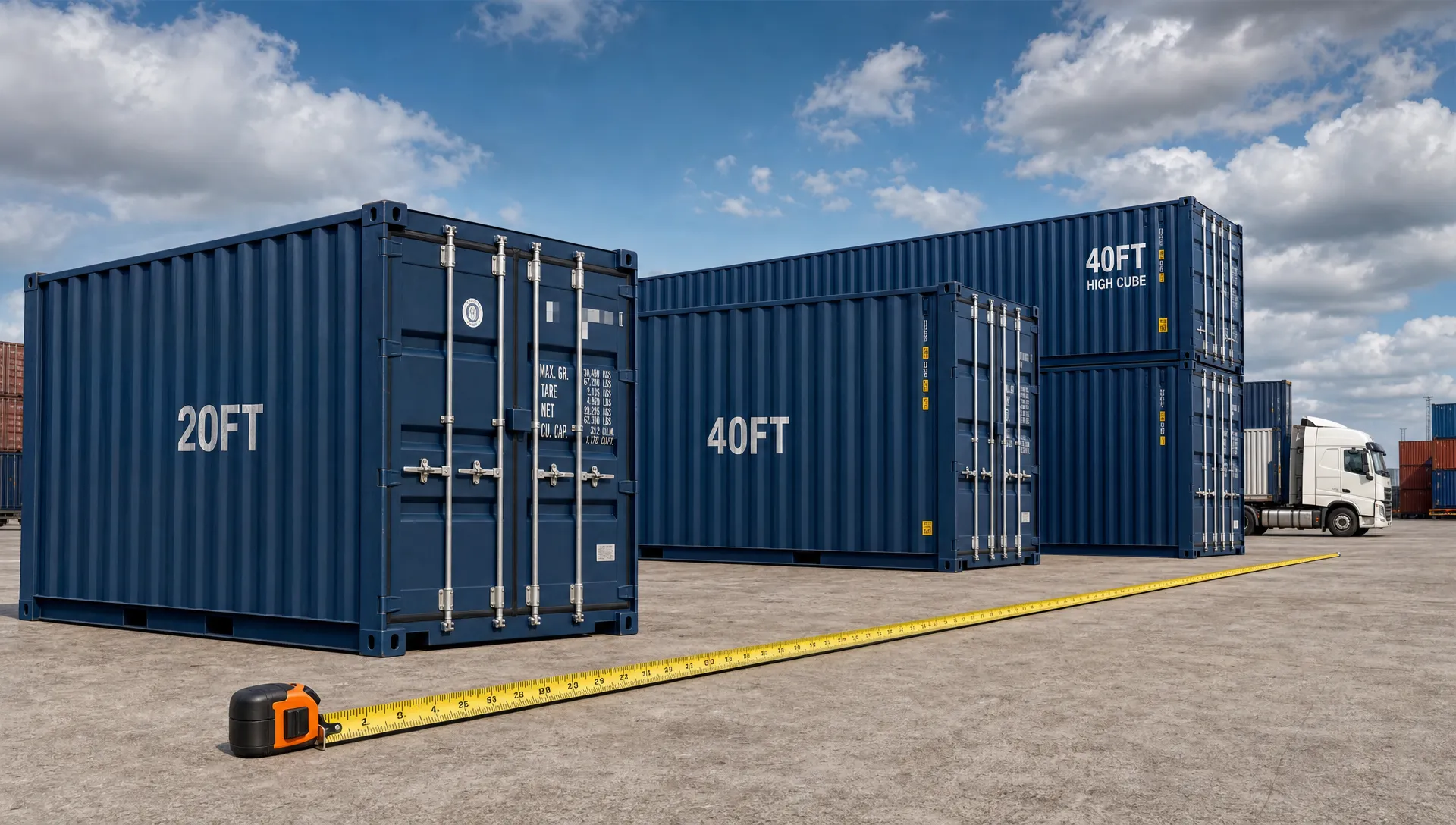
A shipping container is usually sold by its outside length, but that number does not tell you everything you need to know before buying. A 20-foot container is not 20 feet of usable interior space. A high cube gives you an extra foot of exterior height, but modifications, insulation, framing, and refrigeration equipment can reduce the space you actually get inside.
That is why understanding shipping container dimensions matters before you choose a unit for storage, equipment, business use, a workshop, or a container home. The right size affects what you can fit, how much the container costs to deliver, where it can be placed, and whether it will still work after modifications.
This buyer-focused guide explains the standard dimensions, the differences between exterior and interior measurements, and the practical details that matter when comparing 10ft, 20ft, 40ft, high cube, and specialty containers.
Why Shipping Container Dimensions Are Not as Simple as the Name
Container names are based on nominal exterior length. A 20ft container is roughly 20 feet long on the outside. A 40ft container is roughly 40 feet long on the outside. The usable interior is smaller because the steel frame, corrugated walls, flooring, corner posts, and doors all take up space.
There are three measurements buyers should always compare:
- Exterior dimensions: The total outside length, width, and height. These matter for delivery, placement, permits, transport, and site access.
- Interior dimensions: The usable length, width, and height inside the container. These matter for storage capacity, equipment fit, and build planning.
- Door opening dimensions: The usable opening through the cargo doors. This matters if you need to load pallets, vehicles, tools, furniture, machinery, or building materials.
Most standard dry containers are 8 feet wide on the outside. Standard-height containers are typically 8 feet 6 inches tall outside, while high cube containers are typically 9 feet 6 inches tall outside. International container sizing is based around standardized freight container specifications, including ISO 668, the global standard for Series 1 freight container dimensions and ratings from the International Organization for Standardization.
For buyers, the key point is simple: do not choose based on the name alone. Choose based on what has to fit inside, how the unit will be delivered, and whether you plan to modify it.
Standard Shipping Container Dimensions at a Glance
The table below gives common approximate dimensions for popular dry storage containers. Exact measurements can vary slightly by manufacturer, age, floor thickness, door style, and container condition, so always confirm the spec sheet before ordering if clearance is tight.
| Container size | Typical exterior L x W x H | Typical interior L x W x H | Typical door opening W x H | Approx. interior floor area |
|---|---|---|---|---|
| 10ft standard | 10' x 8' x 8'6" | 9'3" x 7'8" x 7'10" | 7'8" x 7'5" | 71 sq. ft. |
| 20ft standard | 20' x 8' x 8'6" | 19'4" x 7'8" x 7'10" | 7'8" x 7'5" | 148 sq. ft. |
| 20ft high cube | 20' x 8' x 9'6" | 19'4" x 7'8" x 8'10" | 7'8" x 8'5" | 148 sq. ft. |
| 40ft standard | 40' x 8' x 8'6" | 39'5" x 7'8" x 7'10" | 7'8" x 7'5" | 303 sq. ft. |
| 40ft high cube | 40' x 8' x 9'6" | 39'5" x 7'8" x 8'10" | 7'8" x 8'5" | 303 sq. ft. |
| 45ft high cube | 45' x 8' x 9'6" | 44'5" x 7'8" x 8'10" | 7'8" x 8'5" | 341 sq. ft. |
High cube containers do not usually give you more floor area than the same-length standard-height container. Their advantage is vertical clearance. That extra foot is valuable for taller equipment, overhead shelving, insulation, lighting, HVAC, office conversions, and container homes.
10ft Containers: Compact Storage for Tight Sites
A 10ft container is often the best choice when space is limited. It gives you about half the length of a 20ft container while keeping the same standard exterior width and standard door width in many configurations.
Buyers often choose a 10ft container for residential storage, small business inventory, tools, jobsite materials, seasonal equipment, or locations where a longer container would be difficult to deliver. Because 10ft containers are less common than 20ft and 40ft units, availability and pricing can vary by region.
The main advantage is footprint. A 10ft container can fit in many driveways, back lots, farm areas, and compact commercial spaces. The main limitation is capacity. If you are storing long materials such as pipe, lumber, ladders, or staging equipment, a 20ft container may be more practical.
20ft Containers: The Most Flexible Size for Many Buyers
The 20ft standard container is one of the most common choices for storage and transport. It offers a good balance between capacity, delivery flexibility, and site access. With roughly 148 square feet of usable floor area, it is large enough for furniture, tools, construction materials, retail inventory, motorcycles, landscaping equipment, and many small business uses.
A 20ft container is often easier to place than a 40ft unit because it requires less straight-line space for delivery. It can also be a smart option if you may need to move the container again later. For many homeowners, contractors, farms, and small businesses, 20ft is the practical middle ground.
For build projects, a 20ft unit can work well as a compact office, studio, workshop, tiny cabin, or utility space. If you are comparing layouts, a product like a custom 20ft shipping container house can help you visualize how the dimensions translate into usable living or working space.
40ft Containers: More Storage Capacity and Better Cost per Square Foot
A 40ft container gives you about twice the floor area of a 20ft container, usually around 303 square feet inside. For buyers who have the room to place one, it can provide excellent storage capacity for the footprint and often a better cost per square foot than smaller containers.
A 40ft container is commonly used for commercial inventory, farm storage, construction equipment, furniture storage, large workshops, mobile offices, and container home shells. It is also a strong option if you need long uninterrupted interior space.
The tradeoff is delivery and placement. A 40ft unit needs more access space, a larger turning radius, and more level ground. It can be harder to place in tight residential areas or locations with narrow gates, low trees, steep driveways, or limited truck access. Before buying, measure not only the pad where the container will sit, but also the full route the delivery truck must take to reach it.
High Cube Containers: When the Extra Foot Matters
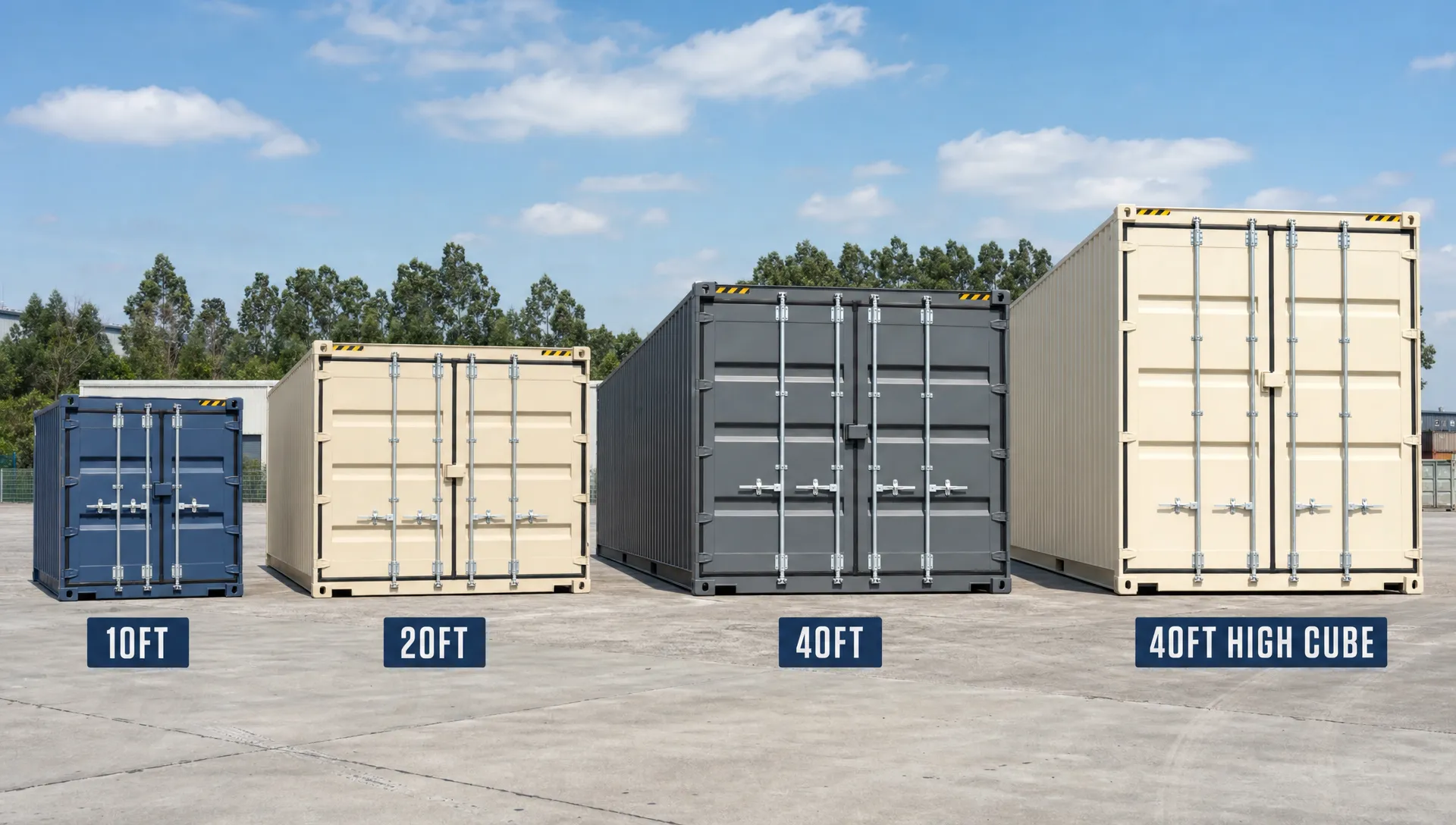
High cube containers are typically 9 feet 6 inches tall outside, compared with 8 feet 6 inches for standard-height units. Inside, that usually means about 8 feet 10 inches of interior height rather than about 7 feet 10 inches.
That extra vertical clearance is especially useful when you want to:
- Store tall equipment, stacked pallets, or shelving
- Add insulation, framing, ceiling panels, or lighting
- Convert the container into an office, studio, shop, or home
- Improve airflow and comfort in a modified space
- Create more usable headroom after flooring or ceiling work
For storage only, standard height may be enough. For any human-occupied conversion, a high cube is often worth serious consideration because finished interior height can shrink quickly once you add a subfloor, insulation, ceiling materials, ducts, lights, or mechanical systems.
Reefer Container Dimensions: Why Interior Space Is Smaller
Refrigerated containers, usually called reefers, are built to maintain controlled temperatures. They have insulated walls, floors, ceilings, and refrigeration machinery. Because of that, their interior dimensions are smaller than a dry container with the same exterior length.
For example, a 40ft high cube reefer may have similar outside dimensions to a 40ft high cube dry container, but less usable interior width and length. The refrigeration unit also affects the internal layout and power requirements. If you are buying a reefer for cold storage, food distribution, agriculture, floral storage, pharmaceuticals, or temperature-sensitive materials, request the exact interior dimensions and power specifications for that unit.
Do not assume dry container measurements apply to reefers. The difference can matter if you are loading palletized goods, wheeled carts, racks, or equipment with tight clearance.
Specialty Containers and Non-Standard Dimensions
Most buyers compare 10ft, 20ft, 40ft, and 40ft high cube containers first, but specialty units can solve problems that standard dry containers cannot.
Open-side containers provide wider side access for retail, events, workshops, and loading oversized items. Double-door containers have cargo doors at both ends, which can improve access and reduce the need to unload everything to reach stored goods. Open-top containers are useful for cargo loaded by crane. Flat rack containers are designed for oversized machinery, vehicles, pipe, equipment, and irregular cargo that does not fit inside a normal box.
If your main issue is width, height, or loading access rather than simple floor area, a specialty unit may be the better fit. Buyers handling oversized freight can review this flat rack shipping container guide for a deeper look at dimensions, use cases, and buying considerations.
How to Match Container Dimensions to Your Use Case
The best container size depends on what you are trying to accomplish. Two buyers can look at the same 20ft unit and reach completely different conclusions because their loading methods, site access, and future plans are different.
| Buyer goal | Dimensions to focus on | Practical recommendation |
|---|---|---|
| Household storage | Floor area, door opening, delivery access | 10ft or 20ft often works well for furniture, boxes, tools, and seasonal items. |
| Contractor storage | Interior length, payload, door clearance | 20ft is flexible, while 40ft works better for bulk materials and larger equipment. |
| Farm or ranch use | Interior length, ventilation options, site access | 20ft or 40ft depending on equipment, feed, tools, and available placement area. |
| Office conversion | Interior height, insulation space, finished width | High cube units are usually better after framing, wiring, and HVAC. |
| Container home | Finished interior height, layout width, multi-unit design | 40ft high cube is popular, but layout planning is essential before buying. |
| Retail or pop-up use | Door configuration, side access, finished ceiling height | Open-side or modified high cube units may improve customer access and merchandising. |
| Cold storage | Interior reefer dimensions, power needs, temperature range | Confirm exact reefer specs because insulation reduces usable space. |
If you are mainly storing boxes and equipment, floor area and door dimensions will drive the decision. If you are building a workspace or living space, finished dimensions matter more than raw steel dimensions.
Do Not Forget Weight, Payload, and Floor Capacity
Dimensions tell you how much space you have, but weight ratings tell you how much load the container is designed to carry. A typical container has a tare weight, which is the empty weight of the container, and a maximum gross weight, which is the container plus its cargo.
Approximate empty weights vary, but a standard 20ft container is often around 4,800 to 5,000 pounds, while a standard 40ft container is often around 8,000 pounds or more. High cube units, reefers, and specialty containers can weigh more. If you are storing very dense materials such as stone, tile, liquids, machinery, paper, metal parts, or bulk agricultural products, weight can become the limiting factor before interior volume does.
For local storage, the biggest concerns are usually floor loading, ground conditions, and safe placement. For shipping or transport, buyers should also review the container’s data plate, condition, and transport requirements. If the container will be used for freight, a cargo-worthy inspection may be needed.
How Modifications Change Usable Dimensions
A container can be transformed into an office, home, workshop, store, bathroom, pool structure, equipment room, or modular build, but every modification affects usable space.
Interior framing, spray foam, wall panels, plumbing chases, electrical conduit, flooring, ceiling systems, HVAC, cabinets, and built-ins all reduce finished dimensions. A standard container that looks roomy when empty can feel much narrower once you finish the walls.
As a rough planning concept, expect finished walls and insulation to reduce interior width by several inches on each side. Finished ceilings and floors can also reduce headroom. This is why high cube containers are so popular for offices and homes. The extra foot of height gives designers more room to create a comfortable finished interior.
If you are planning a modified build, start with the finished layout, not just the container size. Mark out the interior width on the ground with tape. Add your bed, desk, equipment, shelving, shower, door swing, or aisle clearance. This simple exercise often reveals whether a 20ft unit is enough or whether a 40ft high cube would be a better long-term decision.
Delivery and Site Clearance: Dimensions Outside the Box
Container dimensions also affect delivery. The space required to deliver a container is larger than the container itself because the truck needs room to maneuver, tilt, back up, and unload safely.
For a tilt-bed delivery, the truck usually needs a straight approach and enough overhead clearance as the bed raises. A 20ft container often requires much less drop space than a 40ft container. A 40ft unit may need a 120 ft, straight, level approach that is not available on every residential lot.
Before scheduling delivery, measure:
- The width of gates, driveways, and access roads
- Overhead clearance from trees, wires, rooflines, and signs
- The length and levelness of the drop area
- Turning room for the truck and trailer
- Ground firmness after rain or snow
- The final container footprint plus working space around it
For a more complete planning process, use a shipping container site prep checklist before your delivery date. Good site prep can prevent delays, re-delivery fees, placement problems, and long-term issues with doors sticking due to an uneven foundation.
How Dimensions Affect Price
Larger containers usually cost more in total, but not always more per square foot. A 40ft container may provide better value per usable square foot than a 20ft container, especially when delivery is already included in your budget. However, the right choice is not always the cheapest square footage. If a 40ft container is difficult to deliver, oversized for your site, or impossible to use efficiently, a smaller container may be the smarter purchase.
High cube containers may cost more than standard-height units because they offer more cubic capacity and are in high demand for modifications. Reefers, open-side containers, double-door containers, and custom-fabricated units also have different price considerations.
Budget should include the container, delivery, site preparation, modifications, permits if applicable, and accessories such as locks, vents, ramps, shelving, or foundations. If you are comparing size and budget at the same time, this shipping container cost guide breaks down common 2026 pricing factors and hidden costs to consider.
Common Buyer Mistakes When Comparing Dimensions
One of the most common mistakes is measuring the item you want to store, then comparing it only with the container’s exterior dimensions. Always compare your item with the interior length, interior width, interior height, and door opening.
Another mistake is forgetting aisle space. A container packed wall to wall may technically hold everything, but it may not be usable. If you need regular access to tools, inventory, files, or equipment, leave a walking aisle or organize the container with shelving.
Buyers also underestimate finished-space loss in conversions. A container home, office, or studio needs insulation, electrical systems, ventilation, flooring, and often plumbing or HVAC. Those systems reduce the usable dimensions and can change the layout dramatically.
Finally, some buyers forget to plan for delivery. The container may fit perfectly on the pad, but the delivery truck still needs access. Measure the route, not just the final location.
Quick Sizing Rules for Buyers
If you are undecided, these general rules can help narrow the choice:
- Choose a 10ft container when space is tight and you only need compact storage.
- Choose a 20ft container when you want versatile storage, easier delivery, and a manageable footprint.
- Choose a 40ft container when you need maximum storage capacity and have enough delivery access.
- Choose a high cube when height matters, especially for modifications, shelving, offices, workshops, and homes.
- Choose a reefer only when temperature control matters and you have confirmed the exact interior dimensions and power needs.
- Choose a specialty container when standard doors, height, or loading access will not work for your cargo or layout.
When in doubt, measure your largest item first, then add clearance for loading, movement, ventilation, shelving, insulation, and future use. It is usually better to buy slightly more usable space than to discover the container is too tight after delivery.
Frequently Asked Questions
What are the standard shipping container dimensions? A standard 20ft container is typically 20' x 8' x 8'6" on the outside, while a standard 40ft container is typically 40' x 8' x 8'6". High cube containers are usually 9'6" tall outside. Interior dimensions are smaller and vary slightly by manufacturer.
How wide is a shipping container inside? Most standard dry containers are about 7'8" wide inside. Finished width can be smaller if you add insulation, framing, wall panels, shelving, or built-in equipment.
Is a 20ft or 40ft container better? A 20ft container is easier to place and works well for general storage, tools, and smaller sites. A 40ft container offers much more capacity and often better cost per square foot, but it needs more delivery space and a larger placement area.
What is the difference between standard and high cube container dimensions? A standard container is typically 8'6" tall outside, while a high cube is typically 9'6" tall outside. The extra foot of height is useful for tall cargo, shelving, offices, homes, and any build that includes insulation or ceiling systems.
Do reefer containers have the same interior dimensions as dry containers? No. Reefer containers have insulated walls, floors, ceilings, and refrigeration equipment, so their usable interior dimensions are smaller than dry containers with the same exterior length.
How much space do I need for container delivery? You need more space than the container footprint. The truck needs room to enter, turn, back up, tilt, and unload. Requirements vary by container size, truck type, terrain, and delivery method, so confirm access details before scheduling.
Choose the Right Container Size Before You Buy
The best container is not just the one that looks big enough. It is the one with the right interior space, door opening, height, weight capacity, delivery access, and modification potential for your project.
Outback Shipping Containers supplies new, used, and custom containers nationwide, including storage containers, high cube units, container homes, offices, pools, and modular builds. If you need help comparing sizes, planning delivery, or choosing a wind and watertight inspected unit, request a quote from Outback Shipping Containers and get expert support before you buy.
About Outback Shipping Containers
This guide was prepared by the Outback Shipping Containers team, based on the questions our customers ask us most when buying, modifying and taking delivery of shipping containers. Learn more about us.
Ready to find your container?
Browse our in-stock shipping containers, container homes and custom builds, or ask our team for a free quote with delivery to your site.