Ocean Container Sizes Compared for US Buyers
By Outback Shipping Containers · Published July 22, 2026 · Last updated October 18, 2026
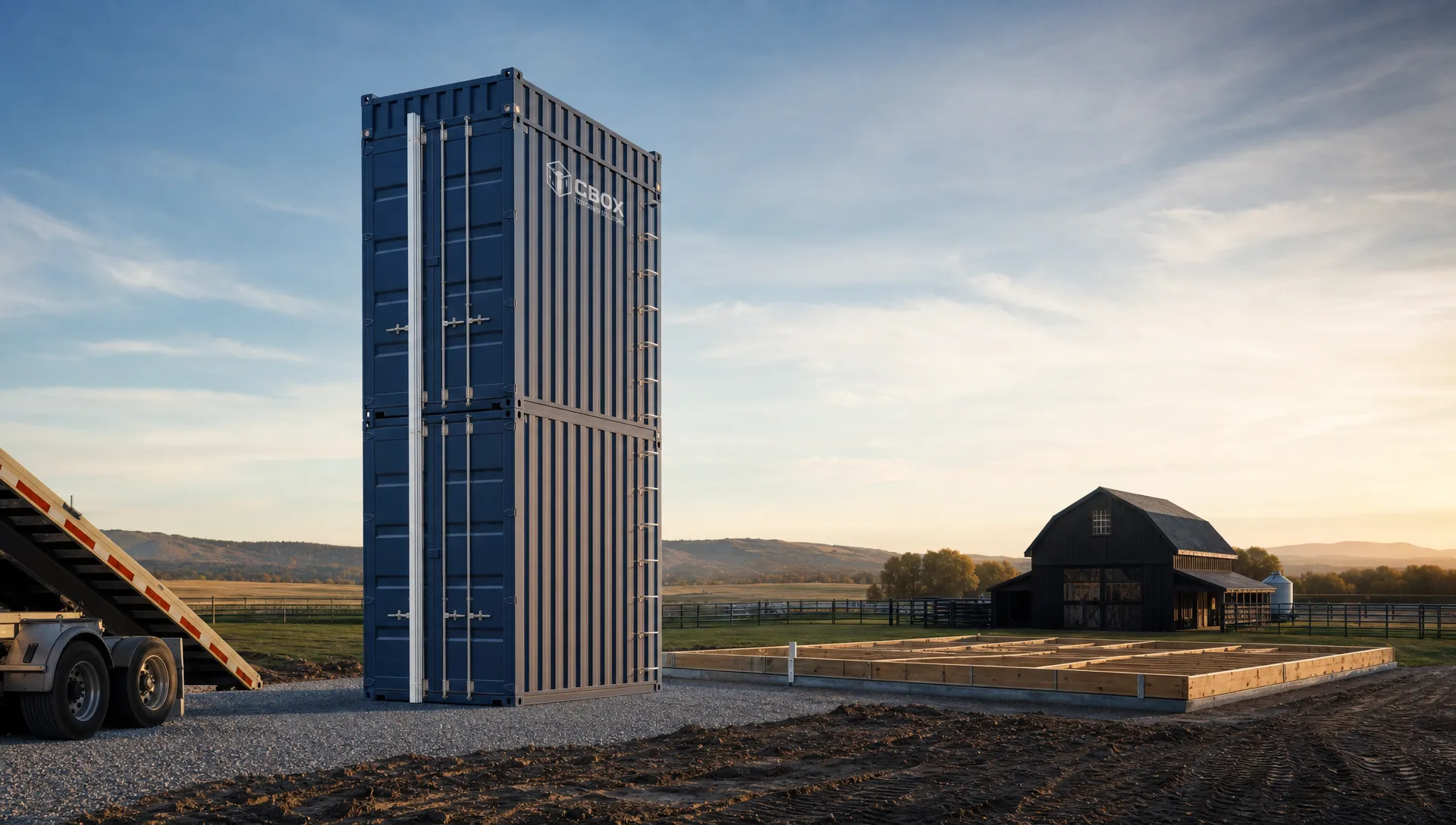
Ocean Container Sizes Compared for US Buyers
The main ocean container sizes for US buyers are 10ft, 20ft, 40ft, 40ft high cube, and 45ft high cube. For most storage buyers, a 20ft container is the easiest size to place. For larger storage, workshops, and container conversions, a 40ft high cube usually gives the best usable space for the footprint.
Quick Answer: Choose a 20ft ocean container for tight sites, heavy goods, farms, and job-site storage. Choose a 40ft or 40ft high cube container when you need more floor space, want better value per cubic foot, or plan to build a shipping container home, office, cabin, or workshop.
Key Takeaways
- 20ft containers are the most flexible size for residential yards, farms, contractors, and small businesses because they are easier to deliver and still hold a lot of weight.
- 40ft containers give more storage per delivery and work well for large equipment, business inventory, and modular builds.
- 40ft high cube containers add 1 extra foot of height, which matters for insulation, lighting, HVAC, and finished ceilings in container conversions.
- Exact dimensions and payload vary by unit, so always check the container data plate, condition grade, and delivered quote before buying.
- Site access can decide the size for you, especially if a tilt-bed truck needs straight clearance to unload.
Quick Comparison: Ocean Container Sizes for US Buyers
Ocean containers, also called cargo containers, conex boxes, ISO containers, or intermodal containers, are built around standard sizes so they can move by ship, rail, and truck. The ISO 668 standard covers the classification, dimensions, and ratings for Series 1 freight containers.
For US buyers, the exterior size is only part of the decision. You also need to compare interior length, door opening, tare weight, payload capacity, and delivery clearance. A container that looks perfect on paper may be too tall for your driveway trees or too long for a tight rural turn.
The table below uses common industry dimensions. Always confirm the exact unit before purchase because measurements can vary slightly by manufacturer, flooring, door design, reefer equipment, repairs, and age.
| Container size | Exterior dimensions | Approx. interior dimensions | Approx. interior volume | Typical tare weight | Best fit |
|---|---|---|---|---|---|
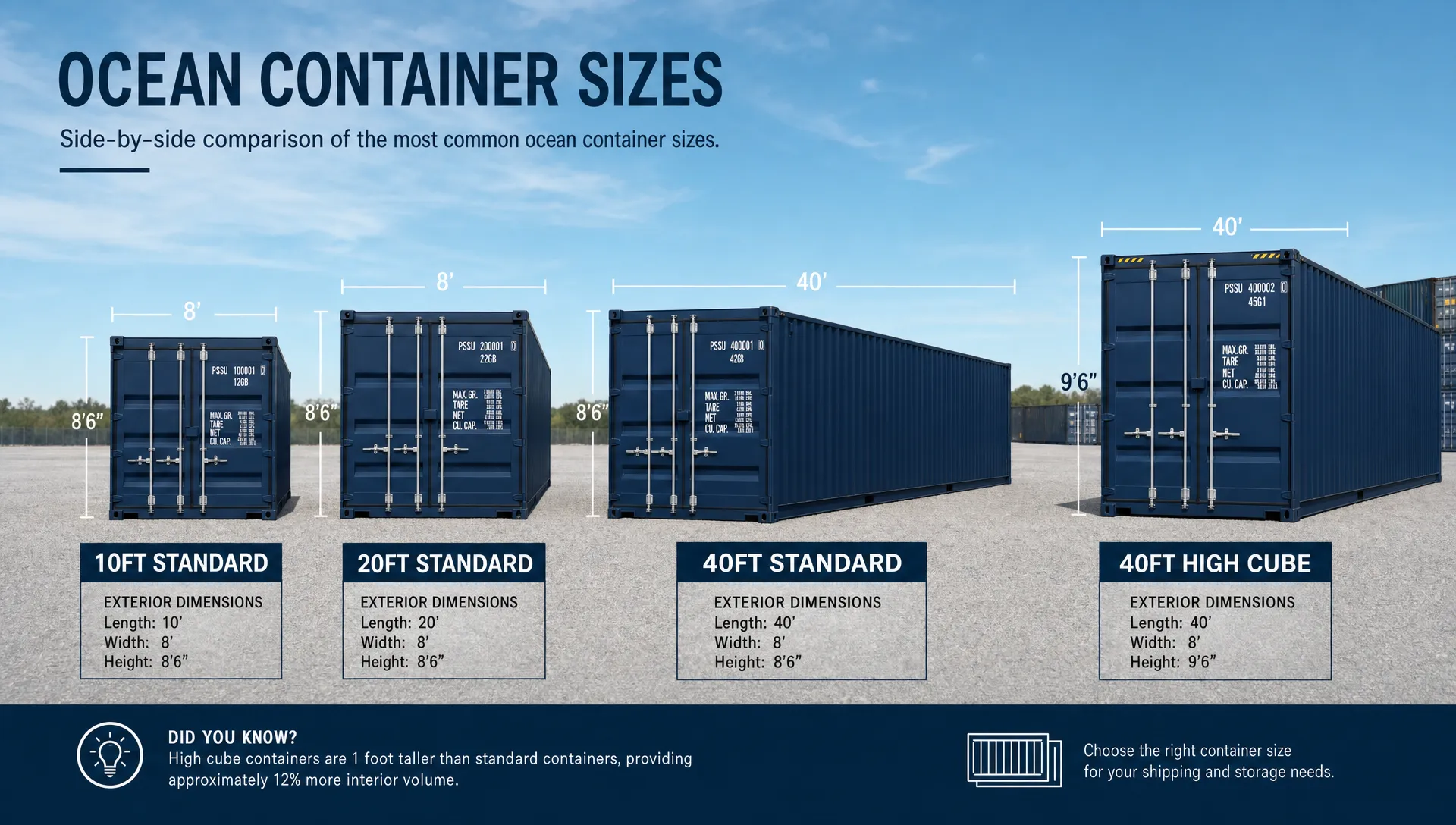
| 10ft standard | 10' L x 8' W x 8'6" H | 9'3" L x 7'8" W x 7'10" H | 560 cu ft | 2,600 to 2,900 lb | Small storage, tight sites, tools, seasonal items |
| 20ft standard | 20' L x 8' W x 8'6" H | 19'4" L x 7'8" W x 7'10" H | 1,170 cu ft | 4,800 to 5,000 lb | Heavy storage, farms, job sites, residential use |
| 40ft standard | 40' L x 8' W x 8'6" H | 39'5" L x 7'8" W x 7'10" H | 2,390 cu ft | 8,000 to 8,400 lb | Bulk storage, inventory, equipment, longer builds |
| 40ft high cube | 40' L x 8' W x 9'6" H | 39'5" L x 7'8" W x 8'10" H | 2,690 cu ft | 8,500 to 8,800 lb | Container homes, offices, workshops, tall items |
| 45ft high cube | 45' L x 8' W x 9'6" H | 44'5" L x 7'8" W x 8'10" H | 3,040 cu ft | 10,000 to 10,600 lb | Maximum storage, specialty builds, commercial use |
Door openings matter just as much as interior volume. Most standard dry containers have a door width of about 7'8". Standard-height containers have a door height near 7'5", while high cube containers often have a door height near 8'5".
If you need to load pallets, ATVs, motorcycles, compact tractors, shelving, or tall trade materials, measure the cargo and the loading equipment first. The door opening is often the limiting factor, not the interior space.
For a deeper technical breakdown of exterior size, interior space, and door openings, see Outback Shipping Containers' guide to shipping container dimensions for buyers.
What Each Ocean Container Size Is Best For
10ft ocean containers
A 10ft container is a compact storage option for buyers who do not have room for a 20ft unit. It works well for tools, lawn equipment, seasonal inventory, pool supplies, or secure storage beside a shop or barn.
The tradeoff is cost per cubic foot. A 10ft unit often costs more per foot of storage than a 20ft container because handling, trucking, and depot labor still apply. Also, some 10ft containers are cut down from larger containers, so buyers should confirm condition, structure, and whether the unit has a valid CSC plate if they plan to use it for cargo movement.
For static storage, a certified wind- and watertight 10ft container can be a practical choice. For frequent moves, check forklift pockets, corner castings, and the base rails before buying.
20ft ocean containers
A 20ft standard container is the most balanced size for many US buyers. It is large enough for serious storage but short enough for many residential driveways, farms, construction sites, and small business lots.
The 20ft size is especially good for dense cargo. A 20ft container and a 40ft container can have similar maximum gross ratings, depending on the unit, but the 20ft container has less volume. That makes it better for heavy items such as tile, machinery parts, feed, tools, metal stock, and compact equipment.
For homeowners and first-time buyers, 20ft containers are easier to place and easier to resell. They are also common enough that availability is usually strong in many US markets. If you are comparing site fit and capacity, Outback's guide to 20 foot container size for storage buyers is a useful next step.
40ft standard ocean containers
A 40ft standard container gives about twice the floor length of a 20ft container. It is a strong fit for business inventory, furniture, building materials, event equipment, long tools, farm supplies, and job-site storage.
The main advantage is space efficiency. If the delivery truck is already coming to your property, a 40ft container may give a lower cost per cubic foot than a smaller unit. The main downside is access. A 40ft container needs 120 ft of straight clearance for delivery and more room for long-term placement.
A 40ft standard unit can work for basic container conversions, but the 7'10" interior height may feel tight after adding insulation, framing, floor build-up, lighting, and ceiling finishes. If people will occupy the space often, compare it with a high cube before deciding.
40ft high cube ocean containers
A 40ft high cube container has the same length and width as a 40ft standard container, but it is 9'6" tall outside. That extra foot is valuable.
For shipping container homes, tiny homes, cabins, offices, workshops, and retail units, high cube height gives you more room for insulation and mechanical systems. It also makes the finished space feel less cramped. A high cube is often the smarter choice when comfort matters.
High cube containers are also useful for tall storage. Contractors use them for ladders, racking, staging materials, tall crates, and equipment that will not clear a standard door height.
45ft high cube ocean containers
A 45ft high cube container gives the most space among common ocean container sizes. It can be useful for large commercial storage, custom modular builds, long workshops, retail concepts, or larger container home layouts.
The caution is logistics. A 45ft high cube is longer, heavier, and less common than a 40ft high cube. Delivery access, local availability, and trucking cost can make or break the deal.
If your site is open and the added length fits your layout, a 45ft high cube can be a strong option. If your site is tight, a 40ft high cube is often easier to source and place.
Size, Weight, and Capacity Details That Matter
The most common mistake buyers make is comparing only the outside length. In real use, a container's interior height, door opening, tare weight, and payload rating matter just as much.
Tare weight is the empty weight of the container. Payload capacity is how much cargo the unit can carry. Maximum gross weight is the total weight of the container plus cargo. These values are listed on the container's data plate, and the exact plate should guide any transport decision.
| Detail to check | Why it matters | Buyer tip |
|---|---|---|
| Exterior length | Affects site footprint and truck access | Mark the footprint with stakes or paint before ordering |
| Interior length | Controls usable storage and build layout | Leave space for aisles, shelving, and wall finishes |
| Interior height | Matters for people, lighting, insulation, and tall cargo | Choose high cube for most occupied builds |
| Door opening | Limits what can be loaded | Measure equipment at its widest and tallest point |
| Tare weight | Affects handling and transport | Confirm the lifting equipment can handle the empty unit |
| Payload capacity | Controls safe cargo loading | Use the data plate, not an online average, for final limits |
A 40ft container does not always mean twice the payload of a 20ft unit. Many 20ft and 40ft containers share similar gross weight ratings, so the 20ft can be better for dense loads. The 40ft is better when your cargo is bulky but not extremely heavy.
For container homes and offices, the payload rating is usually less important than structure, condition, insulation strategy, and code compliance. Once you cut openings for windows and doors, you may need engineered reinforcement. Requirements vary by state, county, and city, so speak with your local building department before starting a permanent build.
Container Condition and Specialty Types That Affect Your Choice
Size is only one part of the purchase. A 40ft container in poor condition may be a worse buy than a clean 20ft unit that fits the job. Condition, certification, and container type affect long-term value.
New one-trip containers
A new or one-trip container has usually made one cargo trip from the factory area to its destination market. It should have minimal wear compared with older used equipment. Buyers often choose one-trip containers for container homes, offices, retail builds, pools, and situations where appearance matters.
One-trip containers are not damage-proof. They can still have small dents, forklift marks, handling scratches, or minor scuffs from transport. The key benefit is cleaner condition and a longer remaining service life.
Used WWT containers
WWT means wind and watertight. A WWT container should keep out normal wind and rain when the doors and seals are in working condition. It is a common choice for static storage on farms, construction sites, homes, and business properties.
WWT does not always mean cargo-worthy. If you plan to load the container for ocean, rail, or long-distance intermodal transport, ask about cargo-worthy status, CSC plate condition, and inspection requirements.
Cargo-worthy containers
CWO means cargo-worthy. A cargo-worthy container is suitable for cargo transport when it meets inspection standards and required documentation. It may still show dents, rust, patches, or cosmetic wear.
If your container will sit on your property as storage, WWT may be enough. If it will move loaded, CWO status becomes more important.
Reefers and specialty containers
Reefer containers are refrigerated units. They have insulated walls and machinery, so the interior space is smaller than a standard dry container of the same exterior length. They also need power and maintenance.
Open-top, flat rack, double-door, and side-opening containers serve different jobs. They can be valuable for machinery, oversized cargo, retail use, or fast loading, but they are not always the right choice for basic storage. If you are deciding between dry vans, reefers, flat racks, and other options, compare the main types of shipping containers and when to use each.
If you already know the size range you want, Outback Shipping Containers can help you browse available containers with nationwide delivery and compare new, used, and custom options with transparent online pricing.
Delivery, Site Access, and Permit Considerations
Delivery can be the deciding factor between a 20ft and a 40ft container. A container may fit on your land but still be hard to unload if the truck cannot line up straight.
A tilt-bed truck typically needs a straight, firm path to roll the container off the trailer. Common planning estimates are 100 feet of straight clearance for a 20ft container and 120 feet for a 40ft container. Carriers and equipment vary, so confirm the exact requirement before the delivery date.
You should also check overhead clearance. Tree limbs, wires, gates, roof overhangs, and uneven ground can stop delivery. Many deliveries need 14 feet of vertical clearance, depending on the trailer, container height, and unloading angle.
A good delivery site has firm ground, enough turning radius, and a level landing area. Gravel pads, concrete piers, railroad ties, or engineered foundations can help keep the container off standing water. Avoid placing a container where doors will bind because one corner sinks.
US highway rules also matter when containers move by road. Federal and state truck size and weight limits can affect routing, permits, and equipment. The Federal Highway Administration provides information on commercial motor vehicle size and weight regulations, but your carrier will still need to confirm the route for your specific delivery.
Permits vary widely. A temporary storage container may need no permit in one county and a temporary use permit in another. A container home, office, guest cabin, pool, or commercial build may require zoning approval, structural plans, inspections, setbacks, foundation details, and utility permits. Always contact the authority having jurisdiction before you buy or start site work.
How to Choose the Right Size Before You Buy
The right ocean container size depends on what you are storing or building, how often you need access, and what your site can accept. Start with use, then confirm dimensions, then confirm delivery.
| Buyer need | Best size to consider | Why it fits |
|---|---|---|
| Backyard storage | 10ft or 20ft | Easier to place and usually enough for household overflow |
| Contractor tools and materials | 20ft | Strong balance of security, capacity, and site access |
| Farm and ranch storage | 20ft or 40ft | Handles feed, tools, equipment, fencing, and seasonal supplies |
| Business inventory | 40ft or 40ft high cube | More cubic space and better racking options |
| Container home or tiny home | 40ft high cube | Extra height helps with insulation and finished ceilings |
| Modular office or workshop | 20ft, 40ft, or 40ft high cube | Size depends on desk space, storage, HVAC, and occupancy |
| Airbnb cabin or rental unit | 40ft high cube or 45ft high cube | Better layout flexibility for finished living space |
| Container pool or custom build | Custom size | Engineering, site access, and local code drive the final design |
Before you pay a deposit, walk through five checks.
- Measure the usable space you need: Include aisles, shelving depth, door swing, workbenches, beds, bathrooms, or mechanical systems.
- Mark the container footprint on site: Use tape, stakes, cones, or paint so you can see the real footprint before delivery.
- Confirm delivery access: Check driveway width, turning radius, slope, soft ground, gates, trees, and overhead wires.
- Verify condition and certification: Ask whether the unit is one-trip, WWT, refurbished, or cargo-worthy, and confirm what guarantee applies.
- Compare delivered cost, not just container price: Delivery distance, crane needs, site difficulty, condition, and local inventory all affect the final number.
Price is a real factor, but it should not be separated from condition and delivery. A cheaper container that needs a crane, repairs, repainting, or door work may cost more in the end. If you are deciding between the two most common sizes, review Outback's 20ft vs 40ft container price guide before comparing quotes.
For first-time buyers, a simple rule works well: buy the smallest container that fits your site and access needs, but do not undersize a permanent build. Storage can be adjusted with shelving. Living and working space is much harder to fix after the shell is delivered.
Frequently Asked Questions
What are the standard ocean container sizes?
The standard ocean container sizes most US buyers compare are 10ft, 20ft, 40ft, 40ft high cube, and 45ft high cube. The 20ft and 40ft sizes are the most common. High cube containers are 9'6" tall outside, giving one extra foot of height compared with standard 8'6" containers.
Is a 20ft or 40ft shipping container better?
A 20ft container is better for tight sites, heavy goods, and residential storage. A 40ft container is better for bulk storage, inventory, long materials, and larger builds. If you need finished interior space for a home, office, or workshop, a 40ft high cube is often the better choice.
How much can fit in a 20ft ocean container?
A 20ft standard ocean container has about 1,170 cubic feet of interior space. It is commonly used for tools, furniture, equipment, business inventory, farm supplies, and construction materials. The practical limit depends on item shape, aisle space, shelving, door clearance, and the payload rating on the container data plate.
What is the difference between a standard container and a high cube?
A standard container is usually 8'6" tall outside. A high cube container is usually 9'6" tall outside. That extra foot gives more interior height and a taller door opening, which helps with tall cargo, insulation, ceiling finishes, lighting, HVAC, and occupied container conversions.
Do I need a permit for a shipping container on my property?
Permit rules depend on your city, county, zoning district, and how you plan to use the container. Temporary storage may be treated differently from a permanent home, office, pool, or commercial structure. Always check with your local building department or zoning office before ordering a container.
Are ocean containers waterproof?
Shipping containers are not designed like boats, so waterproof is not the best term. A good WWT container should be wind and watertight for normal weather exposure when the roof, walls, doors, and seals are sound. Always inspect the roof, door gaskets, flooring, and rust areas before buying.
Choosing the right size is easier when you compare the real dimensions, your site access, and the way you plan to use the container. Outback Shipping Containers supplies new, used, and custom containers nationwide, with inspected wind- and watertight units, online pricing, lender financing (only for container homes priced above $72,000, subject to lender approval), and delivery support across all 50 states. When you are ready to compare delivered options, start by reviewing current availability at Outback Shipping Containers.
About Outback Shipping Containers
This guide was prepared by the Outback Shipping Containers team, based on the questions our customers ask us most when buying, modifying and taking delivery of shipping containers. Learn more about us.
Ready to find your container?
Browse our in-stock shipping containers, container homes and custom builds, or ask our team for a free quote with delivery to your site.