Container One Shipping Containers: What Buyers Should Check
By Outback Shipping Containers · Published July 18, 2026 · Last updated October 20, 2026
Container One Shipping Containers: What Buyers Should Check
Before buying Container One shipping containers, check the condition grade, inspection proof, ISO size, delivery access, total landed cost, and permit needs. A good cargo container should come with clear terms, real photos or a written inspection standard, and delivery details that match your site. If a seller cannot explain WWT, CWO, one-trip, tare weight, or payload capacity, slow down before sending payment.
Quick Answer: When comparing Container One shipping containers or any other supplier, verify the exact container condition, size, structural integrity, door operation, roof condition, floor condition, delivery method, and written quote. The best deal is not the lowest container price. It is the lowest safe, inspected, delivered price for the right unit.
Key Takeaways
- Condition grade matters most: One-trip, Cargo Worthy, and Wind & Watertight mean different things. Do not treat them as equal.
- Ask for the exact unit details: Photos, container ID, data plate, and inspection notes help protect you from surprises.
- Delivery can change the total cost: Site access, tilt-bed clearance, rural roads, and crane needs can add cost.
- Permits vary by location: A storage container, office, pool, or home may trigger different zoning and building rules.
- Compare landed cost: Include the container, delivery, taxes, modifications, lockboxes, paint, and financing terms.
Container One shipping containers: condition grade comes first
The first question is not whether the container looks good in a listing photo. The first question is what grade the seller is offering and what that grade actually means.
A one-trip container is usually the cleanest option. It was manufactured overseas, loaded once, shipped into the United States, and then sold. It can still have small dents, forklift marks, and scuffed paint. New does not always mean showroom perfect.
Used containers cover a wide range. A Cargo Worthy unit may still be fit for cargo use if properly certified. A Wind & Watertight unit is usually suitable for static storage, but it may not meet shipping standards. An As-Is unit may have leaks, heavy rust, or door issues.
For a deeper breakdown of these terms, Outback has a helpful guide to shipping container condition grades that explains One-Trip, Cargo Worthy, WWT, and As-Is in plain English.
| Grade | What it usually means | Best fit | What to verify |
|---|---|---|---|
| One-Trip / New | Used for one cargo trip, usually clean with minor handling marks | Container homes, offices, pools, clean storage, retail units | Exact photos, door seals, dents, paint condition, warranty terms |
| Cargo Worthy / CWO | Structurally suitable for cargo use when properly inspected | Export cargo, high-value storage, heavy use | Inspection date, CSC plate, floor, crossmembers, corner castings |
| Wind & Watertight / WWT | Keeps out normal wind and rain, but may not be cargo certified | Farm storage, job-site storage, workshops | Roof patches, rust, door gaskets, daylight inside the unit |
| As-Is | No condition guarantee | Low-budget projects, scrap, parts | Assume repairs are needed before use |
The key is to get the grade in writing. A verbal promise is not enough. The invoice should match the advertised grade.
Verify ISO size, tare weight, and payload capacity
Shipping containers are intermodal containers, which means they are built to work across ships, trains, and trucks. Standard dry cargo container dimensions are guided by international standards such as ISO 668, which covers classification, dimensions, and ratings for Series 1 freight containers.
Still, do not rely on a generic chart alone. Always check the manufacturer plate or CSC safety approval plate on the container doors. That plate can show maximum gross weight, tare weight, and payload capacity.
Common dry container dimensions are listed below. Exact interior dimensions and weights vary by manufacturer.
| Container size | Exterior dimensions | Approx. empty weight | Common use |
|---|---|---|---|
| 20ft standard | 20 ft x 8 ft x 8 ft 6 in | About 4,800 lb | Residential storage, job-site tools, small workshops |
| 40ft standard | 40 ft x 8 ft x 8 ft 6 in | About 8,000 lb | Bulk storage, farm use, larger builds |
| 40ft high cube | 40 ft x 8 ft x 9 ft 6 in | About 8,700 to 8,900 lb | Container homes, offices, taller equipment |
| 45ft high cube | 45 ft x 8 ft x 9 ft 6 in | About 10,000 lb or more | Large storage, commercial conversions |
A 20ft container is easier to place in tight areas. It is often the better choice for homeowners, small farms, and contractors with limited space. A 40ft container gives more storage per foot of length, but it needs more delivery clearance.
High cube containers add one foot of height. That extra headroom matters for container conversions, insulation, ceiling fans, lighting, HVAC runs, and finished floors. If you are building a shipping container home or office, a 40ft high cube is often easier to work with than a standard-height unit.
Inspect the exact cargo container, not a sample photo
A container can look fine from 20 feet away and still have expensive problems. Buyers should inspect the exact unit when possible. If the container is in a depot far away, ask for recent photos of the exact container ID.
Start with the roof. Roof leaks are common on older units because water can sit in dents and rust can spread from scratches. From inside the container, close the doors and look for pinholes of daylight. A small hole can become wet insulation, damaged inventory, or mold.
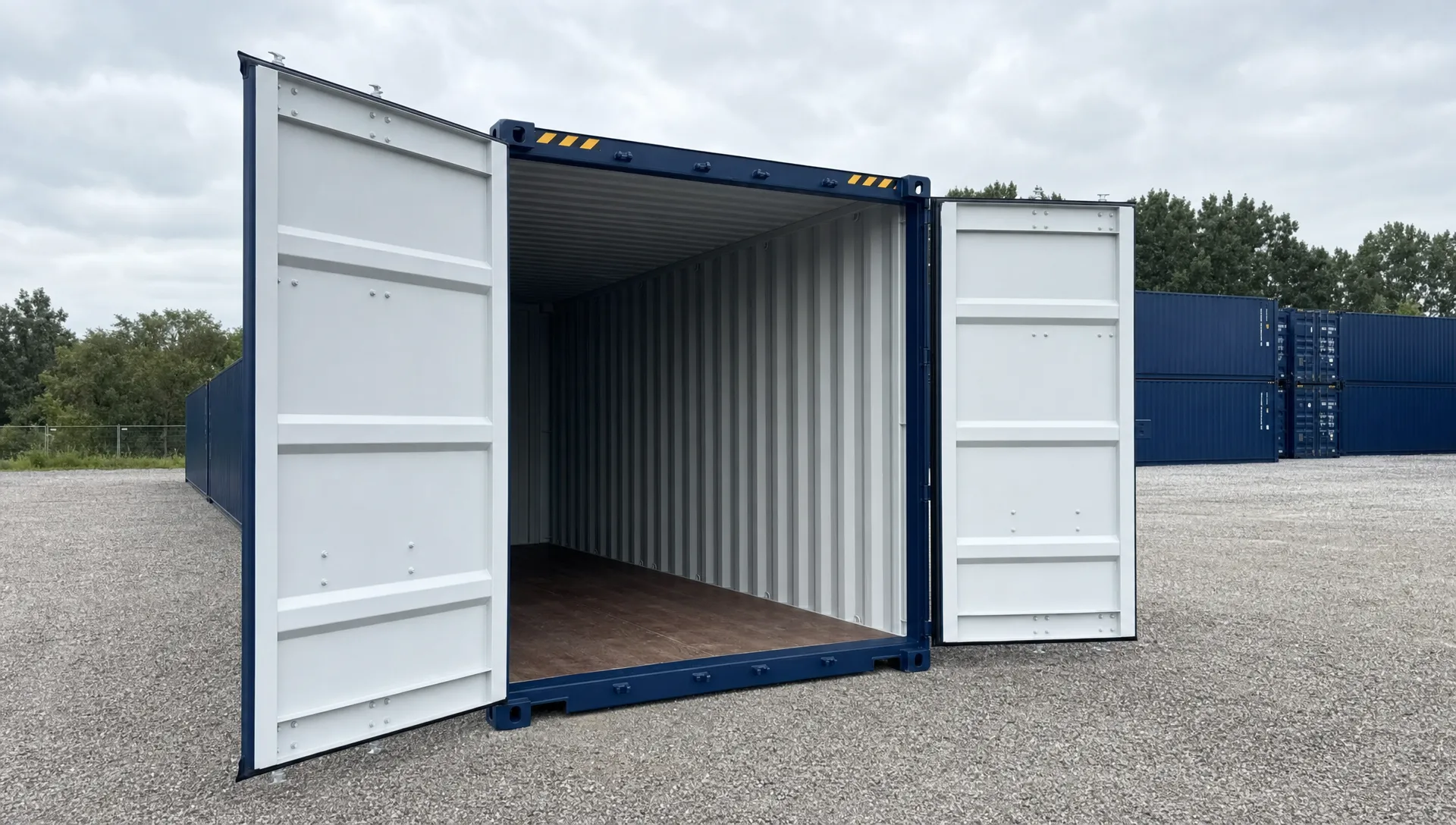
Next, check the doors. Both doors should swing, close, and latch without a fight. Door gaskets should be flexible, not missing or cracked. Lock rods should move freely. If the frame is racked, the doors may bind even if the rest of the box looks straight.
Then inspect the floor. Most dry containers have marine-grade plywood flooring. Look for soft spots, delamination, chemical odors, oil stains, or patched areas. For homes, offices, cabins, and retail conversions, a questionable floor can add labor and material cost.
Finally, check the frame and underside. Corner castings, bottom rails, crossmembers, and forklift pockets carry the load. Surface rust is normal on used containers. Deep flaking rust, holes, twisted rails, and broken welds are different problems.
If you are buying used, this detailed used shipping container inspection guide is worth reviewing before you inspect or approve photos.
Check delivery access before you commit
Delivery is where many first-time buyers get surprised. The container may be affordable, but placement can get expensive if the site is not ready.
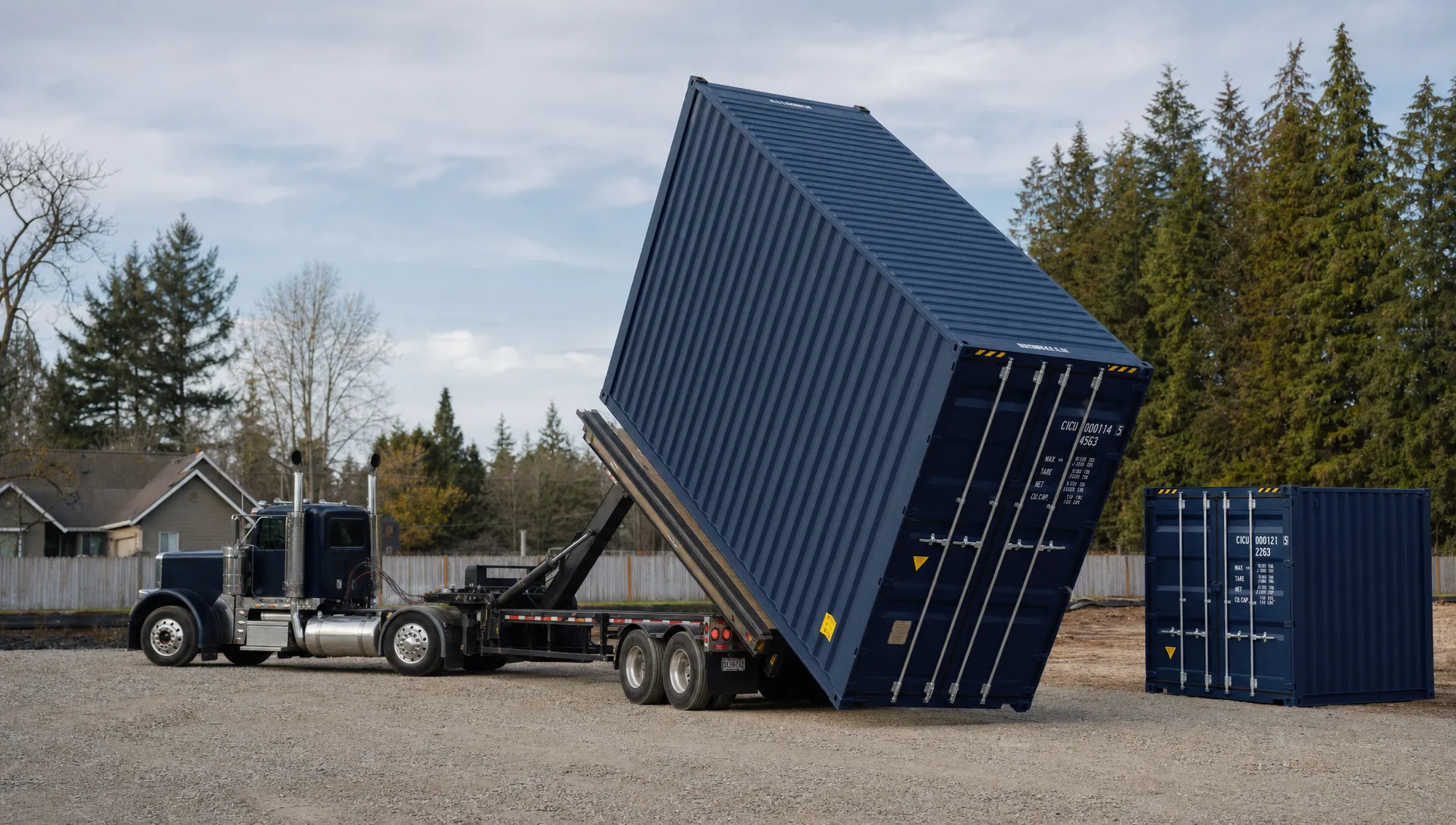
Most residential and small-business deliveries use a tilt-bed truck or tilt-bed trailer. The driver backs into position, tilts the bed, and slides the container onto the ground. This works well if the truck has enough straight clearance.
As a rough planning rule, a 20ft container delivery may need 100 feet of straight space. A 40ft container may need about 120 feet. The driver may also need 12 feet of width and 14 feet of overhead clearance. Trees, wires, gates, soft soil, steep grades, and tight turns can all cause issues.
If a crane, forklift, or side-loader is required, ask who arranges it and who pays for it. Do this before paying a deposit. Freight carriers also have to secure loads properly during transport. The FMCSA cargo securement rules are a useful reference for why professional hauling and proper equipment matter.
Good site prep is simple but important. Use level, compacted ground. Gravel pads, concrete piers, railroad ties, or pressure-treated blocking can help keep the container off standing water. Set the container slightly high so water drains away from the floor rails.
Compare total landed cost, not just the container price
A low advertised price can hide a high final cost. Compare the full delivered price, not the headline number.
Your written quote should show the container size, grade, delivery ZIP code, delivery method, taxes, optional modifications, payment schedule, and any access-related charges. If financing is offered, review the total repayment cost and not just the monthly payment.
One useful benchmark is a live product page with clear specs, photos, and checkout details. If you are comparing a clean 20ft unit for storage or a future conversion, review this 20ft new one-trip shipping container listing to see the type of product information buyers should expect. The listing shows a $3,400 price at the time its product details were summarized, but always confirm current pricing and delivery costs before budgeting.
Watch for red flags when comparing sellers:
- The seller will not provide a business address, invoice, or written terms.
- The listing uses only stock photos and will not show the exact unit.
- The grade is vague, such as good condition, with no WWT or CWO language.
- The seller demands wire-only payment before confirming delivery.
- Delivery is called free, but there is no route, truck type, or placement plan.
- The seller cannot explain what happens if the unit arrives damaged or cannot be placed.
The safest quote is specific. It should tell you what you are buying, where it is coming from, how it will be delivered, and what condition is guaranteed.
Match the container to the job
Different buyers need different containers. A farm owner storing feed and tools may not need the same unit as an Airbnb host building a high-end cabin.
For basic storage, a WWT used container can be a smart buy. It should keep out normal rain and wind, and cosmetic dents may not matter. For construction companies, check door function, lockbox options, and floor strength. Tools and equipment need secure access more than perfect paint.
For a container home, tiny home, pool, office, or retail build, start with a one-trip or very clean used unit when the budget allows. Cleaner steel saves prep time. Straighter walls help with framing, insulation, windows, and finishes. High cube height also gives builders more room for mechanical systems.
For export or intermodal cargo, ask about Cargo Worthy status and CSC documentation. A container used only for static storage may not need the same certification. A container going back into the transportation system usually does.
Permits are another key issue. A storage container may be treated as an accessory structure in one county and a temporary structure in another. A container home or office may need plan review, foundations, insulation, egress, electrical permits, plumbing permits, and energy code compliance. Always check with your local building department, zoning office, HOA, or authority having jurisdiction before ordering.
If the project is temporary, buying may not be the best option. Some contractors and logistics teams compare ownership with leasing through LeaseLink Containers, the leasing arm of Outback Shipping Containers. The right choice depends on duration, cash flow, site security, and whether you need the unit modified.
Final buyer checklist before you pay
Use this checklist before you approve an invoice or send a deposit.
- Confirm the exact size, height, and door style.
- Get the condition grade in writing, such as One-Trip, CWO, or WWT.
- Ask whether photos show the exact container or a representative unit.
- Request the container ID when available.
- Review roof, floor, door, gasket, rail, and rust condition.
- Confirm whether the unit has a CSC plate if cargo use matters.
- Ask for the full delivered price to your ZIP code.
- Confirm delivery truck type, site access, and placement limits.
- Check local permit, zoning, and HOA rules before delivery.
- Keep the invoice, payment record, warranty terms, and delivery notes.
A container is a long-lasting asset when bought correctly. It can also become a costly problem if the grade, delivery, or site rules are misunderstood.
Frequently Asked Questions
What should I look for when buying a shipping container?
Look for a written condition grade, exact size, recent photos, roof condition, door operation, floor condition, rust level, and delivery terms. For used containers, confirm whether the unit is Wind & Watertight or Cargo Worthy. Also compare the full delivered cost, not only the advertised container price.
Is a one-trip shipping container worth it?
A one-trip container is often worth it for homes, offices, pools, retail units, and clean storage because it usually has less rust and fewer repairs. It costs more than most used containers, but it can save labor during conversion. For rough job-site storage, WWT used may be enough.
How do I know if a shipping container is wind and watertight?
A WWT container should keep out normal wind and rain. Inspect it by closing the doors from inside and looking for daylight through the roof, walls, and door seals. Check gaskets, patches, rust, and floor edges. Ask the seller to put the WWT guarantee in writing.
Do I need a permit to put a shipping container on my property?
Maybe. Permit rules vary by city, county, state, zoning district, and use. A temporary storage container may need a simple permit, while a container home or office may need full building review. Check with your local building department, zoning office, and HOA before delivery.
What size shipping container should I buy, 20ft or 40ft?
Choose a 20ft container if you have limited space, tighter delivery access, or moderate storage needs. Choose a 40ft container if you need more square footage and have enough room for delivery. For homes, offices, and workshops, consider a high cube for extra interior height.
Can shipping containers be delivered to rural property?
Yes, rural delivery is common, but access matters. The road must support the delivery truck, and the site needs enough straight clearance for placement. Soft fields, low branches, narrow gates, culverts, steep driveways, and overhead wires should be checked before the truck is scheduled.
Ready to compare inspected containers?
If you are comparing Container One shipping containers with other options, focus on proof, not promises. Outback Shipping Containers supplies new, used, and custom containers nationwide, with inspected units, transparent online pricing, lender financing (only for container homes priced above $72,000, subject to lender approval), and delivery support.
Start by reviewing available options through Outback Shipping Containers, then ask for a written quote that matches your size, grade, delivery location, and project plans.
About Outback Shipping Containers
This guide was prepared by the Outback Shipping Containers team, based on the questions our customers ask us most when buying, modifying and taking delivery of shipping containers. Learn more about us.
Ready to find your container?
Browse our in-stock shipping containers, container homes and custom builds, or ask our team for a free quote with delivery to your site.