Open-top-vs-flat-rack-container-for-heavy-equipment: Open…
The definitive guide to open top vs flat rack container for heavy equipment. Master oversized freight container types and hard top open top container specs.…
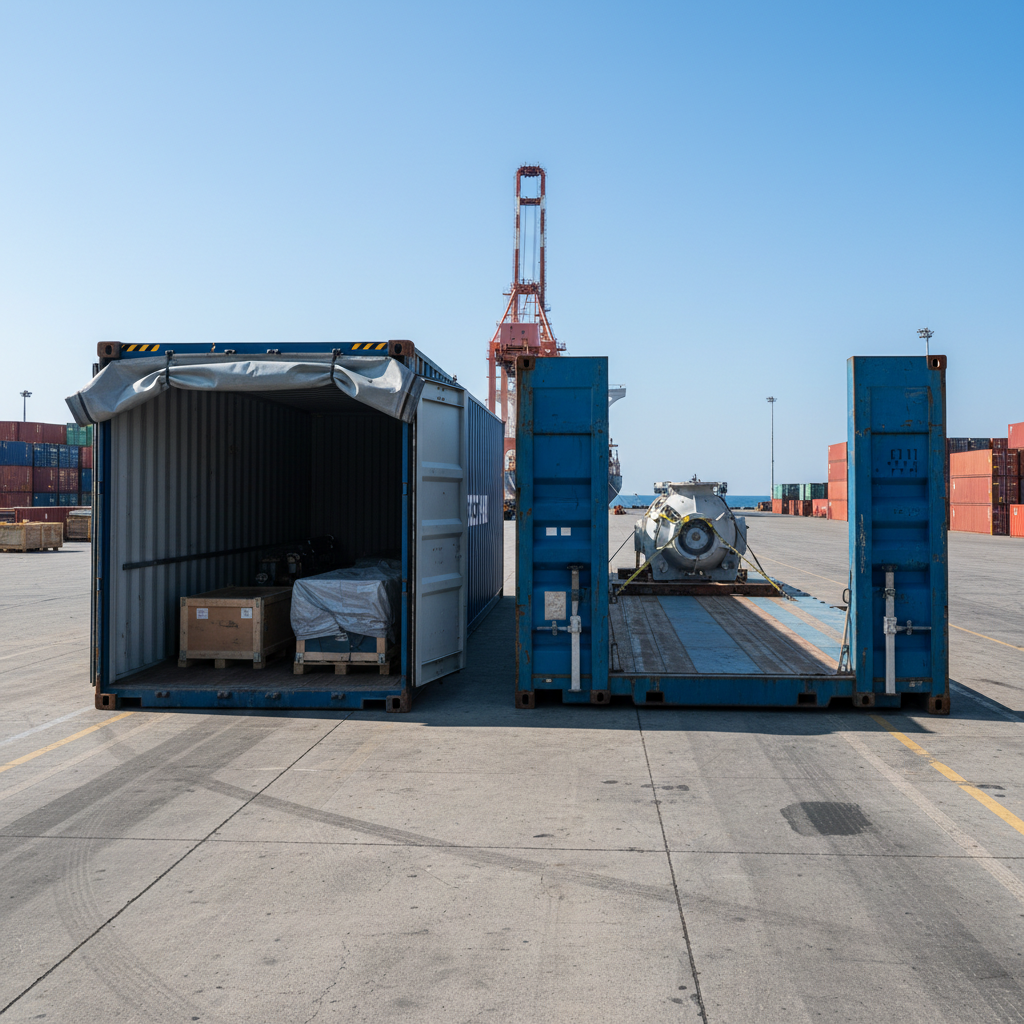
open-top-vs-flat-rack-container-for-heavy-equipment — Choosing between an open top vs flat rack container for heavy equipment can mean the difference between a successful industrial shipment and a logistical nightmare involving thousands in fines or damaged assets. While standard ISO units work for general cargo, heavy machinery often exceeds height or width limits, requiring specialized shipping containers for sale. As US infrastructure projects demand more earthmovers, turbines, and CNC machines, understanding the structural nuances of these two types is essential for 2026 logistics planning.
Table of Contents
- open-top-vs-flat-rack-container-for-heavy-equipment: The Anatomy of an Open Top Container
- The Anatomy of a Flat Rack Container
- Key Differences: Payload and Dimensions
- Securing Your Load: Chains vs Tarps
- Loading Mechanics: Overhead Cranes vs Side-Loading Logistics
- Total Cost of Ownership and Port Handling Fees
- Environmental Protection and Long-Term Storage
- Frequently Asked Questions
- Industrial Shipping Next Steps
- Explore Related Products & Guides
open-top-vs-flat-rack-container-for-heavy-equipment: The Anatomy of an Open Top Container
An open top container is essentially a standard dry van with the roof removed. It is designed for cargo that is too tall to fit through standard doors or must be loaded by a crane from above. The structural integrity is maintained by a removable lintel—the rear top header above the doors—which can be swung out or removed entirely to allow clearance for machinery.
These units usually come with a heavy-duty PVC tarp (often called a 'Tilt') secured by Tir cables. While they protect against rain, they are not structural. If your equipment is slightly taller than a 40ft high cube shipping container, the open top is your best bet, provided it doesn't exceed the lateral width of the container walls.
The Anatomy of a Flat Rack Container
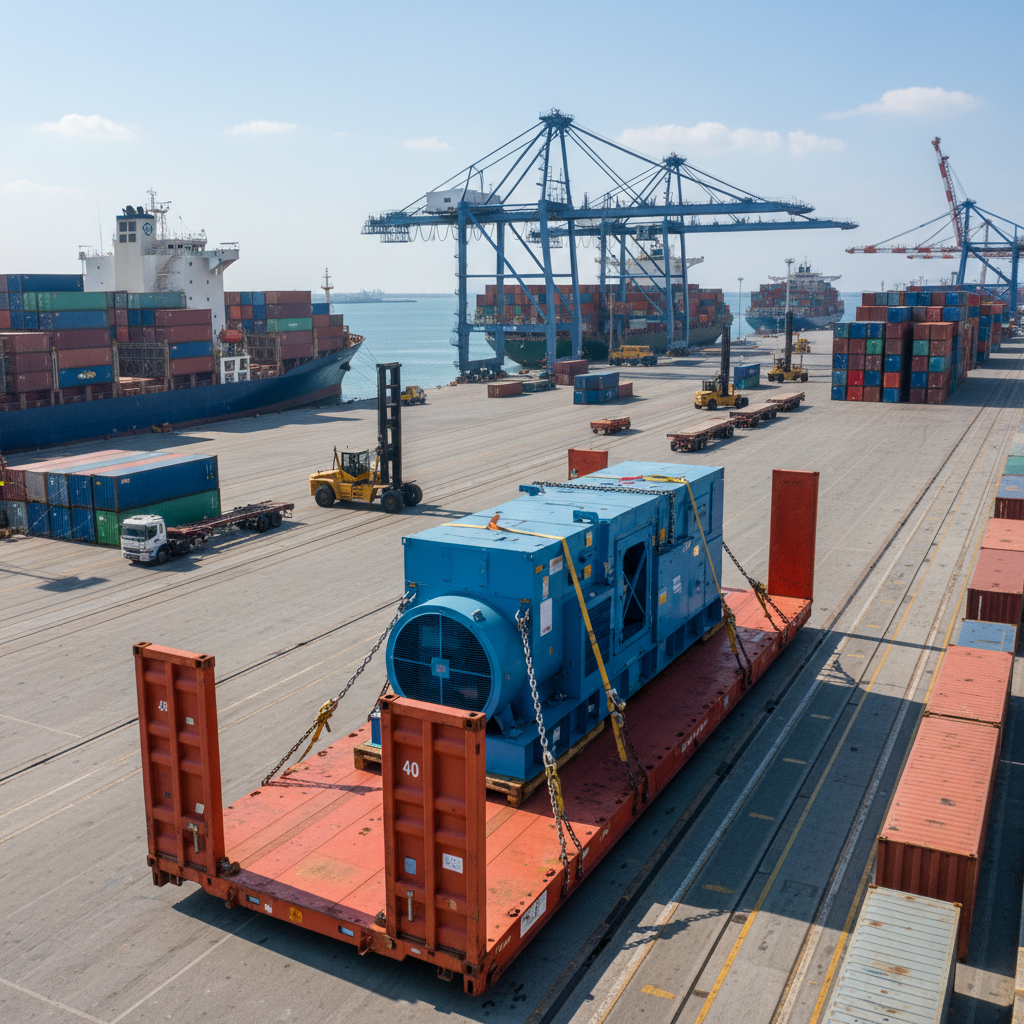
When shipping heavy machinery in containers that is both overweight and oversized, the flat rack is the undisputed champion. It consists of a high-strength steel floor and two end walls, but lacks side panels and a roof. This allows for side-loading or top-loading of cargo that is wider than 8 feet.
You will typically find two variants: collapsible flat rack vs fixed end. Collapsible units have end walls that fold down, allowing them to be stacked together when empty, significantly reducing return shipping costs. Fixed-end units are more rigid and are often preferred for the heaviest concentrated loads where floor deflection must be minimized.
| Feature | Open Top Container | Flat Rack Container |
|---|---|---|
| Max Width | Approx. 7' 8" (Internal) | Unlimited (Over-width allowed) |
| Loading Method | Top (Crane) or Rear (Door) | Top, Side, or End |
| Protection | Tarpaulin/Hard Top included | Exposed (Requires custom crating) |
| Weight Capacity | Standard ISO (up to 60k lbs) | Heavy-duty (up to 95k+ lbs) |
| Best For | Tall machinery / bulk solids | Oversized/Extra-wide equipment |
Key Differences: Payload and Dimensions
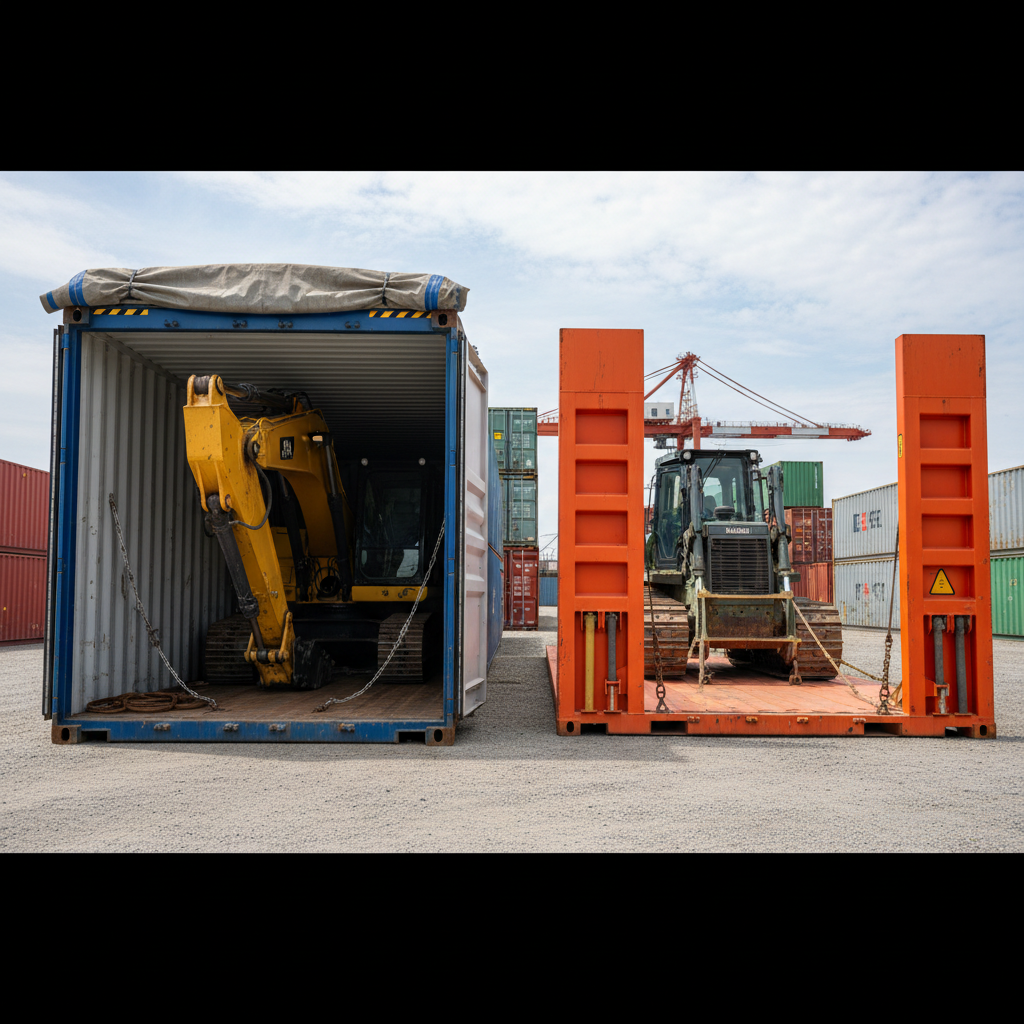
The primary factor in the open top vs flat rack container for heavy equipment debate is the 'Out of Gauge' (OOG) dimension. If your cargo fits within an 8-foot width but is 10 feet tall, an open top is ideal. If the machine is 10 feet wide, a standard 40ft used shipping container or an open top will not work; you must use a 20ft x 8ft used flat rack shipping container.
Important: Always check the CSC plate for the flat rack container weight capacity. Because these units handle concentrated loads, a 20ft flat rack often has a higher payload-per-square-foot rating than a 40ft unit to prevent the steel floor from bowing during crane lifts.
Industrial Cargo Shipping Solutions for 2026
In modern logistics, we are seeing a rise in the hard top open top container. Unlike the soft tarp versions, these feature a removable steel roof. This offers the security of a dry van with the loading flexibility of an open top, making them a popular choice for high-value sensitive machinery that requires overhead crane placement.
- Use Open Tops for: Tall engines, scrap metal, glass sheets, or machinery that fits within a 7'8" width.
- Use Flat Racks for: Excavators, oversized pipes, boat hulls, or industrial boilers.
- Check shipping container transport options to ensure your job site can handle the specialized trailers needed for OOG cargo.
- Ensure your unit is ISO 668 compliant if it is being used for international maritime freight.
Securing Your Load: Chains vs Tarps
Securing cargo in a flat rack is a specialized skill. Unlike a standard box where the walls provide some lateral containment, a flat rack relies entirely on the strength of the lashing rings. For heavy machinery, you must use grade 70 transport chains. When using an open top, the removable lintel must be properly re-installed after loading to maintain the box's structural rigidity; failing to do so can result in the container collapsing when stacked.
Tip: If you are purchasing a used flat rack, inspect the corner castings and the hinge mechanism on collapsible models. Rust in these moving parts can lead to safety failures during sea transit. Always verify the current shipping container grade price comparison to see if a refurbished unit fits your budget better than a one-trip model.
Loading Mechanics: Overhead Cranes vs Side-Loading Logistics
The choice between an open top and a flat rack is often dictated by the specific lifting equipment available at your loading dock or job site. Open top containers are designed primarily for overhead loading via a bridge crane or gantry. Because the roof header at the rear is removable, heavy machinery can be lowered vertically into the 'tub' of the container. This provides a high degree of lateral protection, as the steel corrugated walls act as a natural barrier against shifting during transit. However, this restricts you to equipment that does not exceed the internal width of approximately 7 feet 8 inches.
In contrast, flat racks are the solution for cargo that simply cannot fit through the rear doors or the top opening of a standard box. Since flat racks lack side walls, they allow for side-loading using heavy-duty forklifts or multi-point crane lifts. This is critical for wide-load equipment like bulldozers with blades attached or large industrial boilers. The absence of walls means the cargo can overhang the sides (though this incurs 'out-of-gauge' surcharges), providing a flexibility that open tops cannot match. The mechanical tradeoff is the loss of the structural rigidity provided by the side walls, placing all the stress on the reinforced floor sill.
| Loading Feature | Open Top Container | Flat Rack Container |
|---|---|---|
| Primary Loading Method | Overhead Crane / Top-down | Side-load / Forklift / Crane |
| Wall Support | Full steel side walls | None (End-walls only) |
| Over-width Capability | None (Strictly internal) | Extensive (Out-of-gauge) |
| Rigging Difficulty | Moderate (Requires tarping) | High (Requires complex lashing) |
Important: Always verify if your open top has a 'swing-out' rear header. Some older models have fixed headers that prevent horizontal sliding of tall equipment, forcing a strictly vertical crane lift which may not be possible in low-clearance warehouses.
Total Cost of Ownership and Port Handling Fees
When budgeting for heavy equipment transport, the base freight rate is only one part of the equation. Open top containers are often treated similarly to standard dry vans by terminal operators, provided the load does not exceed the height of the walls. Once the cargo protrudes above the top rail, it is classified as 'Out of Gauge' (OOG). OOG cargo occupies 'lost slots' on a container ship—spaces where other containers cannot be stacked—resulting in significant lost-slot fees that can double or triple your ocean freight costs.
Flat racks almost always incur OOG charges because they are rarely loaded with cargo that fits perfectly within the dimensions of a standard block. Furthermore, flat racks require specialized lashing certificates in many jurisdictions. A certified surveyor must inspect the chains, turnbuckles, and D-rings to ensure the load is immobilized for high-seas transit. These inspections, combined with the higher daily rental rate for flat rack equipment due to its scarcity in carrier inventories, make it the premium price option for logistics managers.
- Lost Slot Fees: Charges for the empty space around OOG cargo on the vessel.
- Lashing & Securing Labor: Professional riggers required for flat rack stability.
- Tarping Fees: Specialized heavy-duty PVC covers for open top protection.
- Equipment Imbalance Surcharges: Fees applied when shipping to ports with low demand for specialized frames.
- Crane Rental: Mobilization costs for shore-side cranes if the terminal lacks specialized reach stackers.
Tip: To minimize costs, check if your equipment can be partially dismantled (e.g., removing exhaust stacks or wheels) to fit inside an open top's internal height. Avoiding OOG status is the fastest way to save thousands on trans-Pacific lanes.
Environmental Protection and Long-Term Storage
Environmental exposure is a critical factor for sensitive heavy machinery. An open top container, once lashing is complete, is covered with a heavy-duty TIR-certified tarpaulin secured by custom cables. This provides a relatively weather-tight seal, protecting the engine components and electronics from salt spray and UV degradation. For long-term storage at a job site, the open top functions much like a standard warehouse, keeping the equipment shielded from the elements and opportunistic theft.
Flat racks offer virtually zero environmental protection on their own. Cargo is exposed to the air on all sides. While you can shrink-wrap or custom-tarp a load on a flat rack, the integrity of that wrapping is often compromised by high winds during ocean transit. If your equipment features exposed hydraulics, sensitive sensors, or non-galvanized steel, the flat rack approach necessitates a much higher investment in industrial-grade corrosion inhibitors (VCI) and heavy-duty heat-shrink plastic wrapping before it ever leaves the warehouse.
- Assess the sensitivity of the equipment's electronics and finish.
- Determine the duration of time the cargo will sit in port environments.
- Compare the cost of custom shrink-wrapping (Flat Rack) vs. standard TIR tarping (Open Top).
- Evaluate the risk of theft or vandalism at the destination port.
- Choose the container type that matches the end-user's storage capabilities.
Tip: Collapsible-end flat racks can be stacked when empty, which may reduce your return-freight costs if you are managing a circular supply chain or returning equipment to a central hub.
Container delivery near you
We deliver to every state in the lower 48 plus Alaska and Hawaii. These local pages list pricing, metro coverage and typical lead times for the areas we run into most:
- Shipping containers near me — how we source from the depot closest to your ZIP code
- Shipping containers in Florida — pricing and delivery to Jacksonville and Miami
- Shipping containers in Georgia — pricing and delivery to Atlanta and Savannah
- Shipping containers in North Carolina — pricing and delivery to Charlotte and Raleigh
- Shipping containers in Arizona — pricing and delivery to Phoenix and Tucson
- Shipping containers in Washington — pricing and delivery to Seattle and Spokane
- Shipping containers Houston — local yard stock and lead times
Frequently Asked Questions
Industrial shipping involves complex variables. Here are the most common questions we encounter when helping clients source the right equipment.
Industrial Shipping Next Steps
Selecting the right container grade and type is a significant investment. Whether you need a 20ft bumper pull container chassis to move your gear around the yard or a fleet of flat racks for a multi-state infrastructure project, our team can help you navigate the specs. If you're ready to compare inventory for your project, our team can pull matching units from our nationwide depots to ensure your heavy equipment arrives safely and legally.
Explore Related Products & Guides
Frequently Asked Questions
What is the difference between open top and flat rack containers?
An open top container has permanent side walls and a removable tarp roof, while a flat rack lacks side walls and a roof, consisting only of a heavy-duty floor and end bulkheads for oversized cargo.
When should I use a flat rack container?
Use a flat rack when your machinery is wider than 8 feet or requires side-loading with a large forklift. It is the primary choice for 'out of gauge' heavy equipment that won't fit inside a standard box.
Can you stack open top shipping containers?
Yes, as long as the removable lintel is in place and the tarp/bows are properly fitted. The structural strength is in the four corner posts, similar to a standard container.
What kind of container is best for heavy machinery?
A flat rack is generally best for the heaviest and widest machinery, while an open top is better for tall equipment that needs protection from the elements via a tarp.
How do you secure cargo in a flat rack?
Cargo is secured using heavy-duty chains, tensioners, and straps connected to lashing rings welded into the side rails of the flat rack's steel floor.
Do open top containers have tarps?
Yes, most open top containers come with a heavy-duty PVC tarp and removable roof bows that support the tarp and prevent water from pooling.