One-Trip Shipping Container vs Used Price: 2026 Savings
Compare one-trip shipping container vs used price gaps for 2026. Review cargo worthy container price trends and buy one trip containers online to save.…
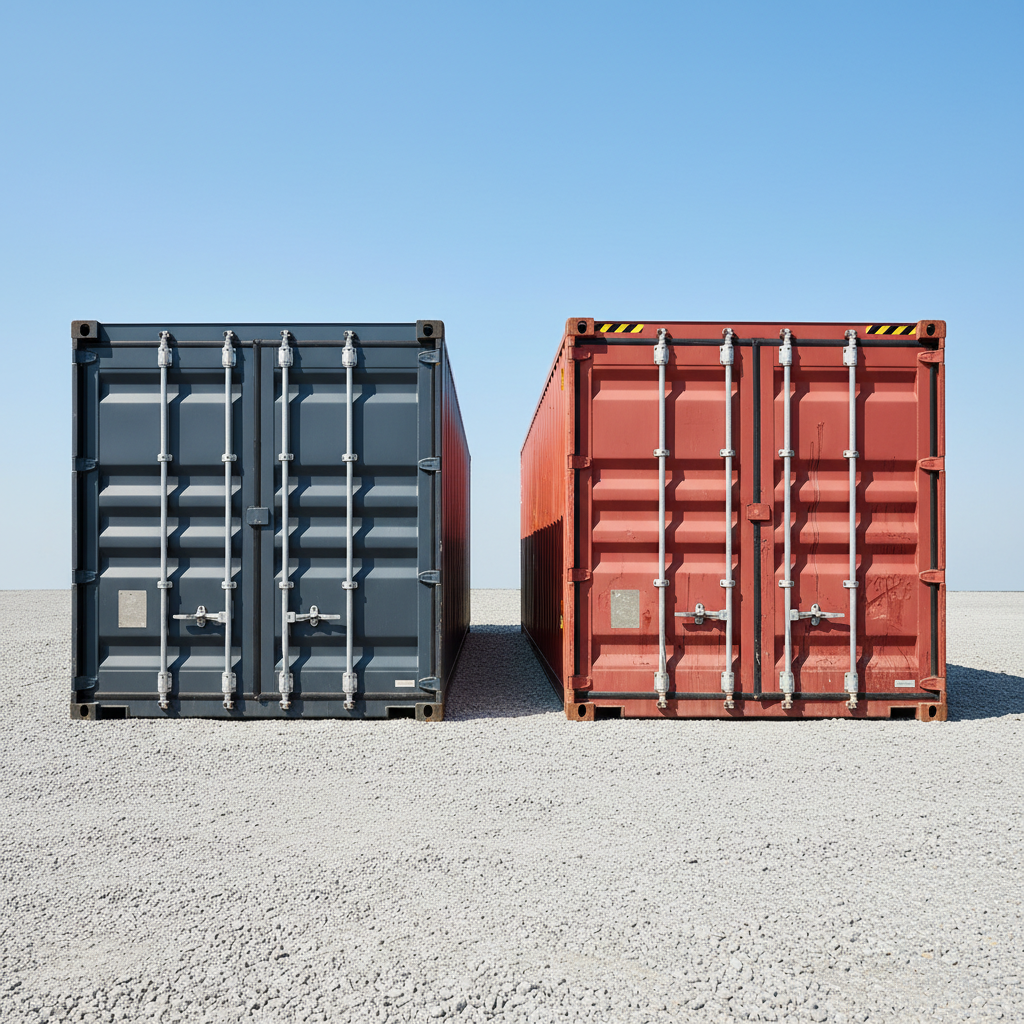
Buying a shipping container in August 2026 requires more than just looking at the bottom-line sticker price. As we approach the winter storage rush, the decision between a one-trip shipping container vs used price points becomes a balance of immediate savings versus long-term durability. A 'One-Trip' container—essentially a new unit that has carried a single load of cargo from Asia to the US—typically commands a 35% to 60% premium over used units. However, for those using a container for a home build, a high-end office, or long-term sensitive storage, that premium often pays for itself through reduced maintenance and higher resale value.
Table of Contents
- one-trip shipping container vs used price: Breaking Down One Trip Container Cost 2026
- Used Shipping Container Condition Guide: Grades and Expectations
- Shipping Container Value Depreciation and Resale
- Choosing the Best Container Grade for Storage
- Frequently Asked Questions
- Explore Related Products & Guides

one-trip shipping container vs used price: Breaking Down One Trip Container Cost 2026

In the current market, one trip container cost 2026 fluctuates based on steel indices and port congestion, but the standard ranges remain consistent for budgeting. A new 20ft one-trip unit generally sits between $3,200 and $4,500, while a shipping container value depreciation can range from $5,500 to $7,800 depending on your proximity to a major port like Houston, Savannah, or Long Beach.
The primary new shipping container vs used benefits include the lack of structural repairs, factory-fresh door seals, and the absence of toxic lead-based paints or heavy chemical floor treatments often found in older marine units. For buyers looking at shipping container value depreciation, the one-trip grade represents the 'Gold Standard' for longevity, typically offering a 25-30 year lifespan with minimal upkeep.
Used Shipping Container Condition Guide: Grades and Expectations
When you look at a used shipping container vs one trip price, you aren't just looking at one 'used' category. The industry divides these into specific tiers that dictate the cargo worthy container price and overall utility:
- Cargo Worthy (CW): Inspected and certified for international shipping. Structurally sound but will have dents and surface rust.
- Wind and Watertight (WWT): The most popular for domestic storage. No leaks, but no longer certified for sea travel.
- As-Is: May have holes, damaged floors, or compromised seals. Cheapest option but high risk.
Evaluating wwtf vs one trip containers is essential. A WWT cargo worthy container price might save you $2,500 upfront, but if you are storing moisture-sensitive electronics or documents, the cost of potential condensation damage must be factored in. For high-value contents, many customers choose to wwtf vs one trip containers to guarantee a pristine interior.
| Feature | One-Trip (New) | Used (WWT/CW Grade) |
|---|---|---|
| Average 20ft Price | $3,200 - $4,500 | $1,800 - $2,600 |
| Average 40ft HC Price | $5,500 - $7,800 | $2,400 - $3,900 |
| Physical Condition | Near Mint / Minimal Scuffs | Dents, Surface Rust, Patches |
| Expected Lifespan | 25-30 Years | 10-15 Years |
| Best Use Case | Housing, Offices, High-End Storage | Farm Equipment, Construction Site |
Important: Avoid 'As-Is' containers for anything other than scrap metal or low-value bulk storage. The repairs required to make them watertight often exceed the price gap to a Wind and Watertight (WWT) unit.
Shipping Container Value Depreciation and Resale
A critical factor in the one trip shipping container vs used price debate is residual value. Shipping container value depreciation is remarkably low compared to vehicles or machinery. A one-trip unit purchased today for $4,000 may still be worth $3,000 in five years due to the inherent value of Corten steel and the high demand for clean storage. Conversely, a used unit that is already 15 years old has a 'floor' value; it will rarely drop below its weight in scrap steel, but its utility value declines faster as rust progresses.
For business owners, we recommend reading our guide on how to purchase storage containers for business use to understand tax depreciation schedules (Section 179) which can further offset the initial higher cost of a new unit.
Choosing the Best Container Grade for Storage
The 'best' grade depends entirely on your specific application and local environment. If you are located in a high-humidity coastal region, the original factory paint on a new unit provides a superior barrier against salt-air corrosion. If you are in a dry, inland climate, a new shipping container vs used benefits may be all you need for basic tool storage.
- For Residential Sheds: One-trip is preferred for aesthetics and neighborhood HOA compliance.
- For Job Sites: Used WWT is the industry standard for building site containers.
- For Container Homes: One-trip is mandatory for most structural engineers to ensure the integrity of the ISO frame for stacking.
Regardless of the grade, ensure you have reviewed the used shipping container condition guide to avoid costly redelivery fees if the truck cannot safely drop the unit on your property.
Detailed Cost Metrics: Capex vs. Lifecycle Maintenance
Site-Specific ROI: When Used Containers Cost More in the Long Run
Logistics and Delivery Impact on Total Price
Container delivery near you
We deliver to every state in the lower 48 plus Alaska and Hawaii. These local pages list pricing, metro coverage and typical lead times for the areas we run into most:
- Shipping containers near me — how we source from the depot closest to your ZIP code
- Shipping containers in Florida — pricing and delivery to Jacksonville and Miami
- Shipping containers in North Carolina — pricing and delivery to Charlotte and Raleigh
- Shipping containers in Arizona — pricing and delivery to Phoenix and Tucson
- Shipping containers in Washington — pricing and delivery to Seattle and Spokane
Frequently Asked Questions
Understanding the nuances of container conditions helps you make a confident investment.
- Is a one trip container worth the extra cost? Yes, if aesthetics, longevity, or conversion (housing/office) are priorities. The lack of rust and odors makes it far superior for inhabitable spaces.
- How much cheaper is a used shipping container? On average, a used unit is $1,200 to $2,500 cheaper than its one-trip counterpart, depending on size and local depot availability.
- What is the life expectancy of a one trip container? With proper ground prep and occasional paint touch-ups, a one-trip unit can last 30+ years in a stationary environment.
- Do used shipping containers hold their value? Yes, because they are made of Corten steel. The market for used containers is very liquid, and they often resell for 60-80% of their purchase price years later.
- Should I buy a new or used container for a shed? If it is visible to neighbors, a one-trip unit looks much cleaner. If it's tucked away on a farm, a used unit provides the same utility for less money.
- What does one trip mean for shipping containers? It means the container was manufactured in Asia and made exactly one journey across the ocean carrying cargo before being sold into the domestic market.
Deciding on the right unit involves balancing your immediate budget with the long-term goal of your project. If you're ready to compare inventory for your project, our team can pull matching units from our nationwide depots and provide current real-time photos of the exact containers available in your region. Whether you need a rugged new shipping container vs used benefits or a pristine one-trip for a custom build, we ensure the delivery process is as smooth as the steel on our new units.
Explore Related Products & Guides
Frequently Asked Questions
Is a one trip container worth the extra cost?
Yes, especially for container homes, offices, or long-term storage of sensitive goods. You save money on repairs, painting, and floor remediation that used units often require.
How much cheaper is a used shipping container?
Typically, you will save between $1,500 and $2,800 by choosing a used WWT or Cargo Worthy container over a new one-trip unit, depending on the current 2026 market supply.
What is the life expectancy of a one trip container?
A one-trip container used for stationary storage can easily last 25 to 30 years with minimal maintenance, as it starts its life with zero structural fatigue or deep-seated rust.
Do used shipping containers hold their value?
Extremely well. Because they are portable and have high utility in the construction and agricultural sectors, used containers typically retain a significant portion of their purchase price for resale.
Should I buy a new or used container for a shed?
For backyard use, one-trip is often preferred for its clean appearance and ease of painting. For agricultural or industrial use where aesthetics don't matter, a used unit is more cost-effective.
What does one trip mean for shipping containers?
It refers to a container that is 'like new.' It was built in a factory (usually overseas), loaded with cargo once to pay for its transit, and then sold at its destination port.
Are used containers safe for storage?
Yes, provided they are 'Wind and Watertight' (WWT). However, they may have a 'marine smell' or flooring treatments that aren't ideal for storing fabrics or food items without modification.
Can I finance a one-trip container?
Yes, many buyers use financing to bridge the price gap, allowing them to get a higher-quality one-trip unit for a manageable monthly payment rather than settling for a lower-grade used unit.