Open Top Container Buying Guide for Oversized Loads
Need an open top container for oversized loads? Compare sizes, load limits, inspections, delivery planning, and when to choose flat racks.
Open Top Container Buying Guide for Oversized Loads
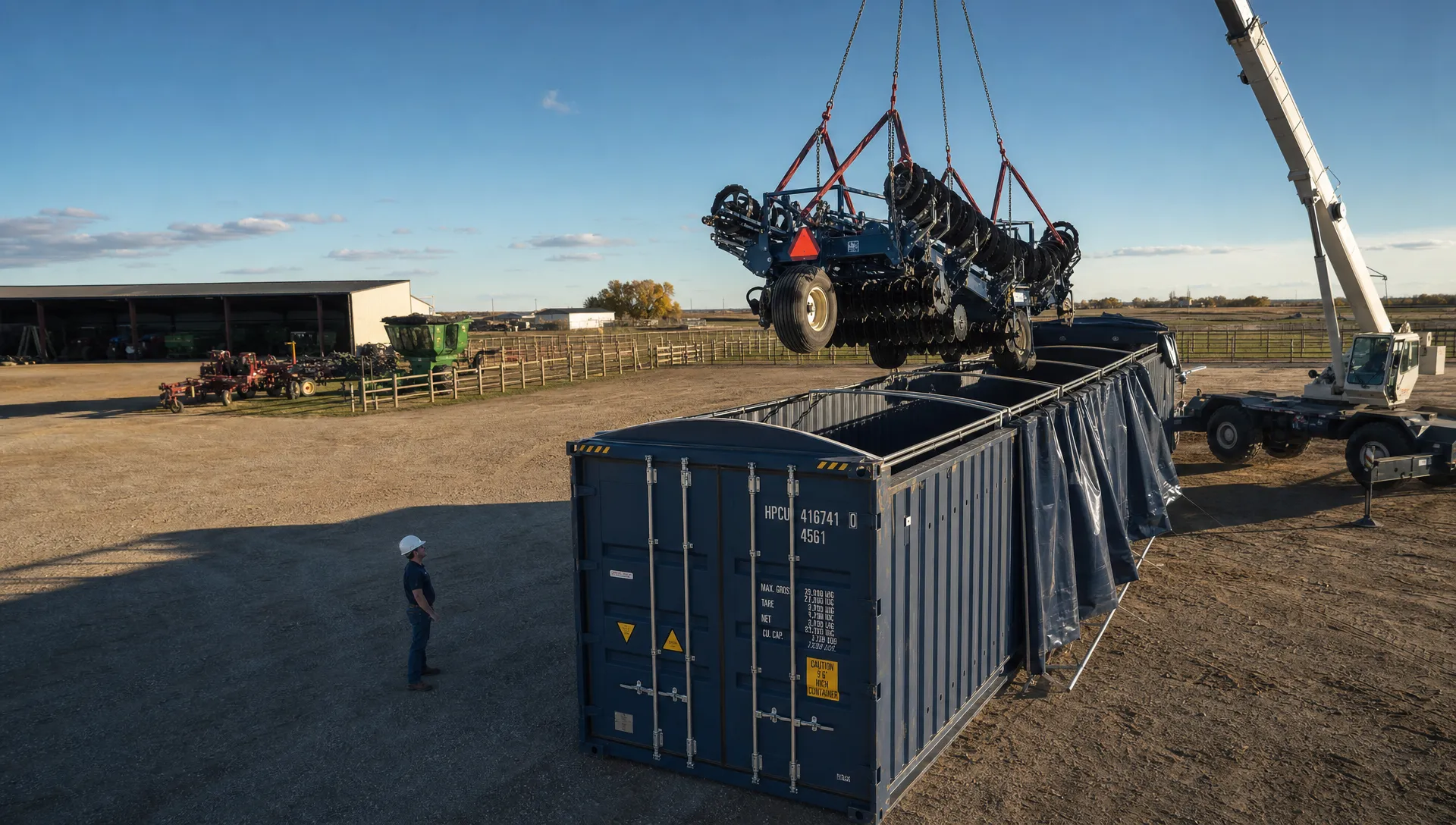
An open top container is the right choice when your cargo is too tall, too heavy, or too awkward to load through standard container doors. Instead of a fixed steel roof, it uses removable roof bows and a tarpaulin, so cranes, forklifts, or loaders can place oversized machinery, pipe, stone, scrap, farm equipment, and industrial parts from above. For buyers, the key is simple: match the container length, payload capacity, roof opening, condition grade, and delivery plan to the exact load before you pay.
Quick Answer: Buy an open top container when your load must be loaded from above but still needs container side walls, corner castings, forklift pockets, and a covered top. If the cargo is wider than 8 feet, has extreme point loads, or needs side loading, compare a flat rack before you buy.
Key Takeaways
- Open top containers are best for crane-loaded and over-height cargo, including equipment, bulk materials, steel, stone, and large industrial parts.
- Most buyers compare 20ft, 40ft, and 40ft high cube open top containers. Always verify the exact unit specs on the CSC plate or seller spec sheet.
- A tarpaulin top helps protect cargo, but it is not the same as a welded steel roof. For long-term dry storage, inspect the tarp, bows, seals, and drainage.
- Flat racks are better when the load is too wide, needs side access, or cannot fit inside container walls.
- Delivered cost matters more than sticker price. Ask for condition grade, inspection details, delivery method, and permit requirements before you buy.
What Is an Open Top Container?
An open top container is an ISO-style cargo container with solid steel side walls, end doors, corner castings, a steel floor structure, removable roof bows, and a removable tarp instead of a fixed roof. It is still a conex box or intermodal container, but it is built for cargo that cannot be loaded through the rear doors alone.
The roof opening lets a crane place cargo straight down into the container. Many open top units also have a removable door header above the double doors. That makes it easier to load tall equipment, long bundles, or irregular freight without fighting the doorway.
Open top containers are common in construction, mining, agriculture, recycling, machinery transport, and industrial storage. They are also useful for some container conversion projects where top access matters, though most shipping container home builds still start with standard or high cube containers.
The main parts to check are simple:
- The tarpaulin, which covers the roof opening
- The roof bows, which support the tarp
- The removable door header, if fitted
- The lashing rings, which secure cargo
- The floor, crossmembers, walls, and corner posts
- The CSC plate, if the container will be used for freight
International container dimensions and ratings are based on standards such as ISO 668 for Series 1 freight containers. In real buying situations, though, you should still verify the exact unit. Manufacturers, age, modifications, and repair history can change usable dimensions and tare weight.
Open Top Container Sizes, Ratings, and Load Limits
Open top containers are most often found in 20ft and 40ft lengths. A 40ft high cube open top is also available in some markets and gives more internal height. The best size depends on three numbers: load length, load height, and total loaded weight.
A 20ft open top is easier to place on tight jobsites and farms. It can be a strong fit for dense loads because the payload is often similar to a 40ft unit, but with a shorter footprint. A 40ft open top gives more length for pipe, lumber, steel bundles, long machinery, and bulkier cargo.
If you are still comparing container lengths for storage, builds, or site work, this standard container size guide is a useful starting point before you narrow the choice to open top models.
Typical dimensions vary by manufacturer, so treat the table below as a planning guide, not a final spec sheet.
| Container type | Exterior size | Typical internal size | Typical roof opening | Typical tare weight | Common max gross rating |
|---|---|---|---|---|---|
| 20ft open top | 20' x 8' x 8'6" | About 19'4" x 7'8" x 7'8" | About 17'9" x 7'3" | About 5,000 to 5,300 lb | Often 67,200 lb |
| 40ft open top | 40' x 8' x 8'6" | About 39'5" x 7'8" x 7'8" | About 38' x 7'3" | About 8,300 to 8,800 lb | Often 67,200 lb |
| 40ft high cube open top | 40' x 8' x 9'6" | About 39'5" x 7'8" x 8'8" | About 38' x 7'3" | About 8,800 to 9,300 lb | Often 67,200 lb |
The payload capacity is the max gross rating minus the tare weight. For example, if the unit has a 67,200 lb max gross rating and a 5,200 lb tare weight, the payload capacity is about 62,000 lb. That does not mean every load should be placed anywhere on the floor. Heavy point loads need dunnage, cribbing, or steel plates to spread the weight.
The CSC plate is important if the container will move loaded in intermodal service. It lists ratings such as maximum gross weight, tare weight, payload, and stacking or racking information. If you only need static storage on private property, a CSC plate may be less important than wind and watertight condition. Still, it is a strong sign that the unit was built and rated as a freight container.
Open Top vs Flat Rack vs Standard Container
Oversized loads often lead buyers to compare three container types: open top, flat rack, and standard dry container. Each one solves a different problem.
A standard dry container has a fixed roof. It is secure, common, and usually easier to source. It is the best fit for tools, pallets, household goods, packaged materials, and general jobsite storage. But it is a poor fit when cargo is too tall for the door or must be crane-loaded.
An open top container keeps the side walls and end doors but removes the fixed roof. It is better for top loading and over-height cargo that still fits within the width of the container.
A flat rack has no fixed side walls and usually has end walls only. It is better for cargo that is too wide, too irregular, or needs side loading. If your load may be wider than a standard container footprint, compare options in this flat rack shipping container guide before choosing an open top.
| Container type | Best for | Main advantage | Main limitation |
|---|---|---|---|
| Standard dry container | Secure storage, palletized freight, tools, household goods | Most weather-secure and widely available | Rear-door loading only, fixed roof |
| Open top container | Tall cargo, crane-loaded machinery, scrap, stone, pipe, equipment | Top loading with side wall protection | Tarp roof needs inspection and maintenance |
| Flat rack container | Wide machinery, vehicles, heavy irregular freight | Side and top access with no side walls | Less enclosed protection and more securement planning |
| High cube container | Taller storage, builds, container conversion | Extra 1 foot of exterior height | Still limited by fixed roof unless it is an open top high cube |
The simplest rule is this: choose an open top if the load fits inside the container walls but needs top loading. Choose a flat rack if the load does not fit between the walls.
How to Choose the Right Open Top Container
Buying the right open top container starts with the load, not the container. Measure the cargo first. Then choose a unit that gives enough working room for loading, securement, and safe delivery.
Start with load dimensions
Measure the longest, widest, and tallest points of the cargo. Do not rely on brochure dimensions for machinery. Attachments, handles, guards, tires, buckets, and exhaust stacks often add inches that matter.
For over-height cargo, remember that the container may accept the load, but road transport may still need permits. A load that sticks above the container can create height issues on public roads, under bridges, near power lines, and at the delivery site.
Check weight and weight distribution
Total weight is only part of the story. You also need to know where that weight sits. A 15,000 lb machine with four small steel feet creates a very different floor load than a 15,000 lb crate spread over a large base.
Use hardwood dunnage, cribbing, steel plates, or engineered supports when needed. Never assume the plywood floor can handle a concentrated point load without support. If the equipment has outriggers or tracks, ask a qualified rigging professional how to spread the load.
Match the container grade to the job
A one-trip open top container is usually the cleanest option. It has made one cargo trip and should have less wear, fewer dents, and a cleaner floor. It is a good fit when appearance matters or when the container will become part of a customer-facing site, commercial project, or high-value storage plan.
Used open top containers can be the better value for construction, farm, scrap, or industrial use. Look for clear condition language. WWT means wind and watertight. CWO means cargo-worthy, which matters more if the unit must carry freight and meet transport needs.
Refurbished units may include repairs, paint, or replacement tarp components. Ask what was repaired and what was only cosmetic. A fresh coat of paint does not fix a bent frame, soft floor, bad tarp, or damaged corner post.
Choose 20ft or 40ft based on the load path
A compact but heavy item often belongs in a 20ft open top. The shorter length is easier to deliver and position. It can also be easier to load in tight yards.
Longer cargo often needs a 40ft open top. Pipe, steel beams, lumber, irrigation equipment, long tanks, and bundled materials need length more than payload.
For a deeper look at smaller units, this guide to 20ft open top container uses and limits explains when a 20ft unit makes sense and when it becomes too limiting.
Delivery, Permits, and Site Prep
Delivery planning can make or break an open top container purchase. The container may be right, but the site still has to support the truck, unloading method, and cargo handling plan.
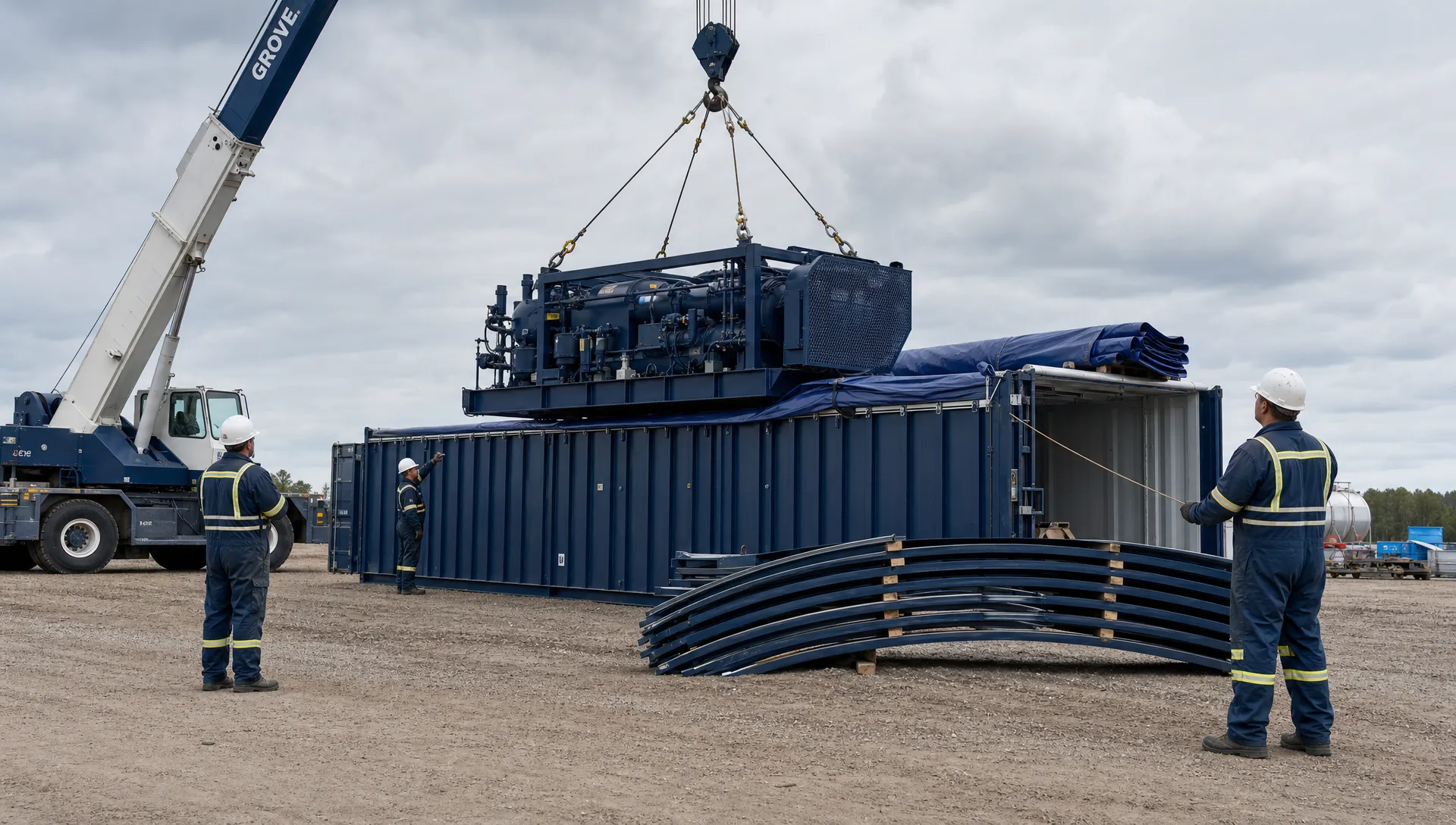
Most empty 20ft and 40ft containers are delivered by tilt-bed truck, roll-off trailer, flatbed, or side-loader, depending on the location and equipment available. Open top containers with over-height cargo may need different transport planning. If the cargo is already loaded, the route, height, weight, and securement requirements become more complex.
Federal rules for commercial cargo securement are outlined by the Federal Motor Carrier Safety Administration. Oversize and overweight permits are usually handled at the state or local level, and requirements vary. If the load will move on public roads, confirm the route, permits, escorts, and securement plan before pickup.
Site prep is also important. A loaded container can be far heavier than an empty conex box. Soft soil, steep driveways, tight turns, low branches, and overhead wires can stop a delivery fast.
Before delivery, confirm these details:
- The truck has enough straight-line clearance to place the container
- The ground is level, firm, and accessible in wet weather
- There are no low power lines, roof eaves, branches, or gates in the way
- The container doors have enough swing space
- A crane, forklift, or loader is scheduled if top loading is needed onsite
- The final location supports the full loaded weight
If you need a verified unit delivered to a farm, jobsite, shop yard, or remote property, you can review current container options from Outback Shipping Containers and request a current quote with delivery included. Outback Shipping Containers serves all 50 states and can help plan delivery logistics before you commit.
Think through tarp access and drainage
An open top container needs room above it. If you plan to remove the tarp often, do not place the unit under a low roof, tree canopy, or tight overhang.
Water management also matters. The tarp should shed water, not hold it like a pond. Sagging tarps, missing bows, loose cables, and poor tension can lead to leaks. If the container will be used for storage, set it level or with slight drainage in mind and inspect the tarp after storms.
Plan for loading safety
Top loading requires coordination. The crane operator, rigger, signal person, and ground crew need a clear plan. The container should sit on stable ground before the load is placed inside. No one should stand under a suspended load or inside a crush zone.
Heavy cargo should be centered and secured. Use rated tie-downs, blocks, braces, and lashing points. Do not weld new brackets to structural parts unless the work is designed and performed by qualified professionals.
Inspection Checklist Before You Buy
Open top containers have all the normal inspection points of a standard shipping container, plus extra roof components. A low price can get expensive if the tarp leaks, the bows are missing, or the door header is damaged.
Ask for recent photos or inspect the exact unit if possible. Stock photos are not enough. You want to see the actual container that will be delivered.
Use this checklist before you approve the purchase:
- Tarp condition: Look for holes, patches, brittle material, torn edges, and missing cable or grommet hardware.
- Roof bows: Confirm all bows are present, straight, removable, and seated correctly.
- Door header: Check that the header is removable, straight, and locks back into place.
- Doors and gaskets: Open and close the doors. Look for bent locking rods, torn seals, and heavy rust at the bottom.
- Floor: Check for soft spots, oil saturation, major gouges, rot, and signs of unsafe repairs.
- Crossmembers: Look underneath for corrosion, bends, cracks, and poor patches.
- Corner posts and castings: These carry major loads. Avoid units with serious structural damage here.
- Side walls: Dents are common, but deep creases, holes, and heavy corrosion can affect function.
- CSC plate: If you need cargo-worthy use, confirm the plate, ratings, and inspection status.
- Condition grade: Get the grade in writing, such as one-trip, CWO, WWT, used, or refurbished.
If you are comparing multiple sellers, the same inspection logic applies across all cargo container types. This guide on how to compare freight containers before you buy covers condition, certification, delivery access, and true delivered cost in more detail.
Do not skip delivered cost
A cheap open top container is not cheap if delivery, permits, repairs, or site equipment double the real cost. Ask for a quote that separates the container cost, delivery, taxes, crane or forklift needs, and any special transport requirements.
Open top containers can cost more than standard dry containers because they are less common and have more specialized parts. Prices also change by size, condition, location, availability, steel market conditions, and delivery distance. For that reason, current delivered quotes are more reliable than old price ranges found online.
Watch for common buying mistakes
The most common mistake is buying based on length alone. A 40ft open top may have enough length, but not enough payload, floor support, or delivery access. A 20ft open top may handle the weight, but not the loading angle or roof opening.
Another mistake is treating the tarp like a steel roof. It is not. A tarp can protect cargo, but it needs tension, intact hardware, and routine checks. If the cargo must stay dry for months or years, inspect the tarp closely and consider whether a standard WWT container would serve better.
A third mistake is ignoring local rules. Zoning, permits, and site placement rules vary by city, county, and state. This is especially true if the container will stay on a residential lot, become a workshop, or be modified into a structure. Always check with local authorities before placing or modifying a container.
FAQ
What is an open top container used for?
An open top container is used for cargo that must be loaded from above or is too tall for a standard container door. Common uses include machinery, scrap metal, stone, steel, pipe, farm equipment, construction materials, and industrial parts. It keeps side wall protection while allowing crane loading.
How much weight can an open top container carry?
Many 20ft and 40ft open top containers have a common max gross rating around 67,200 lb, but the exact payload depends on tare weight and the specific unit. Always check the CSC plate or spec sheet. Also check weight distribution, because heavy point loads can damage floors without support.
Is an open top container waterproof?
An open top container can be wind and watertight when the tarp, roof bows, seals, and hardware are in good condition. Still, a tarp roof is not the same as a welded steel roof. For long-term storage, inspect the tarp often and make sure water cannot pool on top.
Can you ship over-height cargo in an open top container?
Yes, open top containers are often used for over-height cargo, but the load may require special handling, route planning, and permits. Ocean, rail, and road carriers may apply different limits and charges. Confirm the allowed height, securement method, and permit needs before loading.
What is the difference between open top and flat rack containers?
An open top container has side walls and a removable tarp roof. It is best when cargo fits within the walls but needs top loading. A flat rack has no full side walls and is better for wide, irregular, or side-loaded cargo that cannot fit inside a standard container width.
Can I use an open top container for storage?
Yes, but it depends on what you are storing. Open top containers work well for bulky materials, scrap, machinery, and items loaded by crane. For household goods, tools, documents, or moisture-sensitive inventory, a standard wind and watertight container with a solid steel roof is often better.
If you are buying an open top container for oversized loads, start with the cargo measurements, then confirm the exact unit specs, condition grade, and delivery plan. Outback Shipping Containers supplies new, used, and specialty containers nationwide, including inspected wind- and watertight units. When you are ready, request a current quote from Outback Shipping Containers so the container, delivery method, and site needs are matched before you buy.