Cost of a Storage Container in 2026
Cost of a storage container in 2026: compare 10ft, 20ft, 40ft, delivery, site prep, rent vs buy, and buying tips.
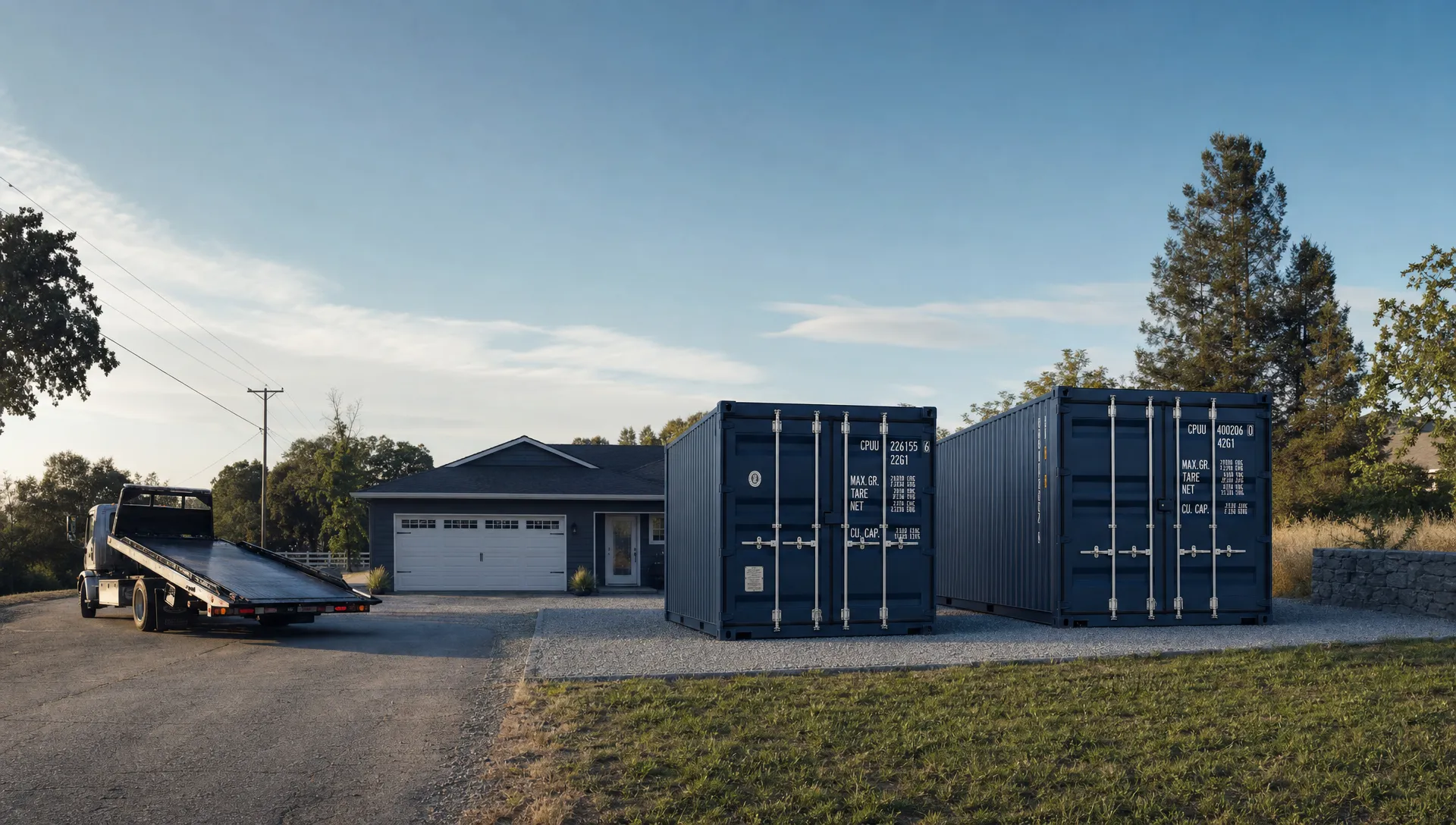
Cost of a Storage Container in 2026
The cost of a storage container in 2026 usually ranges from about $2,000 to $8,500 before delivery, depending on size, condition, height, location, and modifications. A used 20ft wind and watertight unit often costs less than a new one-trip 40ft high cube. Delivery, site prep, taxes, and add-ons can add hundreds or thousands more.
Quick Answer: Most buyers should budget $3,000 to $6,500 all-in for a basic delivered storage container. Choose a 20ft unit for tight sites and a 40ft unit for the lowest cost per square foot.
Key Takeaways
- Used storage containers are cheaper upfront, while new one-trip containers offer cleaner interiors, newer doors, and less wear.
- A 40ft container often gives the best storage value per square foot, but it needs more site access and delivery room.
- Delivery can change the final price fast, especially for rural properties, farms, ranches, and remote job sites.
- WWT certification is usually enough for static storage, while CWO and CSC matter more if the container will move loaded cargo.
- Buying often beats renting if you need the container for more than 12 to 24 months.
Cost of a Storage Container in 2026: Typical Price Ranges
A storage container is often the same structure as a cargo container, conex box, ISO container, or intermodal container. The main difference is how you use it. Instead of moving freight, you use it for tools, equipment, inventory, furniture, hay, feed, seasonal goods, or construction materials.
The ranges below reflect common 2026 retail market pricing in the United States before delivery, taxes, crane service, permits, and site prep. Actual prices vary by port market, inland distance, inventory, condition, and seller.
| Container size and type | Typical 2026 price range | Common storage use | Notes |
|---|---|---|---|
| 10ft used storage container | $2,500 to $4,500 | Backyard tools, small business inventory | Less common, often costs more per square foot |
| 10ft new one-trip container | $3,800 to $6,500 | Residential storage, retail, compact sites | Clean, compact, easy to place |
| 20ft used WWT container | $2,000 to $3,800 | Job sites, farms, garages, remodels | Strong balance of price and access |
| 20ft new one-trip container | $3,000 to $5,500 | Cleaner storage, business use, conversion base | Better appearance and less wear |
| 40ft used WWT container | $2,800 to $5,000 | Bulk storage, ranch equipment, commercial stock | Best value per square foot in many markets |
| 40ft new one-trip container | $4,800 to $7,500 | Long-term storage, clean inventory, conversions | Large capacity with newer condition |
| 40ft high cube used container | $3,200 to $5,800 | Tall equipment, shelving, pallet storage | Adds about 1 ft of height |
| 40ft high cube one-trip container | $5,500 to $8,500 | Business storage, container conversion, workshops | Popular for modified builds |
A 20ft container is the safe choice for many first-time buyers. It fits more residential driveways, small farms, and tight job sites. A 40ft container costs more upfront but often stores twice as much for a smaller jump in price.
If you are comparing container prices beyond storage use, Outback Shipping Containers also has a broader guide on how much a shipping container is in 2026, including new, used, high cube, and specialty units.
What Drives the Final Price?
Storage container pricing is not one flat national number. Two buyers can order the same 20ft WWT container and pay different final prices because one lives near a major depot and the other lives 200 miles inland.
The biggest cost drivers are size, condition, container height, supply in your region, delivery method, and whether you need modifications.
Size and capacity
A 10ft container costs less than a 20ft in total dollars, but it may cost more per square foot. That is because 10ft units are less common. Many are cut down from 20ft containers, which adds labor.
A 20ft container gives about 160 square feet of footprint space. A 40ft container gives about 320 square feet. For pure storage, the 40ft unit often wins on value if your site can handle it.
Condition: new, used, WWT, or CWO
Condition has a major effect on price. A new one-trip container has made one cargo trip from the factory. It usually has cleaner flooring, better paint, smoother doors, and fewer dents.
Used containers cost less, but they show normal shipping wear. Dents, surface rust, patches, faded paint, and floor scuffs are common. For storage, the key is not cosmetic perfection. The key is whether the unit is structurally sound and keeps out water.
| Condition grade | What it means | Best for | Price impact |
|---|---|---|---|
| New one-trip | Used for one ocean trip, usually newest available | Long-term storage, clean goods, conversions | Highest standard container price |
| CWO, cargo worthy | Suitable for cargo transport when properly certified | Freight, storage, job sites | Mid to higher used price |
| WWT, wind and watertight | Keeps out wind and water, usually not certified for loaded shipping | Static storage | Common budget choice |
| As-is | No reliable leak or structural assurance | Noncritical use only | Lowest price, highest risk |
For most homeowners, contractors, and farm operators, a WWT container is the minimum standard worth considering. For international shipping, ask about CSC status. The International Maritime Organization explains the safety framework behind container approval under the International Convention for Safe Containers.
Height: standard vs high cube
A standard shipping container is 8 ft 6 in tall on the outside. A high cube is 9 ft 6 in tall. That extra foot matters if you plan to store tall equipment, install shelving, add insulation, or convert the container into a workshop or office.
High cube containers usually cost more because they are popular and useful. For storage alone, the upgrade makes sense when vertical space helps you avoid buying a second unit.
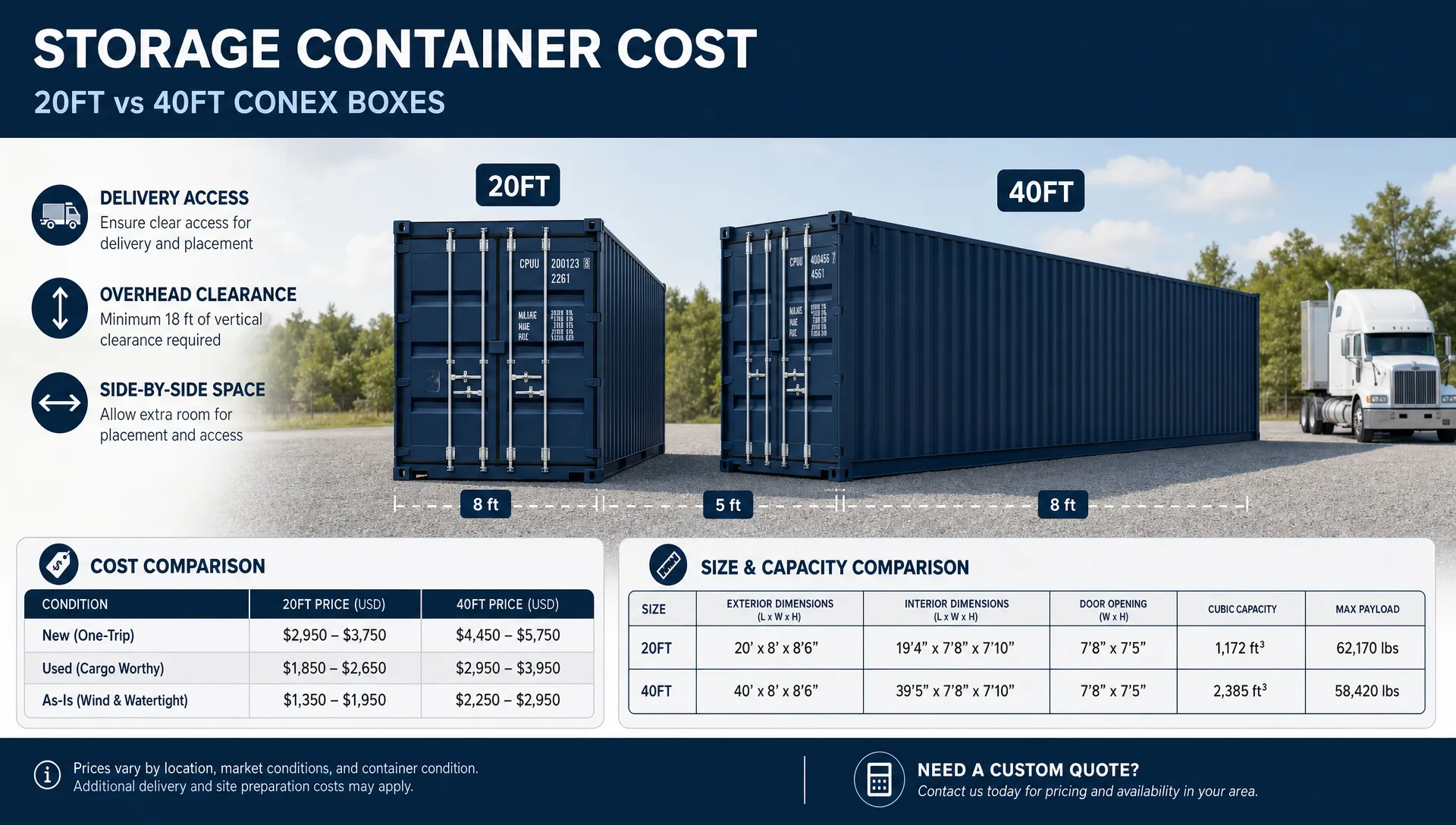
20ft vs 40ft Storage Container Cost Comparison
The 20ft vs 40ft decision is one of the most important parts of buying a storage container. It affects price, delivery, placement, usable space, and future resale value.
A 20ft unit is easier to place. A 40ft unit gives better cost per square foot. Neither is always better. The right choice depends on your site and storage plan.
| Feature | 20ft standard container | 40ft standard container | 40ft high cube container |
|---|---|---|---|
| Exterior length | 20 ft | 40 ft | 40 ft |
| Exterior width | 8 ft | 8 ft | 8 ft |
| Exterior height | 8 ft 6 in | 8 ft 6 in | 9 ft 6 in |
| Footprint | About 160 sq ft | About 320 sq ft | About 320 sq ft |
| Common 2026 used price | $2,000 to $3,800 | $2,800 to $5,000 | $3,200 to $5,800 |
| Used cost per sq ft | About $12.50 to $23.75 | About $8.75 to $15.63 | About $10.00 to $18.13 |
| Placement difficulty | Easier | Harder | Harder, plus height clearance |
| Best use | Residential, tools, job sites | Bulk storage, farms, businesses | Tall equipment, shelving, conversions |
A 20ft container works well for remodels, garage overflow, tools, small equipment, and backyard storage. A 40ft container works better for contractors, ranches, property managers, and businesses with pallets or bulky inventory.
If cost per square foot is your main concern, look hard at the 40ft option. If access is tight, choose 20ft. If you are still deciding, this 20ft vs 40ft container price guide breaks down size, delivery, and value in more detail.
Delivery, Site Prep, and Hidden Costs to Budget For
The sticker price is only part of the total cost. Delivery and setup often decide whether a container purchase stays on budget.
A local delivery may cost a few hundred dollars. Longer rural delivery, difficult access, crane placement, ferry routes, mountain roads, or failed delivery attempts can cost much more. The most accurate quote will include the container, delivery method, mileage, and site conditions.
Common delivery factors
Tilt-bed delivery is common for 20ft and 40ft storage containers. The truck tilts the bed, slides the container down, and pulls away. This requires a straight, firm approach with enough room in front of the final placement area.
Flatbed delivery may be used when a forklift, crane, or other equipment will unload the container. This can cost more, but it helps on sites where a tilt-bed truck cannot safely place the unit.
Expect the carrier to ask about:
- Driveway width and road access
- Overhead wires, branches, gates, and rooflines
- Ground firmness and slope
- Space for the truck to pull forward after placement
- Whether the container doors should face a certain direction
For a deeper look at mileage, base fees, and truck types, see Outback Shipping Containers' guide to shipping container delivery cost per mile in 2026.
Site prep costs
Do not place a storage container directly on soft soil if you can avoid it. Poor drainage can lead to sinking, twisted doors, and faster corrosion. A level, well-drained pad protects the container and makes the doors easier to use.
Basic site prep may include grading, gravel, railroad ties, concrete blocks, piers, or a slab. A simple gravel pad is enough for many storage uses. A workshop, office, or container conversion may need a more permanent foundation.
| Site item | Typical purpose | Budget note |
|---|---|---|
| Gravel pad | Drainage and leveling | Often the best low-cost option |
| Concrete blocks or piers | Raise container off the ground | Helps airflow under the container |
| Concrete slab | Long-term, heavy-use placement | Higher cost but more stable |
| Crane or forklift | Placement where trucks cannot unload | Can add a large one-day cost |
| Permit review | Local zoning or building rules | Varies by city, county, and HOA |
Permit rules vary by state, county, city, and property type. Some areas treat storage containers as temporary equipment. Others treat them as accessory structures. Always ask your local building department before delivery, especially if the container will stay long term or be modified.
Rent vs Buy: Which Costs Less for Storage?
Buying is usually better when you need storage for more than a year or two. Renting can make sense for short projects, seasonal overflow, temporary construction storage, or businesses that need flexibility.
The break-even point depends on local rental rates, delivery fees, pickup fees, and how long you need the unit. Rental charges may look low each month, but delivery, pickup, damage fees, and minimum rental terms can change the math.
| Scenario | Buying may fit better | Renting may fit better |
|---|---|---|
| Home remodel | If storage will last over 12 months | If storage lasts 1 to 6 months |
| Construction site | If your company uses containers often | If the project is short and mobile |
| Farm or ranch | If storage is permanent or seasonal every year | If you need temporary harvest overflow |
| Retail inventory | If you need stable long-term capacity | If demand spikes for a short period |
| Remote land | If delivery is expensive and repeated rentals waste money | If you are unsure the site will work |
Outback Shipping Containers supplies containers for purchase nationwide, while LeaseLink Containers is the leasing arm for customers who need a rental or leasing structure. If you are unsure, compare your total rental cost over the full timeline, not just the monthly payment.
As a rule of thumb, add every rental charge into one number. Include delivery, pickup, monthly rent, taxes, insurance, lockbox, and damage charges. Then compare that number with the delivered purchase price and likely resale value.
If you want a full side-by-side cost model, this guide to renting vs buying shipping containers walks through break-even timing and cost tradeoffs.
How to Choose the Right Storage Container Without Overpaying
The cheapest unit is not always the lowest-cost unit. A bargain container with bad doors, active leaks, weak flooring, or poor placement access can cost more after repairs.
Start with the job the container must do. A homeowner storing furniture needs dry space and easy doors. A contractor needs security and job-site durability. A farm operator may need ventilation, rodent resistance, and enough width for equipment access.
Inspect the basics before you buy
Ask for clear photos or inspect the container in person when possible. Look at the roof, door gaskets, locking rods, corner posts, floor, underside, and interior light leaks.
A simple inspection check helps you avoid common mistakes:
- Check for daylight inside with the doors closed, since daylight may signal holes or gaps.
- Look for soft spots in the floor, especially near the door end.
- Make sure both doors open and close without a fight.
- Confirm the unit is WWT if you need dry storage.
- Ask whether the unit is new one-trip, CWO, WWT, refurbished, or as-is.
- Review delivery access before paying, not after the truck arrives.
If you plan to store high-value tools or business inventory, consider a lockbox, upgraded locks, vents, and lighting. If you plan to work inside the container, think about insulation, electrical, windows, and HVAC early. Those choices can affect the best size and condition to buy.
Match the container to the material being stored
Dry tools, tires, lumber, furniture, and household goods can often go into a standard WWT unit with basic ventilation. Sensitive items may need more planning.
Documents, electronics, upholstered furniture, and temperature-sensitive inventory may need insulation, dehumidification, or climate control. Food-related equipment and packaging need extra care. Businesses in washdown or processing environments often pair secure storage with strict sanitation practices and specialized industrial cleaning and contamination-control solutions to reduce hygiene risks around production areas.
At about this stage, many buyers benefit from a current delivered quote. Outback Shipping Containers offers nationwide support for new, used, and custom units, so you can compare available container options based on size, condition, delivery location, and intended use.
Storage Container Costs by Buyer Type
Different buyers define value in different ways. A low-cost container for a remodel may not fit a job-site contractor, and a farm storage unit may not fit a design-conscious Airbnb project.
Homeowners and DIY buyers
Homeowners often buy storage containers for remodels, moving, garage overflow, and backyard storage. A 10ft or 20ft unit is usually easier to place than a 40ft unit. The biggest risks are zoning, HOA rules, driveway damage, and buying more container than the property can handle.
If the container will sit in view of neighbors, a new one-trip or refurbished unit may be worth the higher price. Paint, trim, skirting, and landscaping can also help the unit fit the property.
Contractors and construction firms
Contractors usually care about security, fast delivery, durability, and easy access. A used WWT 20ft or 40ft container is common for tools and materials. Many add lockboxes, shelving, lighting, and job-site office features.
For repeat projects, buying can be cheaper than renting. It also gives the company control over modifications and branding.
Farm and ranch operators
Farm and ranch buyers often need storage for feed, tools, fencing, irrigation parts, chemicals, tack, and seasonal equipment. A 40ft container often provides strong value because rural properties usually have more placement space.
Plan for drainage and airflow. Raise the container off the ground with blocks, piers, or a gravel pad. This helps reduce corrosion and keeps doors working.
Small businesses and property developers
Retailers, contractors, landscapers, gyms, and property managers use containers for overflow inventory, equipment, records, and seasonal goods. Developers and Airbnb hosts may also look at container conversion projects, tiny homes, cabins, offices, or container pools.
Once a container becomes occupied space, the budget changes. You move beyond storage costs into insulation, electrical, plumbing, HVAC, windows, doors, foundations, engineering, and permits. Local rules matter, so speak with the building department before you buy the shell.
Ways to Lower the Total Cost
You can save money without buying a poor-quality unit. The goal is to reduce waste, avoid avoidable delivery costs, and choose only the features you need.
The best savings usually come from planning. Confirm your site access. Decide door direction. Choose the right size the first time. Compare delivered price, not just container price.
Practical ways to control cost include:
- Buy a 40ft container if you have room and need the lowest cost per square foot.
- Choose WWT instead of one-trip if appearance is not important.
- Prepare a level gravel pad before the truck arrives.
- Avoid crane service unless your site truly needs it.
- Bundle delivery if buying multiple units for a job site, farm, or business.
- Skip modifications you can add later, unless they affect the structure.
Do not save money by ignoring leaks, bad doors, or unsafe placement. Repairs, re-delivery, and damaged stored goods can erase any upfront discount.
Frequently Asked Questions
How much does it cost to buy a storage container?
A storage container often costs $2,000 to $8,500 before delivery in 2026. Used 20ft WWT containers tend to sit near the lower end, while new one-trip 40ft high cube units cost more. Delivery, site prep, taxes, permits, and modifications can raise the final total.
Is it cheaper to rent or buy a storage container?
Renting is usually cheaper for short-term use, such as a remodel or temporary job site. Buying often costs less if you need storage for more than 12 to 24 months. Always compare total rental cost, including delivery, pickup, taxes, and fees, against the delivered purchase price.
How much does a 20 foot storage container cost?
A used 20ft WWT storage container commonly costs about $2,000 to $3,800 before delivery in 2026. A new one-trip 20ft container often runs about $3,000 to $5,500 before delivery. Prices vary by location, condition, availability, and add-ons.
Do I need a permit for a storage container on my property?
Maybe. Permit and zoning rules vary by city, county, state, HOA, and property use. Some areas allow temporary storage containers with few steps. Others require permits, setbacks, screening, or time limits. Ask your local building or zoning office before scheduling delivery.
What is the cheapest way to set up a storage container?
The cheapest safe setup is usually a used WWT container placed on a level gravel pad with good truck access. Avoid soft soil and standing water. Choose a 40ft container if you have room and need maximum storage value per square foot.
How long does a storage container last?
A well-maintained steel storage container can last many years, especially when kept level, drained, and raised off wet ground. Life span depends on climate, salt exposure, roof condition, floor condition, and maintenance. Inspect the roof, door seals, and underside regularly.
Get a Clear Delivered Price Before You Buy
The real cost of a storage container is the delivered, placed, usable cost. Size and condition matter, but delivery access, site prep, and certification matter just as much.
If you are comparing 10ft, 20ft, 40ft, high cube, new, used, or modified storage containers, Outback Shipping Containers can help you price the right unit for your site and use case. Start with Outback Shipping Containers to review options, delivery support, financing availability, and nationwide service.