20ft vs 40ft reefer container cost comparison: Buy 20ft or…
Get the latest 20ft vs 40ft reefer container cost and delivery fees. Compare in-stock refrigerated container prices and power consumption today. Get.
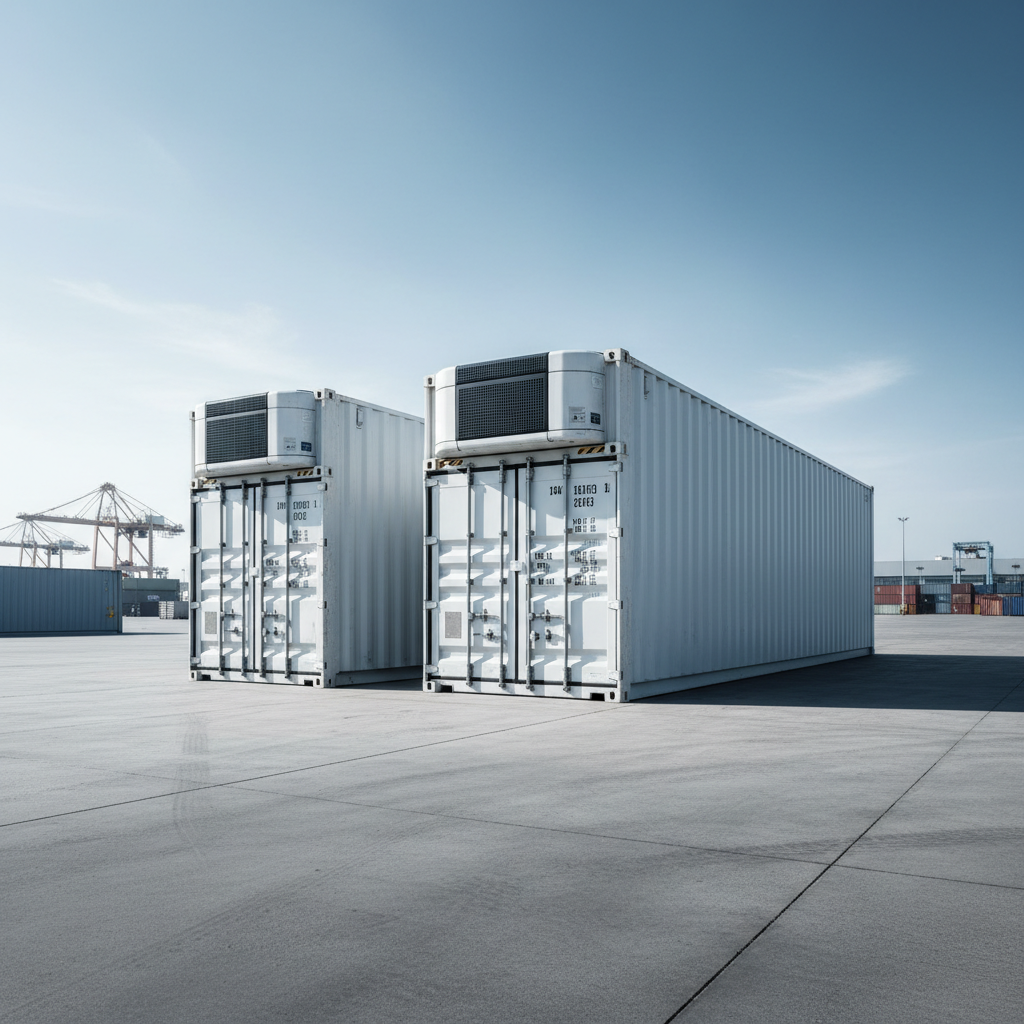
For US agricultural producers and food distributors, August marks the critical window for securing cold storage capacity before the Q4 harvest and holiday surges. The primary decision often comes down to a 20ft vs 40ft reefer container cost comparison. While it's tempting to assume that double the length equals double the cost, the market dynamics of 2026 tell a different story. Choosing the wrong size can lead to inefficient power consumption, higher-than-expected delivery fees, or an inability to fit your standard pallet configurations.
Table of Contents
- 20ft vs 40ft reefer container cost comparison: The 2026 Price Gap: 20ft vs 40ft Reefer Units
- Refrigerated Container Pallet Capacity and Layouts
- Reefer Container Power Consumption by Size
- Logistics and Delivery Requirements
- Carrier vs Thermo King Reefer Cost
- Detailed Breakdown of Resale Value and Lifecycle Depreciation
- Structural Engineering and Ground Load Considerations
- Phase Power and Electrical Infrastructure Costs
- Frequently Asked Questions
- Conclusion: Which Size Wins for Your ROI?
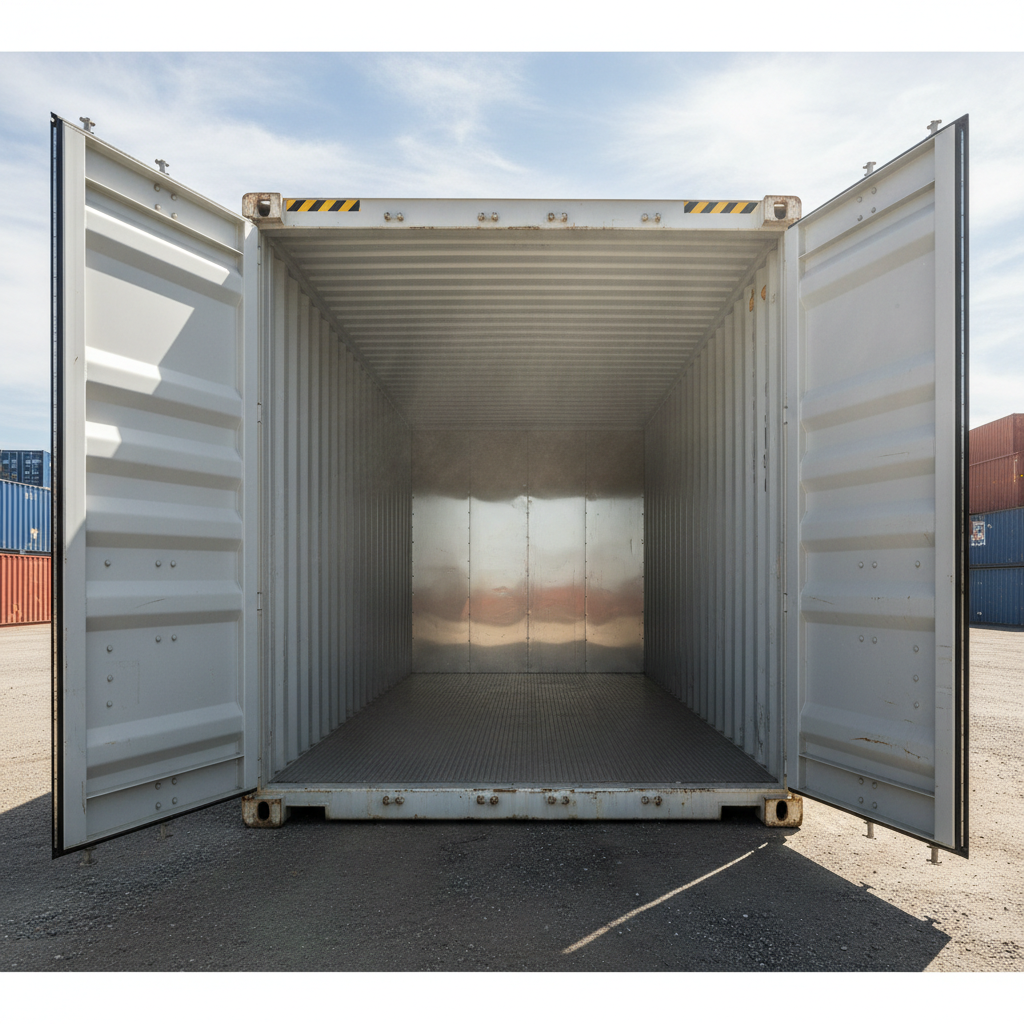
20ft vs 40ft reefer container cost comparison: The 2026 Price Gap: 20ft vs 40ft Reefer Units
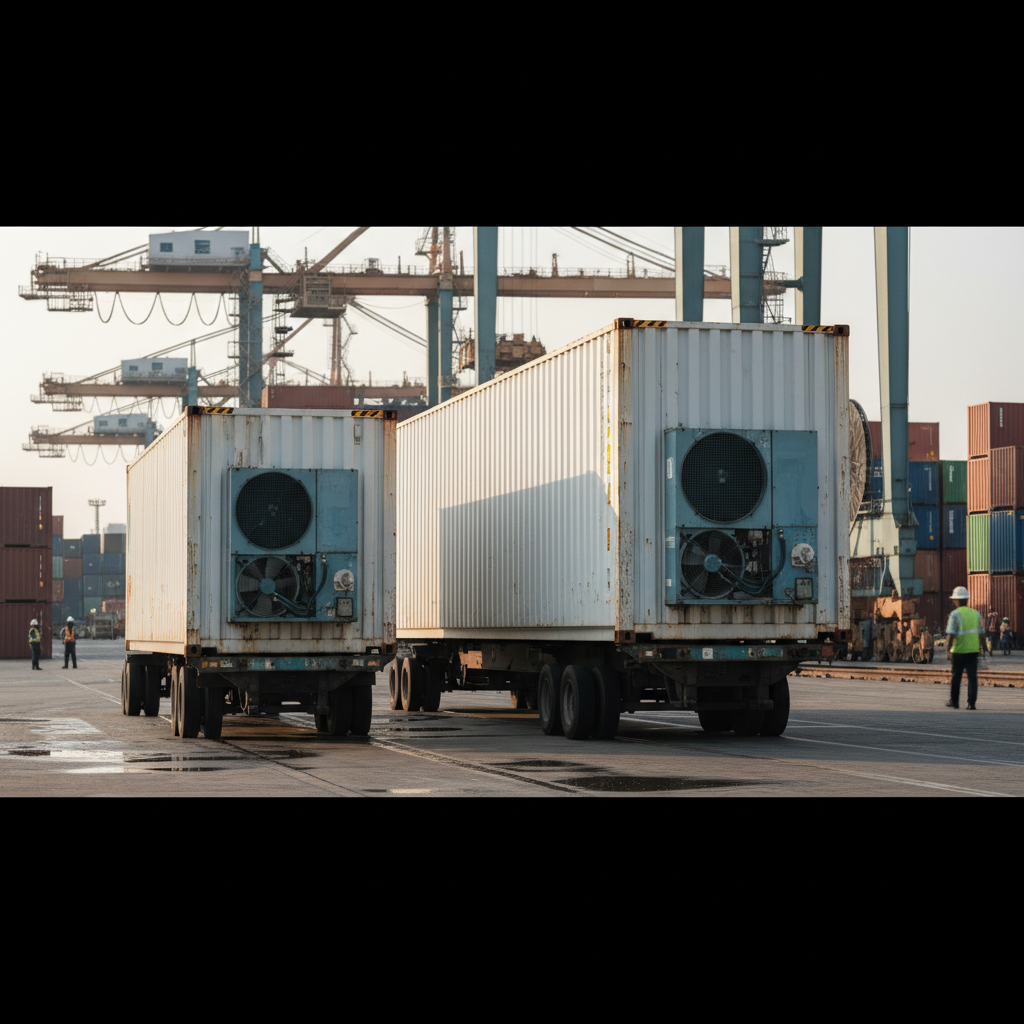
As of mid-2026, the market for refrigerated containers has stabilized, but logistical demand remains high. Generally, a 20ft domestic refrigerated container costs between $9,000 and $14,000 depending on the age of the machinery (Carrier vs. Thermo King) and the condition of the box. Surprisingly, a used 40ft HC working refrigerated container often only costs 20% to 30% more than its 20ft counterpart, ranging from $11,500 to $17,000.
This price compression exists because 40ft units are the global standard for international shipping, leading to a much higher volume of used inventory entering the domestic market. If you are calculating the cost per square foot, the 40ft unit almost always wins. However, capital expenditure is only one part of the equation; you must also consider used refrigerated shipping container prices in the context of your specific site's footprint and power availability.
| Feature | 20ft Reefer Unit | 40ft High Cube Reefer |
|---|---|---|
| Avg. Purchase Price (Used) | $9,000 - $14,000 | $11,500 - $17,000 |
| Standard Pallet Capacity | 8 - 10 Pallets | 20 - 22 Pallets |
| Interior Height | Approx. 7' 5" | Approx. 8' 4" (High Cube) |
| Max Payload | Approx. 60,000 lbs | Approx. 65,000 lbs |
| Voltage Requirements | 460V 3-Phase (Typical) | 460V 3-Phase (Typical) |
Refrigerated Container Pallet Capacity and Layouts
Efficiency in cold storage is measured by how many pallets you can fit without blocking the essential airflow required to maintain temperature uniformity. In a 20ft unit, you are typically limited to 8-10 standard 40" x 48" pallets. Conversely, the 40ft high cube reefer dimensions allow for 20-22 pallets. This makes the 40ft unit the superior choice for high-volume inventory staging.
Tip: When loading your reefer, never stack product above the 'red line' painted on the interior walls. Blocking this space prevents the evaporator fans from circulating air, leading to 'hot spots' and potential spoilage of sensitive cargo like produce or pharmaceuticals.
Why Floor Space Isn't the Only Metric
You must also account for the maneuvering room inside. Many 40ft units, such as the Maersk RAHC-031 model, are High Cube (9'6" exterior height). This extra foot of height is critical for the return air path. If you are debating if a 40ft reefer is cheaper than two 20ft units, the answer is a resounding yes—not just in purchase price, but in the efficiency of cooling a single large volume versus two smaller ones.
Reefer Container Power Consumption by Size
A common misconception is that a 40ft reefer uses twice the electricity of a 20ft unit. In reality, the compressor and motor are often the same size in both units. The power draw is highest during the initial 'pull-down' phase—when the unit is working to reach the set point. Once at temperature, the 40ft unit’s thermal mass can actually make it more stable.
- Running Amps: Most reefers pull 5-8 amps once they have reached the set temperature.
- Start-up Amps: Expect a surge of up to 50 amps; ensure your site's electrical service can handle this peak.
- Single-Phase Conversion: For sites without industrial power, a single-phase 20ft refurbished refrigerated container is available, though it carries a premium price for the transformer/motor swap.
- Ambient Temperature Impact: Cold storage unit operating costs will spike if the unit is placed in direct sunlight during summer months.
For more detail on the infrastructure needed, consult our reefer container electrical requirements guide.
Logistics and Delivery Requirements
The price of the box is only part of the 20ft vs 40ft reefer container cost comparison. Delivery is where the gap widens. A 20ft reefer can often be delivered via a smaller tilt-bed truck, requiring about 60 feet of straight-line clearance. A 40ft unit requires a full semi-tractor and trailer, needing at least 100 to 120 feet of clearance to drop the unit safely.
Tip: A 40ft reefer weighs approximately 9,500 lbs empty and can exceed 70,000 lbs when loaded. You must place these on a level, reinforced concrete pad or a thick gravel bed. If the unit is not level, the doors will rack, the seals will leak, and your cooling unit will fail prematurely.
Review our shipping container delivery cost per mile 2026 guide to estimate your freight expenses accurately.
Carrier vs Thermo King Reefer Cost
When browsing our used inventory, you will see two dominant brands: Carrier and Thermo King. In the used market, Carrier units (like the ThinLine or PrimeLINE) are often more prevalent and easier to find parts for in rural areas. Thermo King units are praised for their intuitive controllers. Both are comparable in price, but if you require deep-freeze capabilities (down to -25°F), the specific model of the machinery matters more than the box size.
Detailed Breakdown of Resale Value and Lifecycle Depreciation
When analyzing the 20ft vs 40ft reefer container cost comparison, initial acquisition is only half the financial equation. The 20ft refrigerated unit generally holds a higher percentage of its value over a 5-to-10-year period due to its versatility for small-scale food producers and urban logistics hubs where space is at a premium. Because 20ft reefers are manufactured in smaller quantities than their 40ft counterparts, the secondary market supply is tighter, often allowing sellers to recoup 65% to 75% of their investment even after several years of service. In contrast, 40ft High Cube reefers are the industry standard for international shipping, meaning there is a higher volume of retired fleet units hitting the market, which can suppress the resale price for individual owners.
Operating costs also influence long-term asset value. A 40ft unit requires more frequent refrigerant top-offs and mechanical checks simply due to the scale of the insulation surface area and the workload on the compressor. Buyers should also account for the 'Age of Machinery' factor; a 20ft unit with a Carrier ThinLINE generator might be priced lower upfront but could face higher maintenance costs as it nears its 15th year of service. We recommend tracking the engine hours on the cooling unit specifically, as this metric impacts the valuation more than the physical condition of the steel COR-TEN box itself.
| Metric | 20ft Reefer (Standard) | 40ft Reefer (High Cube) |
|---|---|---|
| Typical 5-Year Resale Value | 70% of Original Cost | 55% of Original Cost |
| Primary Buyer Secondary Market | Local Farms/Restaurants | Industrial Cold Storage/Logistics |
| Annual Maintenance Buffer | $800 - $1,200 | $1,500 - $2,200 |
| Structural Lifespan | 20+ Years | 15-18 Years |
Tip: Always request the 'Pre-Trip Inspection' (PTI) report before finalizing a purchase. A passed PTI ensures the microprocessor, sensors, and compressor are operating within factory specs, which protects your resale value from day one.
Structural Engineering and Ground Load Considerations
The weight of a reefer container is significantly higher than a standard dry van due to the polyurethane foam insulation, T-bar flooring, and the machinery housing. A 20ft reefer weighs approximately 6,000 to 6,500 lbs empty, while a 40ft High Cube reefer can weigh between 9,500 and 10,500 lbs. When comparing costs, many buyers overlook the hidden expense of site preparation. Placing a 40ft reefer on soft asphalt or uncompacted soil during a hot summer can lead to sinking, which causes the doors to misalign and the cooling seal to fail. This structural stress can lead to expensive gasket replacements or frame warping that voids machinery warranties.
Furthermore, the point-load distribution differs. A 40ft unit requires a more robust foundation—ideally a reinforced concrete pad or at least six heavy-duty pressure-treated wood blocks or concrete piers. If you are placing the unit on a temporary site or a gravel lot, the 20ft unit is far more forgiving and cheaper to stabilize. Failure to level a reefer can also cause the evaporator condensate drains to clog, leading to ice buildup on the floor, which increases the energy pull as the machine struggles to maintain airflow through the T-bars.
- Foundation Requirement: 40ft units generally require a 6-inch reinforced concrete slab for long-term industrial use.
- Door Clearance: Ensure a minimum of 4 feet of clearance for 20ft units and 8 feet for 40ft units to allow for pallet jack maneuvering.
- Ventilation Space: Both sizes require at least 3 feet of air gap at the machinery end to prevent the condenser from overheating.
- Weight Distribution: 40ft reefers loaded with frozen protein can exceed 60,000 lbs total; verify your local zoning allows such ground pressure.
Important: Standard gravel driveways may fail under the weight of a 40ft delivery truck carrying a 40ft reefer. If your site has limited access, the smaller 20ft unit delivered via a tilt-bed 'roll-off' truck is often the only viable (and much cheaper) logistical option.
Phase Power and Electrical Infrastructure Costs
A critical component of the 20ft vs 40ft reefer cost comparison is the facility’s electrical capacity. Most ISO reefer units, regardless of size, are designed for 3-phase power (either 230V or 460V). However, the amperage draw during the 'pull-down' phase—when the unit is working hardest to reach the setpoint—is significantly higher for a 40ft unit due to the larger cubic volume of air that must be cooled. If your facility currently only has single-phase power, you will need to invest in a phase converter or a dedicated transformer. This electrical upgrade can often cost more than the container itself, ranging from $4,000 to $10,000 depending on the distance from your main breaker panel.
For buyers looking to minimize utility bills, the 20ft reefer is the clear winner for low-volume storage. Because the interior volume is roughly 1,000 cubic feet compared to the 2,400+ cubic feet in a 40ft High Cube, the compressor cycles off more frequently once the setpoint is reached. In a steady-state environment where the doors remain closed, a 20ft unit can save an operator $150 to $300 per month in electricity costs compared to a 40ft unit, depending on local KWh rates and ambient outside temperatures.
- Verify your voltage: Most reefers are 460V 3-phase. Check if the unit includes a dual-voltage transformer (190V-230V/380V-460V).
- Install a dedicated disconnect: For safety and compliance, each reefer should have its own fused disconnect switch within line-of-sight.
- Monitor the defrost cycles: 40ft units accumulate more frost on the coils; adjusting the defrost frequency can save 5% on energy costs.
- Use a power logger: For the first month, track the draw to ensure your facility's peak demand charges don't spike your commercial bill.
Tip: If you are running a 40ft reefer off a generator (Genset) for off-grid use, expect a fuel consumption rate of approximately 0.6 to 1.1 gallons per hour. This operational cost makes the 40ft unit significantly more expensive for remote disaster relief or construction site use.
Container delivery near you
We deliver to every state in the lower 48 plus Alaska and Hawaii. These local pages list pricing, metro coverage and typical lead times for the areas we run into most:
- Shipping containers near me — how we source from the depot closest to your ZIP code
- Shipping containers in Florida — pricing and delivery to Jacksonville and Miami
- Shipping containers in Georgia — pricing and delivery to Atlanta and Savannah
- Shipping containers in North Carolina — pricing and delivery to Charlotte and Raleigh
- Shipping containers in Arizona — pricing and delivery to Phoenix and Tucson
- Shipping containers in Washington — pricing and delivery to Seattle and Spokane
- Shipping containers Houston — local yard stock and lead times
Frequently Asked Questions
Navigating the complexities of commercial cold storage requires clear answers. Here are the most common queries from our buyers.
Conclusion: Which Size Wins for Your ROI?
If you have the physical space and the power capacity, the 40ft high cube reefer offers the best value per cubic foot of storage. However, for tight urban sites or catering businesses needing portable cold storage for event catering, the 20ft unit's mobility is unbeatable. Before finalizing your purchase, ensure you've compared freight container grades to verify the machinery has been load-tested and the box is food-grade.
If you're ready to compare inventory for your project, our team can pull matching units from our nationwide depots. Whether you need a single 20ft unit for a restaurant or a fleet of 40ft reefers for an industrial harvest, we provide transparent pricing and reliable logistics to get you through the season.
Frequently Asked Questions
How many pallets fit in a 20ft vs 40ft reefer?
A 20ft reefer typically holds 8-10 standard North American pallets (40"x48"), while a 40ft unit holds 20-22 pallets, depending on whether you are pinwheeling the load and maintaining proper airflow gaps.
Is a 40ft reefer cheaper than two 20ft units?
Yes, significantly. A single 40ft reefer usually costs $11,500–$17,000, whereas two 20ft units would cost $18,000–$28,000, plus double the delivery fees and double the electrical hookup costs.
What is the price difference for refrigerated containers in 2026?
The price gap is surprisingly narrow; a 40ft unit typically costs only $2,500 to $4,000 more than a 20ft unit, despite offering double the floor space.
Which reefer size has better resale value?
The 40ft High Cube reefer generally has better resale value in the commercial sector due to its popularity in the global cold chain and its higher pallet capacity.
Do 40ft reefer containers use more electricity than 20ft units?
Marginally. While the interior volume is larger, the cooling units are often identical. Once the target temperature is reached, the difference in power consumption is often negligible.
What are the delivery requirements for a 40ft reefer?
A 40ft reefer requires a semi-truck with a tilt-bed or chassis. You need approximately 120 feet of straight-line clearance and a level, hard-packed surface to prevent the heavy unit from sinking or racking.