Portable-cold-storage-for-event-catering-2026: The 2026…
Master portable cold storage for event catering 2026 with our guide. Explore refrigerated container for wedding catering and festival cold storage. Explore.
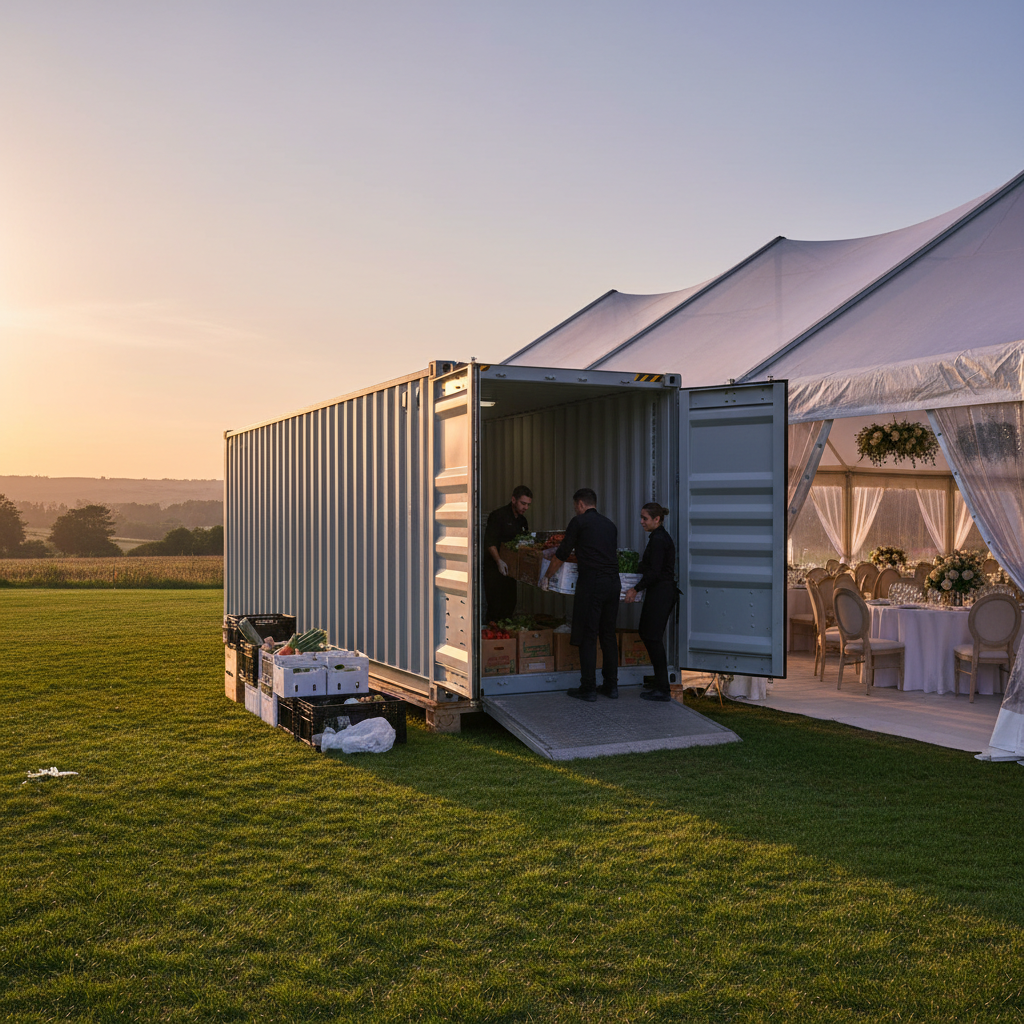
portable-cold-storage-for-event-catering-2026 — For hospitality professionals managing high-stakes festivals or remote weddings, food safety isn't just a regulatory requirement—it is the backbone of the brand. Relying on traditional refrigerated trucks often leaves caterers struggling with steep ramps, high diesel costs, and noise complaints. In the 2026 event season, portable cold storage for event catering 2026 has shifted toward electric, ground-level refrigerated containers. These units provide a mobile walk-in cooler rental alternative that sits flat on the grass or pavement, eliminating the safety hazards of climbing in and out of a semi-trailer 100 times a day.
Table of Contents
- portable-cold-storage-for-event-catering-2026: Why Ground Level Reefer Storage Beats Traditional Reefers
- Choosing the Right Size for Your 2026 Event
- Electrical and Site Requirements for On-Site Food Storage
- Optimizing Cold Chain Logistics for Multi-Day 2026 Festivals
- Remote Monitoring and Smart Telematics for 2026 Compliance
- Sustainable Cold Storage: Integration with Green Event Power
- Frequently Asked Questions
- Explore Related Products & Guides
portable-cold-storage-for-event-catering-2026: Why Ground Level Reefer Storage Beats Traditional Reefers
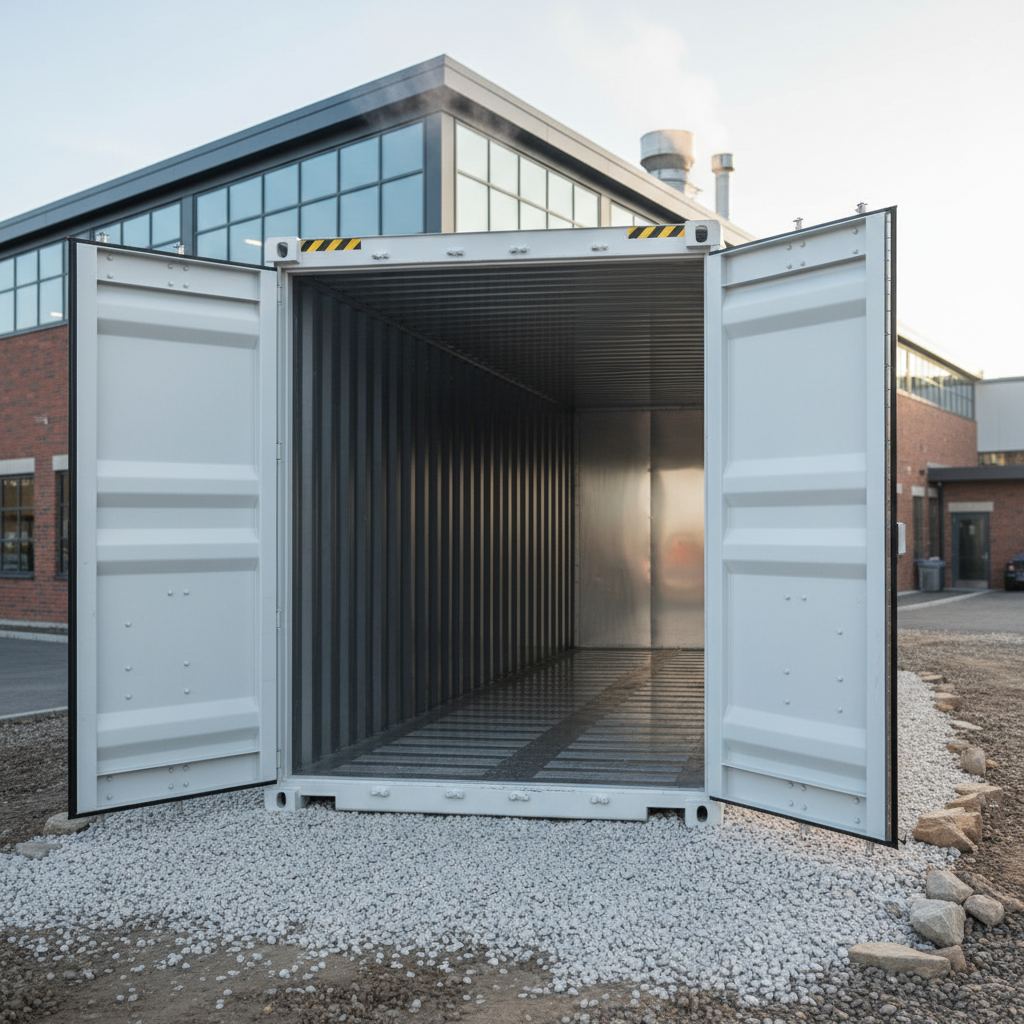
When you are managing festival cold storage solutions, accessibility is key. Standard refrigerated trailers sit 48 inches off the ground, requiring expensive ramping or heavy lifting. A 20ft domestic refrigerated container sits directly on the ground. This 'ground level reefer storage' allows your staff to wheel carts directly into the unit. Furthermore, while diesel 'reefer' trailers are loud and emit fumes near guests, electric containers run nearly silent, making them the preferred refrigerated container for wedding catering where atmosphere is paramount.
| Feature | Refrigerated Container | Reefer Trailer (Semi) |
|---|---|---|
| Access Height | 6-8 inches (Ground Level) | 48 inches (Dock Level) |
| Power Source | Electric (3-Phase or Single) | Diesel Engine (Loud/Fumes) |
| Operating Cost | Lower (Electricity) | Higher (Diesel Fuel) |
| Mobility | Requires Tilt-bed/Crane | Hook and Go |
Choosing the Right Size for Your 2026 Event
Sizing is the most critical decision in your logistics plan. A 40ft high cube refrigerated container is the standard for large-scale music festivals, while a 20ft unit typically suffices for weddings under 300 guests. If you have a mid-sized operation, some specialized units like the 30ft freezer container offer a unique middle ground for dedicated frozen assets.
- 20ft Units: Ideal for tight urban spaces, private parties, and small weddings. Holds roughly 10 standard pallets.
- 40ft High Cube: Necessary for multi-day festivals. Holds 20-22 pallets and offers extra vertical head room.
- Split Units: Some custom 50/50 split cabins allow for dry storage and cold storage in one footprint.
Important: Always verify your power supply before delivery. Most commercial reefers require 460V 3-phase power, but caterers often prefer a single-phase 20ft refurbished refrigerated container for easier compatibility with temporary generators.
Electrical and Site Requirements for On-Site Food Storage
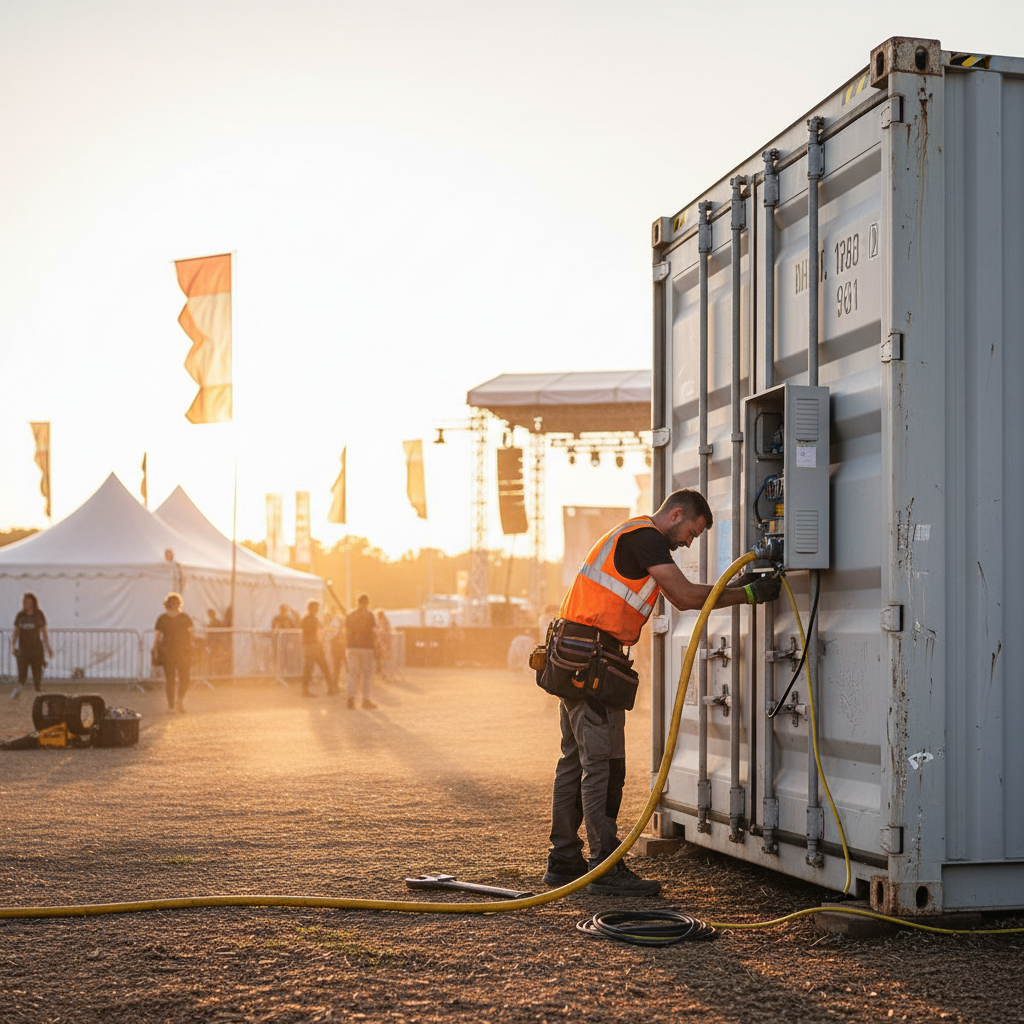
A temporary refrigeration for events setup requires more than just space; it needs the right juice. As detailed in our reefer container electrical requirements guide, most units pull significant amperage at startup. For outdoor food service refrigeration, you must ensure the ground is level and firm enough to support the weight of a loaded container, which can exceed 30,000 lbs when full.
Permits and Logistics
Before placing a unit, consult the shipping container permit requirements by state. While most temporary events fall under 'temporary use permits,' local fire marshals often require specific clearances for emergency access. Ensure your delivery site has enough room for a tilt-bed truck to maneuver.
Optimizing Cold Chain Logistics for Multi-Day 2026 Festivals
For the 2026 event season, caterers are moving away from the 'single-trailer' mentality in favor of modular reefer zones. When managing a multi-day festival, the thermal mass of your inventory changes hourly. A single 40ft reefer might seem efficient, but it creates a single point of failure and makes organizational access a nightmare during peak service hours. Instead, leading event planners are deploying 'Zone-Based Storage' where separate 20ft units are dedicated to specific categories: one for proteins requiring strict 34°F stability, one for produce at 40°F, and a dedicated freezer unit for ice and dessert components. This allows for specific temperature set-points that maximize food safety and shelf life.
The logistical layout of your cold storage zone impacts your labor costs more than you might realize. By utilizing ground-level units, your team eliminates the 'ramp fatigue' associated with traditional refrigerated trailers. In a 2026 event landscape where labor remains a premium expense, reducing the physical strain on kitchen staff translates to faster plating times and fewer safety incidents. Furthermore, the flat-floor design of modern reefer containers allows for the use of standard rolling racks and heavy-duty carts, enabling a seamless transition from the storage unit to the prep line without manual unloading.
| Inventory Type | Recommended Temp (°F) | Humidity Setting | Storage Strategy |
|---|---|---|---|
| Fresh Proteins | 32°F - 34°F | Low | Store on lower racks, furthest from the door. |
| Leafy Greens/Produce | 38°F - 42°F | High | Keep away from direct airflow to prevent wilting. |
| Dairy & Prepared Sauces | 36°F - 38°F | Medium | First-in, first-out (FIFO) rotation near the door. |
| Bulk Ice & Frozen Goods | -5°F - 0°F | N/A | Minimize door openings to prevent frost buildup. |
Tip: To prevent 'hot spots' in your 2026 event storage, ensure a minimum of 6 inches of clearance between the cargo and the container ceiling. This allows the T-bar floor system to circulate air effectively, maintaining a uniform temperature even when the unit is at 90% capacity.
Remote Monitoring and Smart Telematics for 2026 Compliance
Food safety regulations for 2026 are increasingly focused on continuous data logging rather than manual spot checks. Modern refrigerated containers now come equipped with advanced telematics systems that provide real-time updates to your smartphone or tablet. These systems monitor compressor health, interior temperature, and door-open frequency. For event caterers, this means you no longer need to assign a staff member to check the thermometer every two hours. If the power supply from the generator fluctuates or a door is left ajar, the system triggers an immediate SMS alert, potentially saving tens of thousands of dollars in high-value inventory.
Beyond simple temperature alerts, these smart units provide the audit trails required by health inspectors and insurance providers. In the event of an audit, you can export a CSV file showing a stable temperature graph for the entire duration of the festival. This level of transparency is becoming the industry standard for high-end corporate events and large-scale public gatherings. It also assists in energy management; by analyzing usage patterns, event managers can determine if they need to adjust their generator sizing or if the solar-supplemented power grids of 2026-era venues are sufficient for the cooling load.
- Real-time GPS tracking for delivery and placement verification.
- Instant defrost cycle notifications to avoid temperature spikes.
- Remote set-point adjustment for changing weather conditions.
- Automated PDF reporting for USDA and local health department compliance.
- Power failure alarms that trigger before the thermal buffer is compromised.
Tip: When renting for 2026, always verify that the unit uses R-134a or R-452A refrigerant. These comply with the latest environmental standards and ensure that your event remains eco-friendly while providing superior cooling efficiency compared to older R-22 models.
Sustainable Cold Storage: Integration with Green Event Power
As the event industry pushes toward net-zero targets in 2026, the power consumption of portable cold storage is under the microscope. High-efficiency scroll compressors and vacuum-insulated panels (VIPs) are now standard in premium reefer containers, significantly reducing the KWh required to maintain sub-zero temperatures. Caterers are now pairing these units with hybrid power systems—using large-scale battery storage to run the reefers during the night, which eliminates the noise and emissions of diesel generators during quiet hours. This is particularly crucial for events in residential areas or high-end outdoor weddings where ambiance is paramount.
Furthermore, the architectural versatility of shipping containers allows for the integration of temporary solar 'skins' or canopies. These provide double duty: they shield the container from direct solar gain (reducing the cooling load by up to 15%) while generating supplemental power for the container's interior LED lighting and monitoring systems. By choosing a modern reefer over an aging refrigerated truck, you are utilizing a system designed for maximum thermal retention. The stainless steel interior linings and food-grade flooring are not only easy to sanitize but are also designed to reflect radiant heat, ensuring that the cooling system doesn't have to work overtime during the heat of the afternoon.
- Pre-chill the unit 24 hours before loading to stabilize the insulation.
- Group similar thermal mass items together to act as a 'cold battery'.
- Install strip curtains to minimize air exchange during frequent loading.
- Position units in shaded areas or utilize reflective roof coatings.
- Use local 460V 3-phase power whenever possible to maximize motor efficiency.
Important: Avoid using standard extension cords for reefer units. A 20ft or 40ft reefer requires a dedicated 30-amp or 50-amp circuit. Voltage drops caused by improper cabling can damage the sensitive electronic controllers and lead to intermittent cooling failures.
Container delivery near you
We deliver to every state in the lower 48 plus Alaska and Hawaii. These local pages list pricing, metro coverage and typical lead times for the areas we run into most:
- Shipping containers near me — how we source from the depot closest to your ZIP code
- Shipping containers in Georgia — pricing and delivery to Atlanta and Savannah
- Shipping containers in North Carolina — pricing and delivery to Charlotte and Raleigh
- Shipping containers in Arizona — pricing and delivery to Phoenix and Tucson
- Shipping containers in Washington — pricing and delivery to Seattle and Spokane
- Shipping containers in Colorado — pricing and delivery to Denver and Colorado Springs
- Shipping containers Houston — local yard stock and lead times
Frequently Asked Questions
Our experts answer the most common questions regarding portable cold storage for event catering 2026 and temporary logistics.
Tip: Never block the T-floor or the evaporator fans. Refrigerated containers work by circulating air from the floor up. If you stack boxes directly against the walls and ceiling, you'll end up with 'hot spots' and potential food spoilage.
If you're ready to compare inventory for your project, our team can pull matching units from our nationwide depots. Whether you need a Maersk RAHC-031 model or a compact 20ft unit, we provide detailed pre-delivery inspections to ensure your 2026 catering season runs without a hitch. Contact us today to discuss lead times and delivery logistics.
Explore Related Products & Guides
Frequently Asked Questions
How do I keep food cold for a large outdoor event?
The most reliable method is using an electric refrigerated shipping container (reefer). Unlike ice or smaller trailers, reefers provide precise digital temperature control from -20°F to +80°F, ensuring food safety compliance for even the largest outdoor gatherings.
What size refrigerated container do I need for catering?
A 20ft container is standard for most weddings and corporate events (approx. 1,000 sq ft of storage). For large festivals or multi-day events with over 1,000 attendees, a 40ft High Cube is recommended to accommodate bulk pallet deliveries.
Do reefer containers need a constant power source?
Yes, they require a constant connection to either a 3-phase electrical grid or a high-capacity generator. If power is lost, the insulated walls will maintain temperature for several hours, but active cooling requires electricity.
Can a shipping container be used as a walk-in cooler?
Absolutely. Modern refrigerated containers are essentially industrial-grade walk-in coolers with the added benefit of being portable, weather-resistant, and ground-level for easy access.
How much does portable cold storage cost for events?
In 2026, used working reefers typically range from $6,000 to $12,000 depending on age and condition. For one-time events, many caterers choose to purchase and then resell the unit due to high demand and strong residual value.
Is an electric refrigerated container for hire better than diesel?
Electric is superior for events because it is nearly silent and produces no exhaust fumes. Diesel trailers are typically restricted at high-end venues or residential areas due to noise ordinances.