Shipping Container Tie Down Points Installation Guide
By Outback Container Experts · Published November 8, 2026
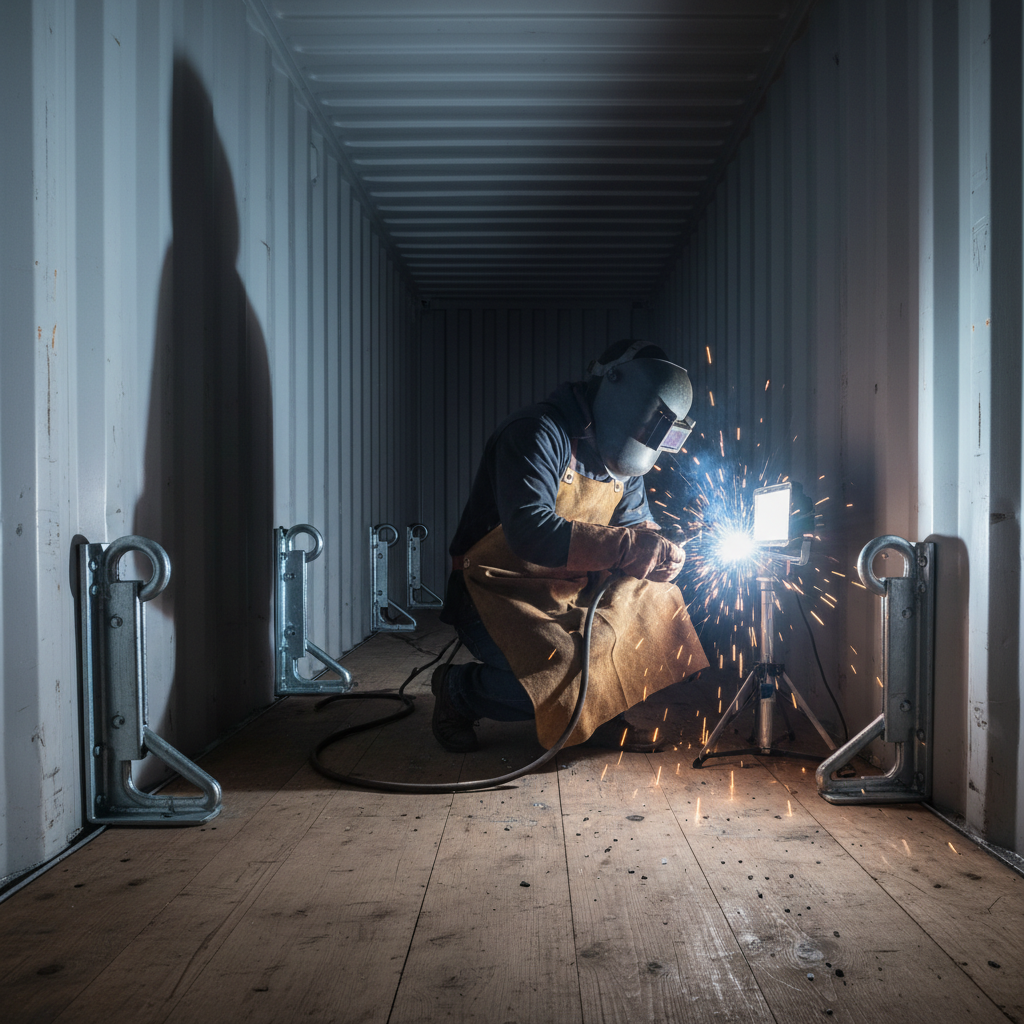
A shipping container tie down points installation guide defines the process of adding structural anchors, such as D-rings or lashing bars, to a container's interior or exterior to prevent cargo shifting during transport or storage. These points are essential for securing heavy machinery, vehicles, or equipment.
Table of Contents
- shipping container tie down points installation guide: How Tie Down Points Work in Practice
- Key Specs and Terminology
- Common Use Cases for Tie Down Modifications
- Costs and Factors Affecting Installation
- D-Ring Placement for Cargo Securement
- Related Terms and Confusion
- How to Choose the Right Tie Down Configuration
- More on Cargo, Enclosed & Utility Trailers
- Container delivery near you
- Structural Engineering of Internal and External Tie Down Anchors
- Site Preparation and Delivery Logistics for Modified Units
- Electrical Integration for Reefer Tie-Down Areas
- Welding vs. Bolting: Proper Attachment Methods for Tie Down Points
- Site Accessibility for Containers with Pre-Installed External Tie Downs
- Frequently Asked Questions
- Explore Related Products & Guides
shipping container tie down points installation guide: How Tie Down Points Work in Practice
In a standard ISO container, the primary structural strength is concentrated in the corner castings and the main rails. However, for internal cargo, you need specific shipping container tie down points installation guide that can withstand thousands of pounds of tension. When securing heavy equipment in containers, the tie-down points act as the interface between your nylon straps or steel chains and the C-channel steel of the container frame.
For transport-ready units, we recommend cargo-worthy container securement solutions that maintain the unit's CSC (Convention for Safe Containers) integrity. Improper installation—such as welding directly to thin corrugated side panels—can lead to structural failure under load. Instead, professional installation focuses on the bottom side rails or the corner posts where the corten steel is thickest.
Tip: Always verify the Working Load Limit (WLL) of your D-rings. A standard 2-inch heavy-duty D-ring often carries a WLL of 4,000 lbs, but the ultimate breaking strength is usually three times that amount.
Key Specs and Terminology
| Component | Material | Standard WLL | Installation Method |
|---|---|---|---|
| Recessed D-Ring | Forged Steel | 6,000 lbs | Flush Weld-on |
| Surface D-Ring | Zinc-Plated Steel | 4,000 lbs | Bolt-on / Weld-on |
| E-Track Rail | 12-Gauge Steel | 2,000 lbs | Bolt-on / Rivet |
| Lashing Bar | Corten Steel | 5,000 lbs | Weld-on |
Common Use Cases for Tie Down Modifications
Shipping container tie down points aren't just for international freight. In 2026, we see a massive increase in specialized shipping container interior modifications for domestic use. If you are building an Outback Ridge 20 Compact Equipment Garage, tie downs allow you to secure zero-turn mowers or ATVs so they don't roll into your workbench during delivery.
- Vehicle Transport: Securing classic cars or off-road vehicles in an Outback Longhorn 40 Car & Workshop Garage.
- Mobile Workshops: Fastening heavy lathes, drill presses, or generators to prevent movement.
- Disaster Relief: Storing emergency supplies in pallets that must remain stationary in high-wind zones.
- Livestock Support: Securement for heavy feed troughs or gates in a shipping container horse trailer conversion.
Costs and Factors Affecting Installation
The cost of a shipping container tie down points installation guide and implementation typically ranges from $45 to $125 per point, depending on the hardware and labor involved. For a standard 20ft container, a 4-point installation is the baseline, while 40ft units often require 8 to 12 points for comprehensive coverage.
- Hardware Quality: Forged steel D-rings cost more than stamped variants but offer higher WLL.
- Installation Type: Weld-on lashing points for conex units are more labor-intensive than bolt-on options but provide superior permanent strength.
- Quantity: Bulk installation during the fabrication of an Outback Forge 20 Insulated Workshop Garage reduces the per-unit labor cost.
- Site Location: On-site welding in remote areas of Texas or Georgia will incur travel fees compared to shop-installed points.
D-Ring Placement for Cargo Securement
Proper d-ring placement for cargo securement follows a 'Low and High' strategy. Low points should be welded to the bottom side rail, just above the floor level. High points are best placed on the top header rail or corner posts. For those utilizing a shipping container lashing rings, ensure your tie downs are placed so that the center of gravity remains over the axles during the tilt-loading process.
Important: Never weld tie downs to the center of a side panel. These panels are only 1.6mm to 2.0mm thick and will bow or tear under the pressure of a ratcheted load. Only weld to the structural frame.
Related Terms and Confusion
Buyers often confuse 'lashing rings' with 'bridge fittings' or 'twist locks.' While bridge fittings secure containers to each other, lashing rings secure items inside or on the container. Additionally, understand the difference between shipping container lashing rings; a container can handle much higher point-loads, but only if the tie-downs are anchored to the main steel beams.
How to Choose the Right Tie Down Configuration
When selecting your best shipping container tie down points installation guide, consider the floor type. Standard units feature 28mm marine-grade plywood. If you have a shipping container horse trailer, you might have rubberized flooring that requires recessed D-rings to prevent trip hazards. For industrial storage, heavy duty container tie downs with a 6,000lb WLL are the industry standard.
If you are planning a move in North Carolina or Florida, consider weather-resistant coatings. Weld-on points should be primed and painted with zinc-rich primer to prevent the corten steel from developing localized corrosion at the weld sites.
More on Cargo, Enclosed & Utility Trailers
- Tilt-Bed Container Trailer Site Access Requirements
- Best Enclosed vs Open Utility Trailer Alternatives
- Aluminum vs Steel Livestock Trailer Weight Guide 2026
Container delivery near you
We deliver to every state in the lower 48 plus Alaska and Hawaii. These local pages list pricing, metro coverage and typical lead times for the areas we run into most:
- Shipping containers near me — how we source from the depot closest to your ZIP code
- Shipping containers in Arizona — pricing and delivery to Phoenix and Tucson
- Shipping containers in Washington — pricing and delivery to Seattle and Spokane
- Shipping containers in Colorado — pricing and delivery to Denver and Colorado Springs
- Shipping containers in Tennessee — pricing and delivery to Nashville and Memphis
- Shipping containers in Ohio — pricing and delivery to Columbus and Cleveland
Structural Engineering of Internal and External Tie Down Anchors
When modifying a container from Outback Shipping Containers LLC for specialized cargo or mobile workshops, understanding the load-bearing capacity of the corten steel walls is paramount. Standard shipping containers are designed to bear weight primarily through their four corner castings, but the installation of interior D-rings or external lashing points allows for the distribution of lateral forces. Every unit we sell is inspected before dispatch to ensure the integrity of the structural steel remains intact, as welding tie-down points directly to the corrugated panels requires a deep understanding of the material's thickness. Because shipping containers are built to withstand the rigors of ocean transport, the steel is robust, but improper installation of high-tension tie-down points can cause localized warping if not backed by a reinforcing plate or positioned near a vertical box section.
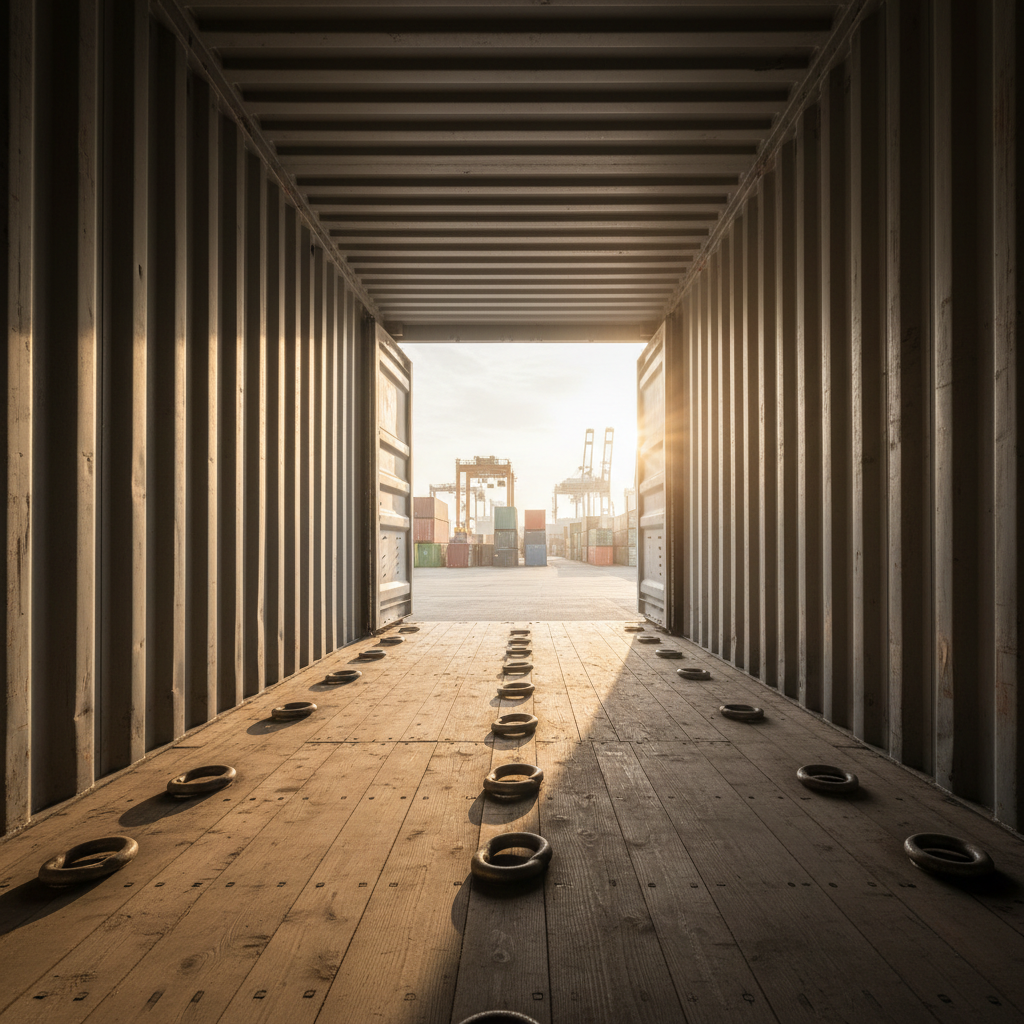
For heavy machinery or automotive storage, flush-mounted D-rings are often the preferred choice to maximize floor space. These involve cutting a precise aperture into the 1-1/8 inch thick marine-grade plywood flooring and securing the anchor directly to the steel cross-members beneath. This method ensures that the weight of the vehicle or equipment is transferred to the chassis of the container rather than just the wooden subfloor. When working with cargo-worthy units, a CSC plate on cargo-worthy units where applicable will verify the original design weight limits, though aftermarket modifications for tie-downs are generally focused on preventing shifting during domestic transit rather than stacking strength. We ensure all our units are inspected wind- and watertight, providing a dry environment where these metal components won't be subjected to premature corrosion from moisture ingress.
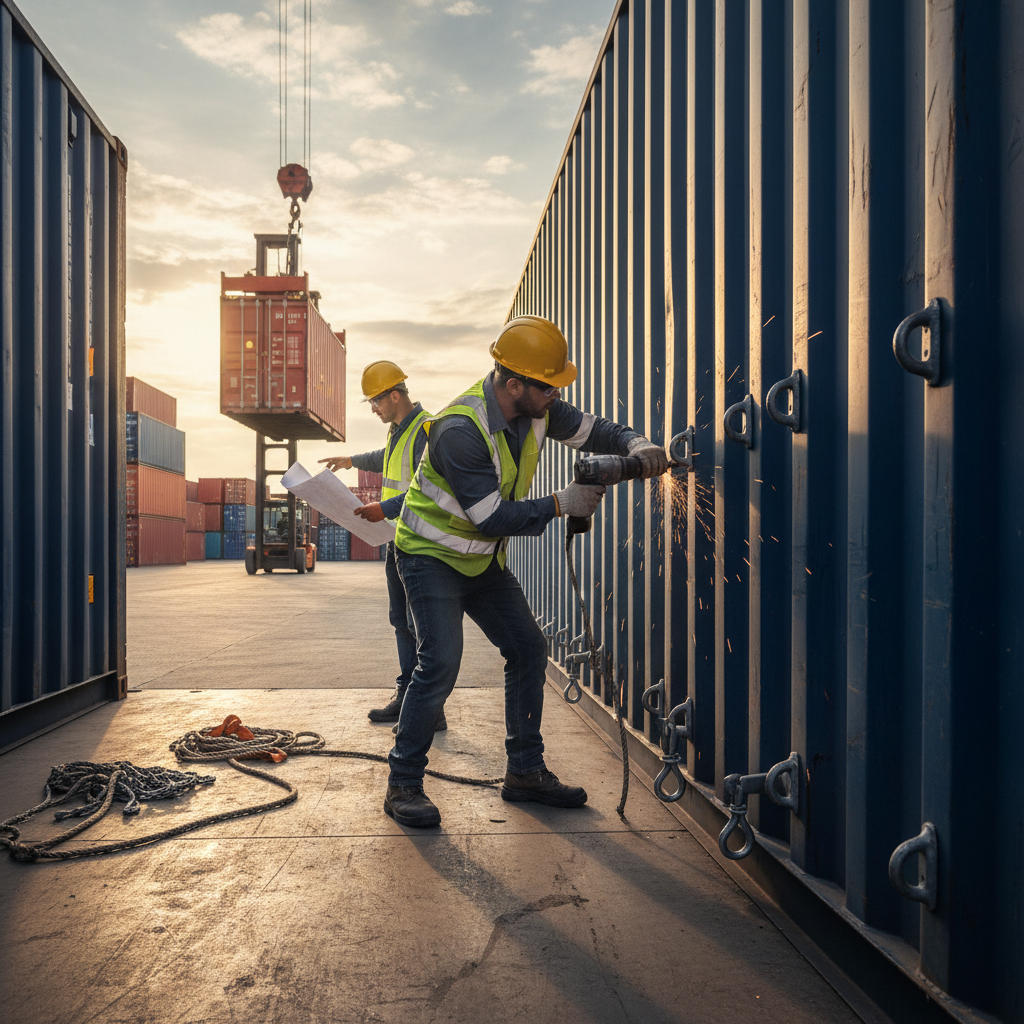
External tie-down points serve a different purpose, often utilized when a container is being repurposed as a job-site office or equipment enclosure that needs to be anchored to a concrete pad. In high-wind regions across the United States, welding heavy-duty pad eyes to the bottom rails of the container allows for secure bolting to a foundation. This prevents the unit from shifting during extreme weather events. While the internal lashing rings that come standard in many of our 20ft and 40ft units are rated for lighter loads, professional-grade aftermarket tie-down points can be rated for 10,000 lbs or more. It is critical to select hardware that matches the intended tensile strength of your straps or chains to avoid a weak link in your securement chain.
Tip: Outback Shipping Containers LLC provides inspection documentation with every purchase to confirm the structural viability of your unit before you begin any welding or drilling for tie-down installations.
- Floor-Mounted D-Rings: Best for vehicles and heavy palletized equipment.
- Wall-Mounted Lashing Rings: Ideal for securing tall furniture or shelving units.
- External Pad Eyes: Necessary for permanent foundation anchoring and wind mitigation.
- E-Track Systems: Provides adjustable vertical and horizontal tie-down points for variable cargo.
- Twist Lock Plate Anchors: Utilizes the corner castings for maximum structural securement.
Site Preparation and Delivery Logistics for Modified Units
Before you install permanent tie-down points or receive a container intended for heavy cargo, you must ensure your site in the United States is prepared for the specific delivery equipment used by Outback Shipping Containers LLC. The delivery of a standard container requires significant space for the tilt-bed truck to maneuver and offload. For instance, a 20ft container needs 100 ft straight approach and a 25 x 13 ft drop zone to be safely positioned. If you are planning to install ground-based tie-downs to secure the container itself, the surface must be level and compacted. A 12 ft-wide access path and 14 ft of overhead clearance (15 ft for high cube containers) are mandatory for our trucks to enter your property without risk of damage to the vehicle or your existing structures.
Larger units require even more substantial clearance. A 40ft container needs 120 ft straight approach and a 45 x 13 ft drop zone to ensure the driver can pull out from under the unit once it is tilted onto the ground. If you are ordering a 45ft high cube, the requirements increase to a 125 ft straight approach and 15 ft of overhead clearance. For the largest 53ft high cube units, you must provide a 135 ft straight approach and a 58 x 13 ft drop zone. We recommend reviewing our full /shipping-policy to ensure your site meets these specific dimensional requirements. Failure to provide adequate space can result in a failed delivery, which is why we emphasize these measurements for every client from Houston to the West Coast.
If your project involves specialized modular units like container homes or portable cabins that have pre-installed tie-down points for crane lifting, the delivery method shifts from a tilt-bed to a flatbed and crane set. These units arrive on a flatbed and are set by crane; each product page lists its exact requirements, but generally, you will need a 20 x 30 ft crane pad within 25 ft of the set point. Safety is our priority, so ensure there are no power lines within 20 ft of the lift path. For those using flat-pack units or compact cabins, a forklift is often required, necessitating a 20 ft forklift lane beside the trailer to safely extract and move the components to their final tie-down location.
| Container Size | Straight Approach Required | Drop Zone Dimensions | Overhead Clearance |
|---|---|---|---|
| 10ft Container | 90 ft | 17 x 13 ft | 14 ft (15 ft HC) |
| 20ft Container | 100 ft | 25 x 13 ft | 14 ft (15 ft HC) |
| 40ft Container | 120 ft | 45 x 13 ft | 14 ft (15 ft HC) |
| 53ft High Cube | 135 ft | 58 x 13 ft | 15 ft |
Electrical Integration for Reefer Tie-Down Areas
When installing tie-down points in a refrigerated (reefer) container, special care must be taken to avoid damaging the insulation or the cooling machinery. At Outback Shipping Containers LLC, we specialize in units that are efficient and reliable for US customers. Our reefers run on single-phase 220/240V from a dedicated 240V circuit (50A standard, 60A blast freezers). It is a common misconception in the industry that these units require industrial 3-phase power, but our specialized inventory is designed for easier integration into domestic and light commercial power grids without the need for complex transformers or phase converters. When securing cargo inside a reefer, you must use specialized track systems that do not create thermal bridges through the insulated walls.
Properly securing cargo in a reefer is vital because the floor is usually a T-bar aluminum design rather than plywood. This means standard screw-in D-rings are not an option. Instead, lashing points are typically integrated into the side walls or specialized cargo bars are used to wedge between the T-bars. Because these units are inspected wind- and watertight, any modification for tie-downs must be properly sealed with food-grade silicone to maintain the thermal envelope. If you are using these units for food storage or temperature-sensitive logistics, maintaining the integrity of the interior lining while providing adequate securement points is a delicate balance that requires professional planning.
Finally, consider the placement of your reefer unit relative to your power source. Since our reefers operate on a 50A or 60A dedicated 240V circuit, the container should be positioned so that the power cable is not a trip hazard and the tie-down points for the exterior of the unit are easily accessible for maintenance. We provide the highest quality reefers in the Houston area and nationwide, ensuring that every unit is pre-tested. By adhering to the single-phase 220/240V power requirements, you avoid the high costs of electrical conversions while enjoying the same cooling power as industrial units. Always consult with a licensed electrician to ensure your dedicated circuit is properly grounded and rated for the specific amperage of your reefer model.
Important: Never attempt to run our refrigerated units on 460V or 3-phase power. All reefers from Outback Shipping Containers LLC are designed strictly for 240V single-phase electrical systems.
Welding vs. Bolting: Proper Attachment Methods for Tie Down Points
When deciding how to secure tie down points to a shipping container, the choice between welding and bolting is critical for structural integrity. Welding D-rings directly to the interior corner posts or the bottom side rails is the industry standard for high-load applications. Because shipping containers are constructed from CORTEN steel, they offer excellent weldability, allowing for a permanent, high-strength bond that can withstand thousands of pounds of tension. At Outback Shipping Containers, every unit is inspected before dispatch to ensure the base metal is free of excessive corrosion, providing a clean surface for these critical structural modifications. This method ensures that the cargo securement points become an integral part of the frame, rather than a separate component that could potentially vibrate loose over long-distance transit.
Bolted installations, while less permanent, are often used for lighter-duty interior organization or when welding equipment is not available on-site. If you choose to bolt tie-down hardware, it is essential to use Grade 8 bolts and oversized backing plates to distribute the load across the container wall corrugated panels. Without backing plates, the relatively thin 14-gauge steel walls can easily warp or tear under the localized stress of a heavy strap. It is also important to note that any penetration of the container wall requires proper sealing with marine-grade silicone or industrial sealants to maintain the wind- and watertight (WWT) status of the unit. Failure to seal these penetrations can lead to localized rust and moisture ingress, compromising the cargo inside.
For heavy machinery or specialized equipment, we recommend focusing tie-down installations on the four main corner posts or the heavy-duty crossmembers beneath the bamboo or plywood flooring. These areas are designed to bear the primary weight of the stack and provide the most stable anchoring points. When we prepare cargo-worthy units where applicable, the CSC plate remains the primary indicator of the container's structural rating, but aftermarket tie-downs must be placed strategically to avoid compromising the original engineering. Proper installation prevents the 'oil-canning' effect where walls flex inward, ensuring the container remains rigid and secure regardless of the internal load distribution.
- Use 7018 low-hydrogen welding rods for CORTEN steel attachments.
- Always grind away the factory paint/primer to bare metal before welding.
- Install backing plates for all through-bolt applications to prevent sheet metal tearing.
- Apply zinc-rich cold galvanizing spray to any exposed metal after installation.
- Verify that internal D-rings do not obstruct the path of the door locking bars.
Important: Never weld or drill into a container without first verifying the interior lining. Many reefer units and insulated containers have foam or fiberglass behind the walls that can ignite or release toxic fumes when heated.
Site Accessibility for Containers with Pre-Installed External Tie Downs
If your shipping container is ordered with external tie-down points or structural protruding anchors, you must account for the additional width during the delivery process. Standard site access requires a 12 ft-wide clear path, but external hardware can snag on low-hanging branches or narrow gate openings. Our delivery teams at Outback Shipping Containers operate nationwide, and we emphasize the importance of a clear, straight approach to ensure your modified unit is placed exactly where you need it. A 20ft container requires 100 ft of straight approach, while a 40ft container requires 120 ft to safely maneuver the tilt-bed trailer and drop the unit without damaging exterior modifications.
The drop zone itself must be level and firm to prevent the container from shifting after it is released from the truck. For a standard 20ft unit, a 25 x 13 ft drop zone is required, while a 40ft unit needs a 45 x 13 ft area. If your container features specialized tie-down points for mounting to a foundation or trailer chassis, the site must be prepared according to the specific dimensions of those anchors. We provide inspection documentation with every purchase, ensuring that the unit delivered matches the structural specifications you requested. Maintaining the 14 ft overhead clearance (15 ft for high cubes) is also vital, as external tie-downs mounted near the roofline can easily strike overhead obstacles during the offloading process.
For complex installations like container homes or modular offices that use heavy-duty lashing points for crane sets, the delivery method shifts to a flatbed and crane. This requires an 80 ft straight approach for the truck and a dedicated 20 x 30 ft crane pad. It is crucial to ensure there are no power lines within 20 ft of the lift path, especially when using external securement points as the primary lift interface. For more details on preparing your location for these specialized deliveries, please visit our /shipping-policy page to review the full requirements for your specific container size and type.
| Container Size | Tilt-Bed Straight Approach | Drop Zone Dimensions | Overhead Clearance |
|---|---|---|---|
| 10ft Container | 90 ft | 17 x 13 ft | 14 ft (15 ft HC) |
| 20ft Container | 100 ft | 25 x 13 ft | 14 ft (15 ft HC) |
| 40ft Container | 120 ft | 45 x 13 ft | 14 ft (15 ft HC) |
| 53ft High Cube | 135 ft | 58 x 13 ft | 15 ft |
Tip: Mark your drop zone with flags or cones prior to the driver's arrival to ensure external tie-down points are aligned perfectly with your foundation piers or ground anchors.
Best Practices for Securing Loads and DOT Lighting Requirements
When utilizing a shipping container as a mobile trailer or cargo unit, adhering to Department of Transportation (DOT) standards is critical for road safety. Securing loads and DOT lighting requirements dictate that all cargo must be immobilized using tested tie-down points to prevent shifting during transit. Furthermore, any containerized trailer exceeding 80 inches in width must feature specific identification lamps and clearance lights to define the vehicle's footprint for other drivers.
Compliance Standards for Securing Loads and DOT Lighting Requirements in Container Transport
To satisfy federal regulations, the aggregate working load limit (WLL) of all tie-downs must equal at least half the weight of the cargo being transported. Beyond mechanical securement, DOT lighting requirements necessitate functional turn signals, brake lights, and side marker lamps. If the container obscures the towing vehicle's original lights, a temporary or permanent light bar must be integrated into the rear chassis of the container unit to ensure visibility and legal compliance on US highways.
Essential Maintenance for Container Trailers
Securing loads and DOT lighting requirements are the primary focus for roadside safety, but long-haul reliability depends on the integration of legal-grade equipment. Operators must ensure that D-rings are rated for the specific tension of the straps used, and all electrical conduits for lighting must be shielded from moisture to prevent short circuits during transport.
Trailer maintenance: bearings, brakes and tires are the three pillars of container chassis longevity. Wheel bearings require repacking with high-quality grease every 12,000 miles or annually to prevent friction-induced failure. Brakes, whether electric or surge, must be inspected for pad wear and magnet functionality, while tires should be checked for dry rot and maintained at the recommended cold PSI to handle the significant tongue weight of a loaded 20ft or 40ft container.
Frequently Asked Questions
Here are the most common questions regarding securement and installation for shipping containers.
Explore Related Products & Guides
Frequently Asked Questions
Where should tie down points be placed in a 40ft container?
For a 40ft container, tie down points should be placed every 4 to 6 feet along the bottom side rails. Additionally, placing four points at chest height on the corner posts provides superior stability for tall cargo.
How many D-rings do I need for a 20ft shipping container?
A minimum of four D-rings (one in each corner) is required, but for versatile storage, we recommend eight points—four along the floor and four along the top rail.
Are interior lashing rings standard on WWT containers?
Most Wind and Watertight (WWT) containers come with small, factory-installed lashing bars along the top and bottom rails. However, these are often only rated for light duty (approx. 500-1,000 lbs) and may need upgrading for heavy machinery.
Can you weld tie downs to a shipping container floor?
No, shipping container floors are made of wood. Tie downs must be welded to the steel C-channel cross members beneath the wood or to the side rails that frame the floor.
What is the weight rating for container lashing points?
Standard industrial D-rings are rated for a Working Load Limit (WLL) of 4,000 to 6,000 lbs. Always check the specific manufacturer rating before use.
Are bolted vs welded tie down points better?
Welded points are superior for permanent, heavy-duty applications as they become part of the steel frame. Bolted points are acceptable for lighter loads if using high-grade backing plates to distribute the stress.
What tools are required for installing recessed D-rings in a container wall?
Installing recessed D-rings requires an angle grinder with a diamond cutoff wheel to penetrate the 14-gauge Corten steel. You will also need a MIG welder for securing the housing or a heavy-duty drill with cobalt bits for Grade 8 bolts. Ensure you have a zinc-rich primer to coat the exposed metal edges after cutting to prevent oxidation, which can occur rapidly in high-humidity US coastal regions.
How do you secure heavy machinery using container floor tracks?
For heavy machinery, L-track or E-track systems should be bolted through the 1-1/8 inch marine-grade plywood floor directly into the underlying steel crossmembers. Use 3-inch carriage bolts spaced every 12 inches to distribute the load. This setup allows for adjustable tie-down points, ensuring you can secure varying wheelbases. Always verify that the floor joists are not rusted before drilling to maintain structural integrity.
What is the best height for installing mid-wall lashing rails?
Mid-wall lashing rails are most effective when installed between 36 and 48 inches from the floor. This height aligns with the center of gravity for most palletized goods and furniture. In a standard 8-foot-6-inch container, mounting at 42 inches provides optimal leverage for ratchet straps while avoiding the corrugation peaks that can interfere with flush mounting. Use self-tapping TEK screws for quick installation in non-structural applications.
Can I install exterior tie-down points on a shipping container roof?
Exterior roof tie-downs should only be installed along the top corner castings or the reinforced top side rails. Avoid drilling into the center of the roof panel, as the 2mm steel is not load-bearing and will flex or leak. Weld-on bridge fittings or twist-lock D-rings are the safest options for securing rooftop cargo or solar arrays, providing a Working Load Limit (WLL) of up to 10,000 lbs per point.
Frequently asked questions
Where should tie down points be placed in a 40ft container?
For a 40ft container, tie down points should be placed every 4 to 6 feet along the bottom side rails. Additionally, placing four points at chest height on the corner posts provides superior stability for tall cargo.
How many D-rings do I need for a 20ft shipping container?
A minimum of four D-rings (one in each corner) is required, but for versatile storage, we recommend eight points—four along the floor and four along the top rail.
Are interior lashing rings standard on WWT containers?
Most Wind and Watertight (WWT) containers come with small, factory-installed lashing bars along the top and bottom rails. However, these are often only rated for light duty (approx. 500-1,000 lbs) and may need upgrading for heavy machinery.
Can you weld tie downs to a shipping container floor?
No, shipping container floors are made of wood. Tie downs must be welded to the steel C-channel cross members beneath the wood or to the side rails that frame the floor.
What is the weight rating for container lashing points?
Standard industrial D-rings are rated for a Working Load Limit (WLL) of 4,000 to 6,000 lbs. Always check the specific manufacturer rating before use.
Are bolted vs welded tie down points better?
Welded points are superior for permanent, heavy-duty applications as they become part of the steel frame. Bolted points are acceptable for lighter loads if using high-grade backing plates to distribute the stress.
What tools are required for installing recessed D-rings in a container wall?
Installing recessed D-rings requires an angle grinder with a diamond cutoff wheel to penetrate the 14-gauge Corten steel. You will also need a MIG welder for securing the housing or a heavy-duty drill with cobalt bits for Grade 8 bolts. Ensure you have a zinc-rich primer to coat the exposed metal edges after cutting to prevent oxidation, which can occur rapidly in high-humidity US coastal regions.
How do you secure heavy machinery using container floor tracks?
For heavy machinery, L-track or E-track systems should be bolted through the 1-1/8 inch marine-grade plywood floor directly into the underlying steel crossmembers. Use 3-inch carriage bolts spaced every 12 inches to distribute the load. This setup allows for adjustable tie-down points, ensuring you can secure varying wheelbases. Always verify that the floor joists are not rusted before drilling to maintain structural integrity.
What is the best height for installing mid-wall lashing rails?
Mid-wall lashing rails are most effective when installed between 36 and 48 inches from the floor. This height aligns with the center of gravity for most palletized goods and furniture. In a standard 8-foot-6-inch container, mounting at 42 inches provides optimal leverage for ratchet straps while avoiding the corrugation peaks that can interfere with flush mounting. Use self-tapping TEK screws for quick installation in non-structural applications.
Can I install exterior tie-down points on a shipping container roof?
Exterior roof tie-downs should only be installed along the top corner castings or the reinforced top side rails. Avoid drilling into the center of the roof panel, as the 2mm steel is not load-bearing and will flex or leak. Weld-on bridge fittings or twist-lock D-rings are the safest options for securing rooftop cargo or solar arrays, providing a Working Load Limit (WLL) of up to 10,000 lbs per point.
About Outback Container Experts
This guide was prepared by the Outback Shipping Containers team, based on the questions our customers ask us most when buying, modifying and taking delivery of shipping containers. Learn more about us.
Ready to find your container?
Browse our in-stock shipping containers, container homes and custom builds, or ask our team for a free quote with delivery to your site.