Shipping container d-ring installation price 2026: 2026…
By Outback Container Experts · Published November 8, 2026
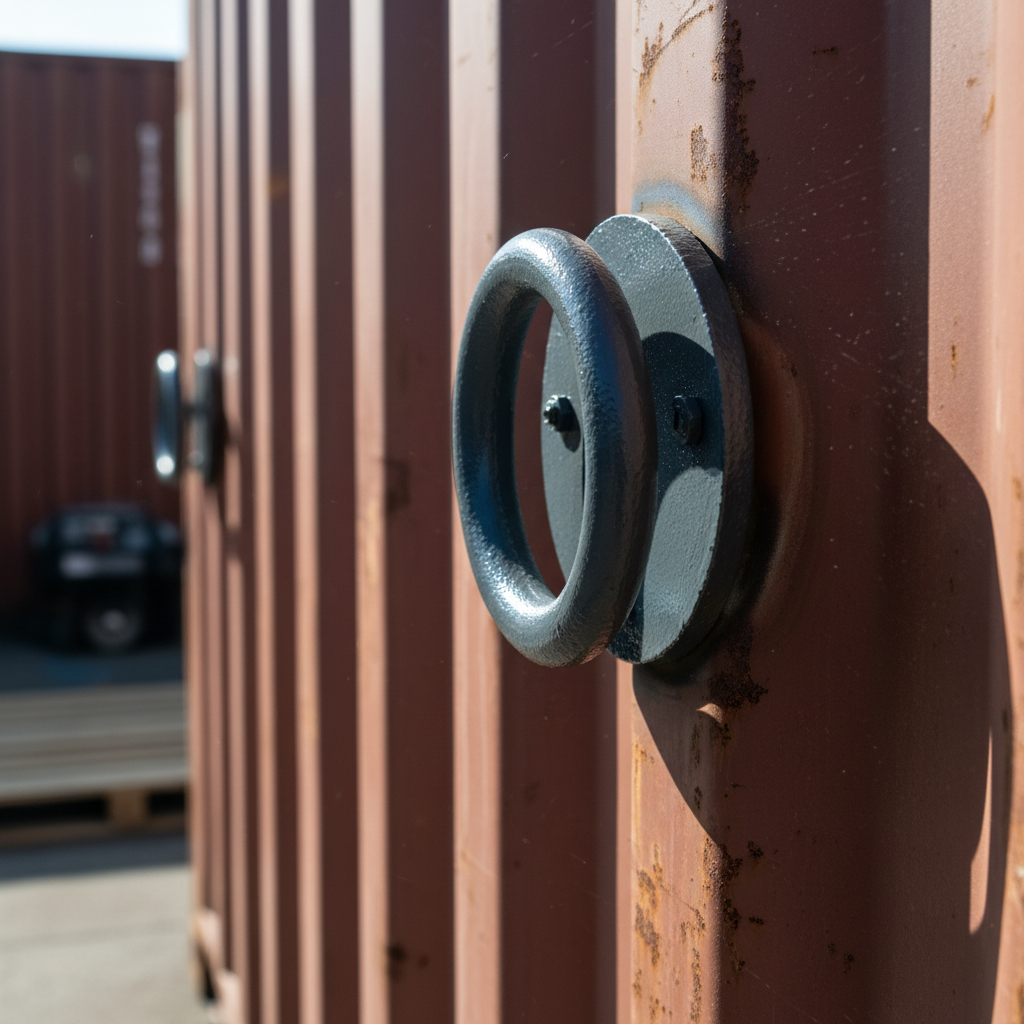
The shipping container d-ring installation price 2026 typically ranges from $125 to $350 per anchor point when professionally installed by a fabricator. This price includes the heavy duty d-rings for containers, structural welding, and localized paint touch-ups to prevent corrosion. For a standard 20ft unit with a four-point tie-down configuration, buyers should budget between $500 and $1,400 above the base container price.
Table of Contents
- Shipping Container D-Ring Installation Price 2026: Cost Breakdown
- What Is Included in Cargo Securement Hardware Costs?
- Delivery, Site Access, and Installation Logistics
- Modification and Add-On Pricing for Secure Storage
- Hidden Costs Buyers Miss in 2026
- How to Lower Your Total Cost
- More on Cargo, Enclosed & Utility Trailers
- Container delivery near you
- Technical Specifications for Heavy-Duty Welded D-Rings
- Site Preparation and Delivery Clearance for Modified Units
- Maximizing the Utility of Your Cargo Securement System
- Frequently Asked Questions
- Explore Related Products & Guides
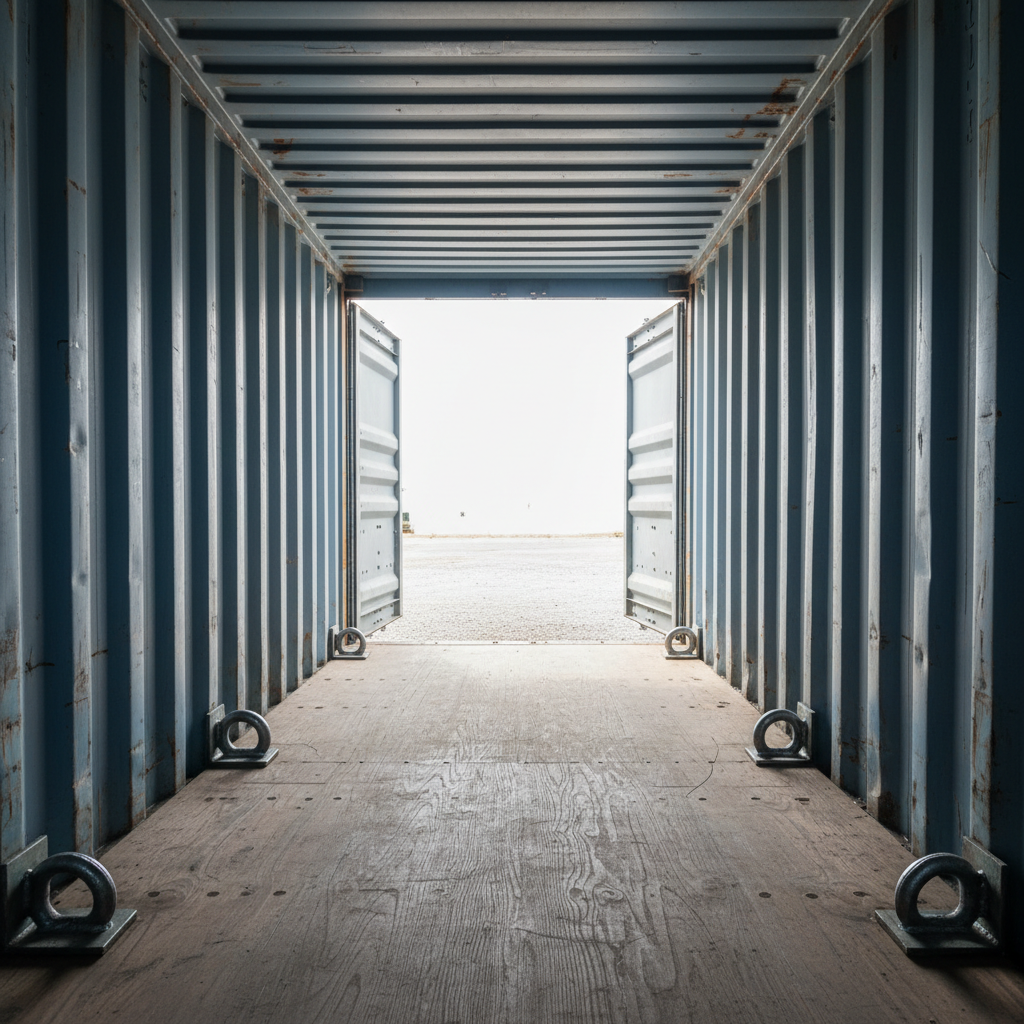
Shipping Container D-Ring Installation Price 2026: Cost Breakdown
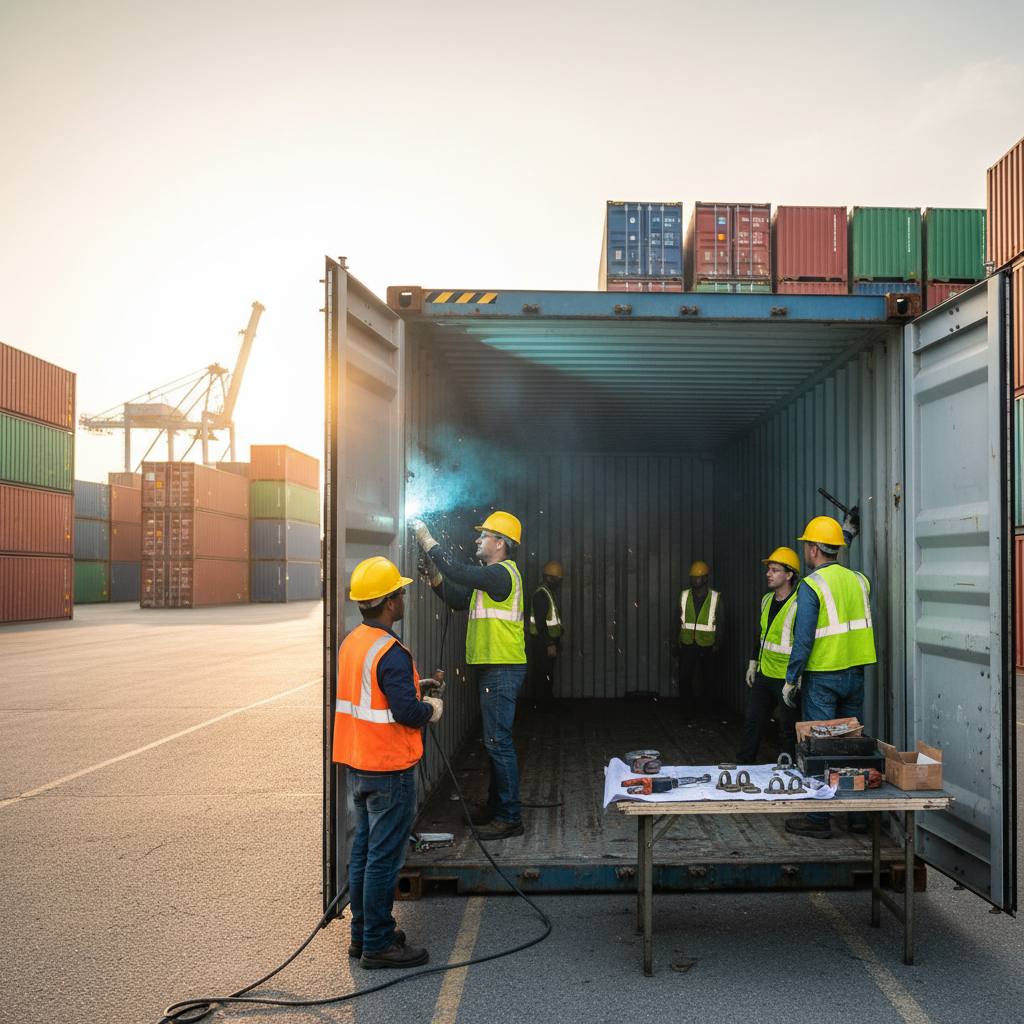
When calculating modified storage container costs, the price fluctuates based on the quantity of rings, the labor rate in your region—such as /shipping-containers-houston or /shipping-containers-atlanta—and whether the unit is being worked on at a depot or on-site. Using CSC plate cargo worthy units ensures the steel is of sufficient quality to support high-tension welds.
| Item/Service | Estimated Cost (Per Unit/Point) | Notes |
|---|---|---|
| Standard Weld-on D-Ring (Hardware) | $15 - $45 | 6k - 15k lb Capacity |
| Labor (Welding & Grinding) | $85 - $200 | Includes surface prep and weld |
| Paint Touch-up (Corten Match) | $25 - $50 | Prevents rust at heat-affected zone |
| Full 4-Point Set Installed | $500 - $1,100 | Bulk discount often applied |
| Heavy-Duty 30k lb Lashing Rings | $450+ | Specialty recessed floor mounts |
What Is Included in Cargo Securement Hardware Costs?
A professional shipping container lashing rings isn't just about the metal loop. It includes the engineering of the load path. For internal container tie downs, the ring must be welded to the structural side-rails or the corner posts, not just the thin 14-gauge wall corrugation. High-quality shipping container lashing rings are typically forged steel and rated for specific Working Load Limits (WLL).
- Hardware: Forged weld-on D-rings with clips.
- Surface Preparation: Grinding away the marine-grade paint to reach bare corten steel.
- Welding: Certified MIG or Stick welding to AWS standards.
- Corrosion Protection: Priming and painting the weld site to match the interior.
Delivery, Site Access, and Installation Logistics
It is significantly cheaper to have D-rings installed at the depot before your container is shipped. If you require on-site installation, you will pay a mobilization fee for a mobile welder. Regardless of modifications, you must adhere to Tilt-Bed Container Trailer Site Access Requirements. For example, a 20ft container needs 100 ft of straight approach and a 25 x 13 ft drop zone. If you choose a larger Outback Summit 40 High-Cube Performance Garage, ensure you have 120 ft of clearance and 15 ft of overhead height.
Important: Never weld D-rings to the center of the wall corrugation. The sheet metal will bow or tear under heavy tension. Always anchor to the bottom rail or top rail for maximum pull strength.
Modification and Add-On Pricing for Secure Storage
Securing loads in shipping containers often goes hand-in-hand with other modifications. If you are building an Outback Forge 20 Insulated Workshop Garage, you may want E-track systems in addition to D-rings.
| Add-on Modification | Price Range (2026) | Benefit |
|---|---|---|
| E-Track Rails (Horizontal) | $35 - $60 per ft | Infinite light-duty tie-down points |
| Heavy Duty D-Rings (Weld-on) | $125 - $350 each | Best for vehicles and machinery |
| Spray Foam Insulation | $1,800 - $3,500 | Prevents condensation on cargo |
| Bamboo Floor Overlay | $1,200 - $2,400 | Protects original marine plywood |
Hidden Costs Buyers Miss in 2026
Beyond the weld-on d-rings for shipping containers, buyers often forget about local permits or specialized foundations. If your container is used for commercial hauling, are D-rings required for DOT container transport? While the container itself is secured to the chassis via twist locks, the internal cargo must be secured per FMCSA 393.100 to avoid fines. Also, consider the cost of shipping container d-ring installation price 2026 if your heavy machinery damages the wood during loading.
How to Lower Your Total Cost
To get the best shipping container d-ring installation price 2026, order your modifications as a bundle. Purchasing an Outback Ridge 20 Compact Equipment Garage with pre-installed tie-downs is cheaper than retrofitting a CSC plate cargo worthy units unit later. Additionally, choosing One-Trip units reduces the labor time needed for surface preparation, as there is no rust or thick scale to grind away before welding cargo securement hardware.
More on Cargo, Enclosed & Utility Trailers
- Best Enclosed vs Open Utility Trailer Alternatives
- Aluminum vs Steel Livestock Trailer Weight Guide 2026
Container delivery near you
We deliver to every state in the lower 48 plus Alaska and Hawaii. These local pages list pricing, metro coverage and typical lead times for the areas we run into most:
- Shipping containers near me — how we source from the depot closest to your ZIP code
- Shipping containers in Arizona — pricing and delivery to Phoenix and Tucson
- Shipping containers in Washington — pricing and delivery to Seattle and Spokane
- Shipping containers in Colorado — pricing and delivery to Denver and Colorado Springs
- Shipping containers in Tennessee — pricing and delivery to Nashville and Memphis
- Shipping containers in Ohio — pricing and delivery to Columbus and Cleveland
- Shipping containers Houston — local yard stock and lead times
Technical Specifications for Heavy-Duty Welded D-Rings
When planning your shipping container d-ring installation price 2026 budget, it is critical to distinguish between bolt-on retail hardware and professional-grade welded securement points. At Outback Shipping Containers LLC, we specialize in high-tensile steel D-rings that are MIG-welded directly to the structural C-channel or top rail of the container. This integration ensures that the securement point is not merely attached to the thin corten steel side walls, which can ripple under heavy load, but is instead anchored to the rigid skeleton of the unit. A standard 20ft or 40ft container features 14-gauge corrugated steel panels, but the structural integrity required for heavy equipment or automotive tie-downs must come from the corner posts and horizontal rails.
The installation process involves grinding away the factory marine-grade paint to expose raw steel, followed by a multi-pass weld to ensure full penetration of the D-ring bracket. In the 2026 market, labor rates for certified welders have stabilized, but the precision required for internal modifications remains a significant factor in the final quote. Every unit inspected before dispatch undergoes a visual check of these weld points to ensure they meet load-bearing expectations for stationary storage or local transport. Unlike generic utility trailers, container D-rings must be positioned to avoid interference with the cargo doors and internal width clearances, typically recessed or placed at a height that accommodates standard ratchet strap angles.
Buyers should also consider the impact of the CSC plate on cargo-worthy units where applicable. If you intend to use your modified container for international shipping, any structural welding must be performed by certified technicians to maintain the validity of the CSC safety certification. Improperly installed D-rings that penetrate the exterior wall can void the wind- and watertight status of the unit. We ensure all modifications are seam-sealed and paint-matched using industrial primers to prevent rust bloom at the weld sites. This attention to detail prevents future maintenance costs that often plague DIY installations where moisture traps lead to localized corrosion behind the D-ring plate.
Furthermore, the placement of D-rings influences the weight distribution inside the container. For customers in Houston, TX, and across the United States, we recommend a symmetrical layout. Typically, four to six rings per side are sufficient for securing a vehicle or heavy machinery. By distributing the tension across multiple structural points, you minimize the risk of warping the top rails or pulling the floor cross-members out of alignment. This professional approach to securement is what justifies the professional installation price over cheaper, less reliable bolt-through methods that frequently fail under the dynamic loads experienced during a tilt-bed delivery or relocation.
Tip: Our modified refrigerated containers (reefers) run on single-phase 220/240V from a dedicated 240V circuit (50A standard, 60A blast freezers). If you are installing D-rings in a reefer, special care is taken to maintain the thermal envelope and internal stainless steel lining.
- Standard 1-inch forged steel D-ring: 4,000 lbs working load limit.
- Heavy-duty 2-inch recessed D-ring: 6,000 lbs working load limit for automotive use.
- Top-rail lashing bars: Best for securing tall furniture or crated goods.
- Floor-mounted flush rings: Ideal for rolling stock that requires a flat floor surface.
Site Preparation and Delivery Clearance for Modified Units
A critical component of your total shipping container d-ring installation price 2026 is the final delivery to your site. Because modified containers often hold valuable equipment immediately upon arrival, ensuring a smooth drop-off is paramount. For a standard 20ft container, our tilt-bed trucks require 100 ft of straight, clear approach and a drop zone of at least 25 x 13 ft. The surface must be level and compacted to prevent the container from shifting, which could put unnecessary stress on your newly installed internal securement hardware. We provide inspection documentation with every purchase, verifying that the unit was inspected wind- and watertight before it left our Houston facility.
For larger projects involving 40ft containers, the clearance requirements increase to 120 ft of straight approach and a 45 x 13 ft drop zone. It is vital to note that tilt-bed delivery needs a minimum of 14 ft of overhead clearance, and 15 ft if you have opted for a high cube model. These figures are non-negotiable for safe operation. If your site has low-hanging branches or power lines, these must be cleared before the driver arrives. Failure to provide the required 12 ft of width or the necessary straight-line approach can result in failed delivery fees, which significantly inflates your total investment beyond the initial hardware and installation costs.
If you are purchasing a container home, pool, or modular office that requires D-rings for specialized furniture or equipment, these units typically arrive on a flatbed and are set by a crane. These deliveries require an 80 ft straight truck access approach and a 20 x 30 ft crane pad within 25 ft of the set point. Unlike the sliding action of a tilt-bed, a crane lift ensures the container remains perfectly level during placement, which is the preferred method for highly modified units where internal structural integrity is sensitive. For more details on these specific requirements, please review our /shipping-policy to ensure your site is fully prepared for our nationwide delivery team.
Finally, consider the long-term placement of your unit. If the container is not leveled correctly on its foundation—whether that be a gravel pad, concrete piers, or a slab—the frame can rack. Racking occurs when the container is slightly twisted, making the heavy cargo doors difficult to open and potentially putting your tie-down points under static tension before you even load your cargo. Our delivery teams are experienced in placing units in tight U.S. residential and commercial settings, but the buyer is responsible for ensuring the drop zone is clear of overhead obstructions. A well-placed, level container preserves the value of your modifications and ensures your securement system functions as engineered for the life of the unit.
| Container Size | Delivery Method | Straight Approach | Drop Zone Area | Overhead Clearance |
|---|---|---|---|---|
| 10ft Container | Tilt-bed | 90 ft | 17 x 13 ft | 14 ft (15ft HC) |
| 20ft Container | Tilt-bed | 100 ft | 25 x 13 ft | 14 ft (15ft HC) |
| 40ft Container | Tilt-bed | 120 ft | 45 x 13 ft | 14 ft (15ft HC) |
| 45ft High Cube | Tilt-bed | 125 ft | 50 x 13 ft | 15 ft |
| 53ft High Cube | Tilt-bed | 135 ft | 58 x 13 ft | 15 ft |
Maximizing the Utility of Your Cargo Securement System
Investing in professional D-ring installation is about more than just hardware; it is about versatile logistics. In 2026, we see a rise in 'multi-modal' storage where customers use containers for both stationary storage and periodic relocation of workshop equipment. By choosing welded D-rings over temporary solutions, you are future-proofing the unit. Each ring is inspected to be wind- and watertight at the point of penetration, ensuring that your interior remains dry even in the humid climates of the Gulf Coast or the snowy regions of the Pacific Northwest. We recommend a staggered height approach for D-rings: some near the floor for motorcycles or ATVs, and others at the 4-foot mark for stabilizing tall tool chests or racking systems.
For commercial clients, the addition of these securement points can lower insurance premiums for goods in transit. When a container is loaded onto a chassis or moved via tilt-bed, the internal forces can be significant. Standard cargo-worthy units come with basic lashing points, but these are often insufficient for 2026 safety standards regarding heavy machinery. Our team at Outback Shipping Containers LLC ensures that the installation does not compromise the exterior corten steel's ability to resist corrosion. We apply a zinc-rich primer to all modified areas, which is a standard procedure for every unit inspected before dispatch. This prevents the 'rust streaks' often seen on lower-quality modifications.
Another factor to consider is the 'clear width' inside the container. A standard container has an internal width of approximately 7 feet 8 inches. Recessed D-rings are an excellent option if you are loading vehicles with wide wheelbases, as they sit flush with the corrugated wall. While the shipping container d-ring installation price 2026 for recessed units is slightly higher due to the additional cutting and framing required, the benefit of an unobstructed floor and wall space is often worth the investment. This is especially true for container workshops or 'man caves' where floor space is at a premium and safety is a high priority.
In conclusion, while the price of steel and labor can fluctuate, the value of a professionally modified container remains high. Whether you are in Houston or anywhere across the U.S., selecting a partner that understands the structural nuances of these units is vital. We don't just weld metal; we ensure that your mobile storage solution remains a structural asset. From the initial inspection of the base unit to the final delivery at your prepared site, every step is designed to provide a secure, reliable environment for your most valuable cargo. Remember to verify your site clearances against our standard tilt-bed requirements—100 ft for 20ft units and 120 ft for 40ft units—to ensure your delivery goes as planned.
Important: Never use D-rings to lift a loaded container unless they are specifically engineered and certified as lifting lugs. Standard securement D-rings are designed for tie-down tension only. For lifting heavy units, always use the four corner castings.
When modifying a shipping container for transport or using it as a chassis-mounted unit, you must adhere to federal regulations regarding securing loads and DOT lighting requirements. The Department of Transportation mandates that any cargo securement system, including D-rings, must be capable of withstanding specific force thresholds based on the Gross Vehicle Weight Rating (GVWR). Failure to properly secure internal contents can lead to structural shifting, which affects vehicle stability and increases the risk of road accidents.
In addition to physical securement, legal transport requires functional lighting. DOT lighting requirements dictate that containers mounted on trailers must have visible clearance lamps, identification lamps, and tail lamps that remain unobstructed. In 2026, many operators are integrating recessed LED lighting directly into the container frame during the D-ring installation process to ensure long-term durability and compliance during roadside inspections.
Modern enforcement utilizes thermal imaging and load sensors to verify that operators are securing loads and DOT lighting requirements are met before the vehicle enters high-traffic corridors. For containers used as mobile workshops or utility units, this means D-rings must be rated for at least 1.5 times the weight of the heaviest equipment stored. Furthermore, any external modifications must not interfere with the reflective tape or light clusters required by FMCSA Title 49 standards.
Securing loads and DOT lighting requirements: Beyond simple D-ring placement, comprehensive cargo securement involves the use of Grade 70 transport chains or heavy-duty polyester webbing rated for the specific load limit. Federal law requires that all lighting systems remain operational under all weather conditions, necessitating weatherproof wiring harnesses for any container-trailer hybrid configuration.
Trailer maintenance: bearings, brakes and tires: Integrating a shipping container onto a trailer frame increases the demand on the underlying mechanical systems. Regular trailer maintenance—specifically focusing on repacking wheel bearings every 12,000 miles, inspecting electric brake magnets for wear, and maintaining tire pressure to prevent sidewall blowouts—is essential to handle the concentrated weight of a modified steel unit.
| Service/Component | Estimated Cost (USD) | Frequency |
|---|---|---|
| DOT-Compliant LED Lighting Kit | $250 - $600 | Per Installation |
| Wheel Bearing Repack & Inspection | $150 - $300 | Annually |
| Electric Brake Adjustment | $100 - $200 | Bi-Annually |
| Load-Rated Radial Tires (Load Range E/G) | $180 - $350 | Per Tire |
Frequently Asked Questions
Common questions regarding load securement and internal modifications for 2026.
Explore Related Products & Guides
Frequently Asked Questions
How much does it cost to add D-rings to a container?
In 2026, expect to pay between $125 and $350 per ring for professional installation, including the hardware, welding labor, and paint touch-ups.
Where should tie-down points be installed in a 20ft container?
Standard placement includes four points: two on each side wall, anchored to the bottom structural rail, approximately 2-3 feet from the corners.
Are D-rings required for DOT container transport?
D-rings themselves aren't explicitly mandated, but FMCSA regulations require all cargo to be secured. D-rings are the most reliable method for meeting these securement standards.
What is the weight rating for container lashing rings?
Standard heavy-duty D-rings are usually rated for a Working Load Limit (WLL) of 4,000 to 6,000 lbs, with break strengths often exceeding 12,000 lbs.
Can you install D-rings on a used wind and watertight container?
Yes, but the weld area must be ground to bare metal. Ensure the structural rails are not severely thinned by rust to maintain the rated capacity of the ring.
Do I need a permit to add D-rings to my container?
Generally, no. Internal hardware modifications do not usually require a local building permit, though they should be performed by a qualified welder for safety.
What is the professional labor rate for welding D-rings in 2026?
Expect to pay between $150 and $250 for professional mobile welding services to install 4 to 6 D-rings. While the rings themselves cost only $15 to $30 each, certified welders charge for a minimum service call and surface preparation. In 2026, many shops offer flat-rate installation packages for new 40ft units starting at $450, which includes heavy-duty recessed rings and rust-inhibitive primer over the weld points.
Does installing D-rings affect the ISO certification of a container?
Standard D-ring installation for cargo tie-downs typically does not void ISO certification if the rings are welded to the corner posts or heavy wall corrugation without compromising structural integrity. However, if the rings are used for heavy lifting rather than securing, a re-certification survey by a maritime surveyor is necessary. For US domestic storage use, no certification is impacted, but for international shipping, all modifications must meet CSC safety standards.
What are the advantages of recessed D-rings versus surface-mount rings?
Recessed D-rings are preferred for high-traffic floors as they sit flush with the 1.1-inch marine-grade plywood, preventing trip hazards and damage from forklifts. While surface-mount rings are $50 cheaper per set and easier to weld to the steel frame, they reduce usable floor space and catch on pallet jacks. In 2026, most US modifications use recessed 6,000-lb rated rings for maximum versatility in vehicle transport and heavy equipment storage.
How many D-rings are recommended for securing a vehicle in a 40ft container?
For securing a standard vehicle or light truck, a minimum of eight D-rings is recommended—four at the front and four at the rear to allow for crossing straps. Strategic placement involves welding four rings to the floor crossmembers and four to the side wall structural tubing about 24 inches high. This configuration provides 360-degree tension, ensuring the vehicle remains stationary during the lateral forces experienced during trucking or rail transport across the US.
Frequently asked questions
How much does it cost to add D-rings to a container?
In 2026, expect to pay between $125 and $350 per ring for professional installation, including the hardware, welding labor, and paint touch-ups.
Where should tie-down points be installed in a 20ft container?
Standard placement includes four points: two on each side wall, anchored to the bottom structural rail, approximately 2-3 feet from the corners.
Are D-rings required for DOT container transport?
D-rings themselves aren't explicitly mandated, but FMCSA regulations require all cargo to be secured. D-rings are the most reliable method for meeting these securement standards.
What is the weight rating for container lashing rings?
Standard heavy-duty D-rings are usually rated for a Working Load Limit (WLL) of 4,000 to 6,000 lbs, with break strengths often exceeding 12,000 lbs.
Can you install D-rings on a used wind and watertight container?
Yes, but the weld area must be ground to bare metal. Ensure the structural rails are not severely thinned by rust to maintain the rated capacity of the ring.
Do I need a permit to add D-rings to my container?
Generally, no. Internal hardware modifications do not usually require a local building permit, though they should be performed by a qualified welder for safety.
What is the professional labor rate for welding D-rings in 2026?
Expect to pay between $150 and $250 for professional mobile welding services to install 4 to 6 D-rings. While the rings themselves cost only $15 to $30 each, certified welders charge for a minimum service call and surface preparation. In 2026, many shops offer flat-rate installation packages for new 40ft units starting at $450, which includes heavy-duty recessed rings and rust-inhibitive primer over the weld points.
Does installing D-rings affect the ISO certification of a container?
Standard D-ring installation for cargo tie-downs typically does not void ISO certification if the rings are welded to the corner posts or heavy wall corrugation without compromising structural integrity. However, if the rings are used for heavy lifting rather than securing, a re-certification survey by a maritime surveyor is necessary. For US domestic storage use, no certification is impacted, but for international shipping, all modifications must meet CSC safety standards.
What are the advantages of recessed D-rings versus surface-mount rings?
Recessed D-rings are preferred for high-traffic floors as they sit flush with the 1.1-inch marine-grade plywood, preventing trip hazards and damage from forklifts. While surface-mount rings are $50 cheaper per set and easier to weld to the steel frame, they reduce usable floor space and catch on pallet jacks. In 2026, most US modifications use recessed 6,000-lb rated rings for maximum versatility in vehicle transport and heavy equipment storage.
How many D-rings are recommended for securing a vehicle in a 40ft container?
For securing a standard vehicle or light truck, a minimum of eight D-rings is recommended—four at the front and four at the rear to allow for crossing straps. Strategic placement involves welding four rings to the floor crossmembers and four to the side wall structural tubing about 24 inches high. This configuration provides 360-degree tension, ensuring the vehicle remains stationary during the lateral forces experienced during trucking or rail transport across the US.
About Outback Container Experts
This guide was prepared by the Outback Shipping Containers team, based on the questions our customers ask us most when buying, modifying and taking delivery of shipping containers. Learn more about us.
Ready to find your container?
Browse our in-stock shipping containers, container homes and custom builds, or ask our team for a free quote with delivery to your site.