How to Insulate a Shipping Container for Summer Heat (2026)
By Outback Container Experts · Published July 23, 2026 · Last updated October 11, 2026

Inside an uninsulated 40ft used shipping container on a typical 90-degree July afternoon, the air temperature can easily spike to 125 degrees Fahrenheit. This is because the CORTEN steel—a weather-resistant alloy designed for maritime durability—acts as a massive thermal conductor. Without a strategic thermal break, your living space effectively becomes a solar oven. Learning how to insulate a shipping container for summer isn't just about comfort; it is about protecting your interior finishes and preventing the structural degradation caused by extreme heat cycling.
Table of Contents
- how to insulate a shipping container for summer: The Physics of Keeping a Container Home Cool in July
- Spray Foam vs. Batt Insulation for Containers
- Advanced Cooling: Radiant Barriers and Reflective Paints
- Ventilation Systems for Shipping Container Homes
- The Thermal Bridge Management Strategy
- Strategic Exterior Shading and Solar Heat Gain Mitigation
- The Dehumidification and Airflow Equation
- Frequently Asked Questions
- Ready to Beat the Heat?
- Explore Related Products & Guides
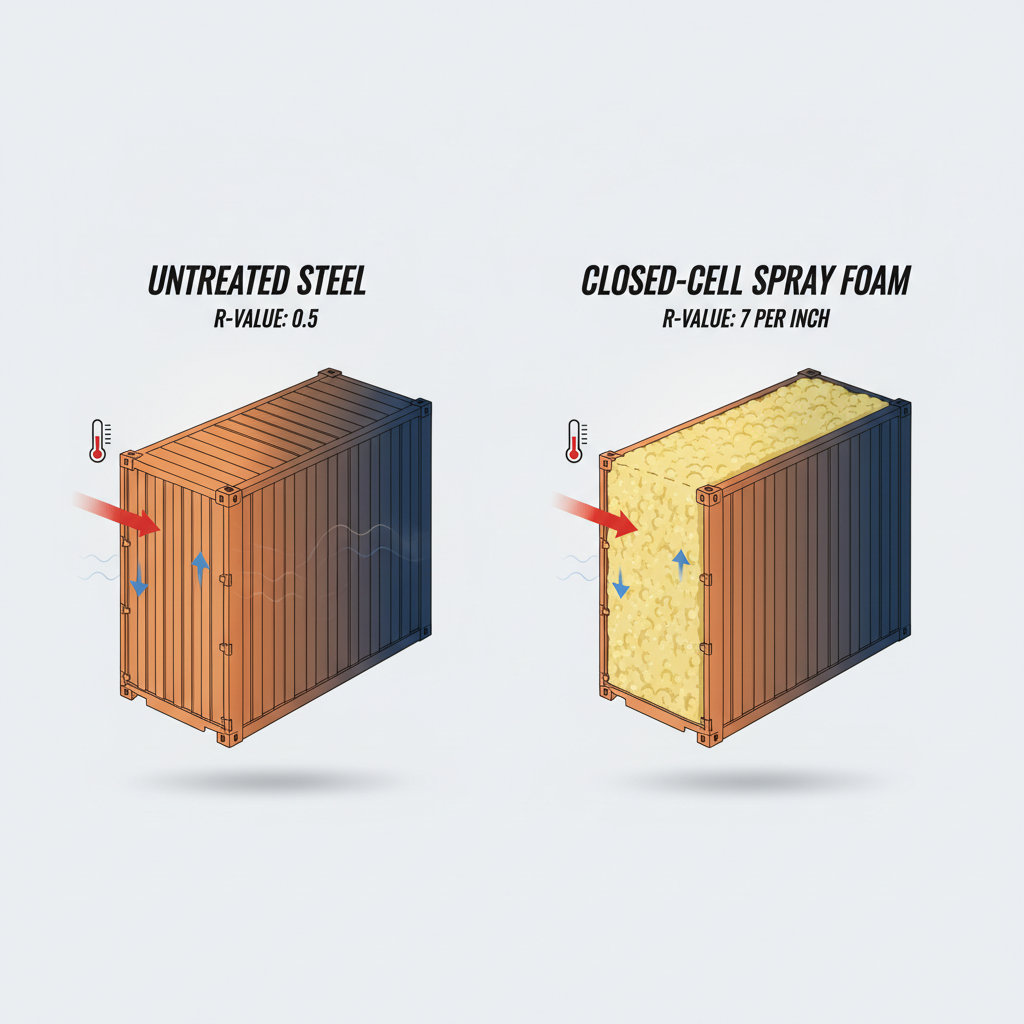
how to insulate a shipping container for summer: The Physics of Keeping a Container Home Cool in July
Heat enters your container in three ways: conduction, convection, and radiation. In the height of summer, radiant heat from the sun is your primary enemy. When that steel skin heats up, it transfers energy to the interior studs and air. To solve this, you need a solution that combines a high R-value (resistance to heat flow) with a radiant barrier. If you are starting from scratch or looking at luxury modular container home villas, the insulation strategy is often baked into the build, but DIYers must be more intentional.
Spray Foam vs. Batt Insulation for Containers
When users ask us if spray foam is worth it for container homes, the answer is almost always a resounding yes. Standard fiberglass batts or Rockwool require a vapor barrier that is nearly impossible to seal perfectly against corrugated steel. Any gaps lead to condensation, which causes hidden rust. Closed-cell spray foam, however, adheres directly to the steel, eliminating the air gap where moisture would otherwise collect.
| Insulation Type | Estimated R-Value (per inch) | Condensation Control | Summer Performance |
|---|---|---|---|
| Closed-Cell Spray Foam | 6.5 - 7.0 | Excellent (Vapor Barrier Built-in) | Superior |
| InSoFast Panels | 10.0 (Total Panel) | Good (Integrated Drainage) | High |
| Fiberglass Batts | 3.1 - 3.4 | Poor (Needs separate barrier) | Moderate |
| Radiant Barriers | N/A | None | High (Solar Reflection) |
Why Closed Cell Spray Foam R-Value Wins
Closed cell spray foam provides an R-value of roughly 6.5 to 7 per inch. In a 40ft high cube shipping container, applying 2 to 3 inches of foam creates a powerful thermal envelope that keeps out the 2026 summer heatwaves. It also adds structural rigidity, which is vital when you've cut out large sections for windows or doors.
Advanced Cooling: Radiant Barriers and Reflective Paints
If you cannot afford a full spray foam interior, or if you're looking to augment your existing setup, focusing on the exterior skin is the next best move. Shipping container radiant barrier installation involves applying foil-faced materials that reflect solar energy before it ever hits the steel. Even the best paint to reflect heat on shipping containers, such as ceramic-infused coatings like SuperTherm, can drop surface temperatures by as much as 40 to 50 degrees.
Tip: Never use dark colors for your container's exterior if you live in high-UV areas like Arizona or Texas. A white or light-tan roof alone can reduce your AC load by 25%.
Alternative Methods: InSoFast Panels
InSoFast panels for shipping containers cost more upfront than traditional studs and batts, but they are engineered specifically for the corrugation of ISO containers. These EPS foam panels snap into place, creating a continuous thermal break and providing built-in channels for electrical wiring. This is a game-changer for those modifying a standard 20ft container without professional spraying equipment.
Ventilation Systems for Shipping Container Homes
Insulation keeps heat out, but ventilation keeps air moving. Without adequate airflow, even an insulated container can feel stuffy. For those looking at mobile container office units with HVAC, we always recommend a dual-path ventilation system. Passive vents at the floor level combined with solar-powered exhaust fans near the roof use convection to naturally pull the hot air out.
- Install louvered vents on the leeward side to prevent rain ingress.
- Use rooftop turbine vents for 24/7 passive extraction.
- Consider an ERV (Energy Recovery Ventilator) to exchange stale indoor air with fresh outdoor air without losing your cool interior temperature.
- Ensure all cuts for vents are treated with zinc-rich primer to prevent rust of the CORTEN steel.

The Thermal Bridge Management Strategy
One of the most significant oversights when insulating a shipping container for extreme summer heat is failing to account for thermal bridging. Because the container's shell is composed of Corten steel, it acts as a massive radiator. Even with high-quality interior insulation, the steel studs or direct contact points between the exterior skin and the interior framing will transfer heat into your living space at an alarming rate. To combat this, you must prioritize a thermal break. This involves decoupling the interior wall assembly from the metal skin using materials like EPS foam strips or specialized magnetic mounting brackets that prevent metal-on-metal contact.
When calculating your R-value requirements for summer, remember that cooling a space often requires more energy than heating it, especially in humid Southern climates. In regions like Texas or Arizona, where surface temperatures on dark-painted containers can exceed 150 degrees Fahrenheit, a standard R-13 batt will likely fail. You should aim for a continuous insulation layer that covers the ribs of the container entirely. This ensures that the 'cookie cutter' effect—where heat bleeds through every point the wall studs meet the container wall—is neutralized.
- Infiltrated Thermal Break Strips: Apply high-density foam tape to the face of any metal studs before hanging drywall.
- Non-Conductive Fasteners: Use nylon or composite standoffs when mounting exterior cladding to avoid creating heat conduction paths.
- Staggered Stud Framing: If space permits, build an internal wooden frame that doesn't touch the steel walls, leaving a 1-inch air gap for maximum thermal resistance.
- Closed-Cell Edge Sealing: Ensure that any gaps around plumbing or electrical penetrations are filled with expanding foam to prevent 'hot spots'.
Important: Avoid using standard fiberglass batts without a perfectly sealed vapor barrier. In summer, humid air can condense against the cool side of the metal interior, leading to hidden mold growth and structural rust within your walls.
Strategic Exterior Shading and Solar Heat Gain Mitigation
Insulation is your last line of defense, but exterior shading is your first. The most effective way to keep a container cool is to prevent the sun's rays from ever touching the steel surface. This can be achieved through a 'second skin' approach or a rainscreen system. By installing a secondary roof structure—often called a 'fly roof'—you create a permanent pocket of moving air between the hot sun and the container's top surface. This single modification can reduce the internal temperature of a container by up to 30 degrees before the insulation even begins to work.
Don't underestimate the power of the 'Albedo Effect.' The color of your container drastically alters its heat absorption. A dark blue or charcoal container will absorb roughly 90% of solar radiation, whereas a white or light-tan container reflects the majority of it. When combining reflective coatings with physical shading, you create a tiered defense system that allows your HVAC or swamp cooler to run significantly less often, extending the lifespan of your mechanical systems and reducing monthly utility costs.
| Method | Heat Reduction Impact | Installation Complexity | Best Use Case |
|---|---|---|---|
| Fly Roof (Secondary) | High (25-30°F) | High | Permanent off-grid setups |
| Ceramic Reflective Paint | Moderate (10-15°F) | Low | Quick retrofits in high sun areas |
| Living Green Wall | Moderate (8-12°F) | Medium | Eco-friendly urban containers |
| Bamboo Roller Shades | Low-Moderate (5-10°F) | Very Low | Temporary or seasonal cooling |
Tip: When installing a fly roof, ensure a minimum 6-inch gap between the container and the shade structure to allow for adequate convection airflow.
The Dehumidification and Airflow Equation
In many parts of the United States, summer heat is inextricably linked with high humidity. If you only focus on R-value without addressing moisture content in the air, the interior will feel 'swampy' and uncomfortable even at 72 degrees. Managing the dew point inside a steel box is critical. You must design a ventilation strategy that facilitates cross-ventilation. This is best achieved by placing intake vents low on the windward side of the container and exhaust vents (or solar-powered fans) high on the opposite side to take advantage of the stack effect.
For those using mini-split systems, the technical sizing is different for containers than for traditional stick-built homes. Because containers are airtight environments, a system that is too large will cool the air too quickly without removing the humidity, leaving the space cold and damp. Sizing your system to run longer cycles will provide better dehumidification. Additionally, consider the placement of your windows. High-performance, Low-E glass is non-negotiable for any southern-facing glazing to prevent the 'greenhouse effect' from neutralizing your insulation efforts.
- Calculate the Cubic Feet per Minute (CFM) required for your container volume to ensure a full air exchange every 4-6 hours.
- Install a dedicated dehumidifier if you are in the Southeast or Gulf Coast regions, independent of your AC unit.
- Use Energy Recovery Ventilators (ERVs) to bring in fresh air without losing the cool temperature you have already paid for.
- Position windows to capture prevailing summer breezes based on your specific site orientation.
Tip: Using a solar-powered attic fan on the roof of your container can pull out the hottest air trapped near the ceiling for $0 in operating costs.
Container delivery near you
We deliver to every state in the lower 48 plus Alaska and Hawaii. These local pages list pricing, metro coverage and typical lead times for the areas we run into most:
- Shipping containers near me — how we source from the depot closest to your ZIP code
- Shipping containers in Georgia — pricing and delivery to Atlanta and Savannah
- Shipping containers in North Carolina — pricing and delivery to Charlotte and Raleigh
- Shipping containers in Washington — pricing and delivery to Seattle and Spokane
- Shipping containers in Colorado — pricing and delivery to Denver and Colorado Springs
Frequently Asked Questions
Navigating the thermal challenges of metal buildings often leads to several common questions from first-time buyers and builders.
Ready to Beat the Heat?
Whether you are planning a full-scale Kennedy Luxury Container Home or managing a custom DIY conversion, getting the insulation right the first time is the difference between a livable space and a storage box. If you're ready to compare inventory or need a unit already pre-insulated, our team can pull matching units from our nationwide depots and discuss professional modification options that meet IRC standards. Contact us today for a quote on high-grade units designed for thermal efficiency.
Explore Related Products & Guides
Frequently Asked Questions
How do I stop my shipping container from getting so hot?
The most effective method is a combination of white reflective roof coating, closed-cell spray foam insulation (at least 2 inches), and a powered ventilation system to exhaust rising heat.
Can you insulate a shipping container from the outside?
Yes. External insulation (the 'Innie' vs 'Outie' debate) involves framing the exterior and applying foam or rigid boards, then cladding it. This is highly effective as it prevents the steel itself from ever heating up, though it changes the industrial aesthetic.
What is the cheapest way to insulate a container?
The most budget-friendly method is using EPS rigid foam boards and reflective bubble wrap (radiant barrier), though it requires careful sealing with foil tape to prevent condensation and rust.
How to keep a metal container cool without electricity?
Focus on 'cool roof' paints to reflect 90% of solar radiation, install passive whirlybird vents for airflow, and use shade structures (like a fly roof) to keep the container out of direct sunlight.
How much does it cost to insulate a 40ft container?
In 2026, professional spray foam for a 40ft High Cube typically ranges from $2,500 to $4,500 depending on the depth and local labor rates. DIY foam kits for the same size range from $1,800 to $2,800.
Is spray foam worth it for container homes?
Absolutely. Since it acts as both a high-R-value insulator and a vapor barrier, it is the only system that effectively prevents the interstitial condensation that leads to interior rust in metal buildings.
Frequently asked questions
How do I stop my shipping container from getting so hot?
The most effective method is a combination of white reflective roof coating, closed-cell spray foam insulation (at least 2 inches), and a powered ventilation system to exhaust rising heat.
Can you insulate a shipping container from the outside?
Yes. External insulation (the 'Innie' vs 'Outie' debate) involves framing the exterior and applying foam or rigid boards, then cladding it. This is highly effective as it prevents the steel itself from ever heating up, though it changes the industrial aesthetic.
What is the cheapest way to insulate a container?
The most budget-friendly method is using EPS rigid foam boards and reflective bubble wrap (radiant barrier), though it requires careful sealing with foil tape to prevent condensation and rust.
How to keep a metal container cool without electricity?
Focus on 'cool roof' paints to reflect 90% of solar radiation, install passive whirlybird vents for airflow, and use shade structures (like a fly roof) to keep the container out of direct sunlight.
How much does it cost to insulate a 40ft container?
In 2026, professional spray foam for a 40ft High Cube typically ranges from $2,500 to $4,500 depending on the depth and local labor rates. DIY foam kits for the same size range from $1,800 to $2,800.
Is spray foam worth it for container homes?
Absolutely. Since it acts as both a high-R-value insulator and a vapor barrier, it is the only system that effectively prevents the interstitial condensation that leads to interior rust in metal buildings.
About Outback Container Experts
This guide was prepared by the Outback Shipping Containers team, based on the questions our customers ask us most when buying, modifying and taking delivery of shipping containers. Learn more about us.
Ready to find your container?
Browse our in-stock shipping containers, container homes and custom builds, or ask our team for a free quote with delivery to your site.