Insulated Container Offices for Extreme Heat: 2026 Guide
By Outback Container Experts · Published July 21, 2026 · Last updated October 11, 2026

As summer temperatures across the United States reach historic highs in 2026, the primary challenge for mobile job sites and remote professionals isn't just space—it’s thermal management. A standard steel box is a thermodynamic sponge; without the right interventions, interior temperatures can soar 30 degrees above the ambient air. If you are investing in an insulated shipping container office for extreme temperatures, you aren't just buying a box; you're buying a controlled environment where precision insulation and mechanical cooling work in tandem to beat triple-digit heat.
Table of Contents
- insulated shipping container office for extreme temperatures: The Physics of Heat in Steel Containers
- Top Insulation Strategies for 100°F+ Environments
- HVAC Integration: Beyond Window Units
- Preventing Condensation and Rust
- Selecting the R-Value: Matching Material to Regional Extremes
- Thermal Bridging and Framing Geometry via Steel Studs vs. Wood
- Power Requirements for Extreme Temperature HVAC Systems
- Frequently Asked Questions
- Conclusion: Investing in Thermal Longevity
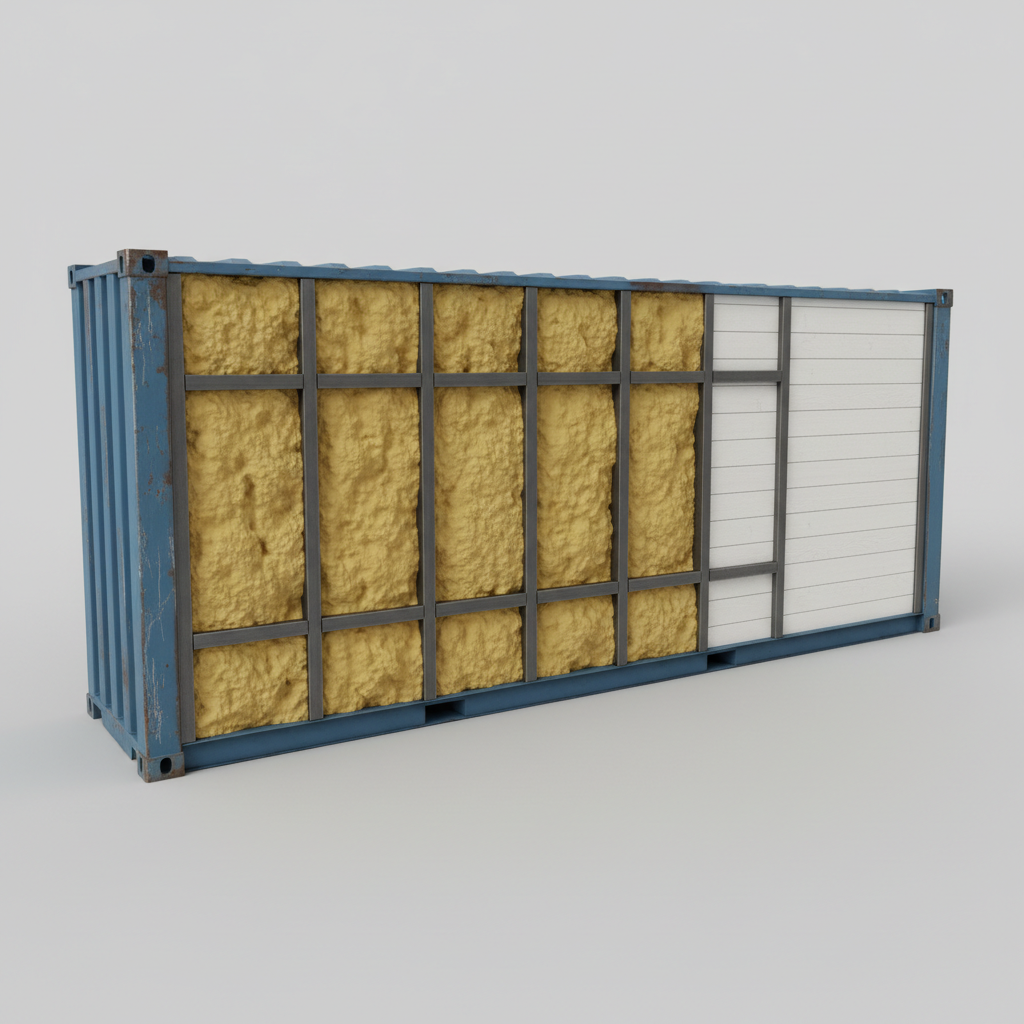
insulated shipping container office for extreme temperatures: The Physics of Heat in Steel Containers
To understand why a basic 20ft new shipping container fails in the heat of Arizona or Florida, you have to look at thermal bridging. Steel is a highly conductive material. Heat travels through the exterior corrugation and directly into the interior framing. If your insulation doesn't break this physical contact, the 'bridge' remains, rendering your AC unit inefficient.
Achieving a functional insulated shipping container office for extreme temperatures requires more than just fiberglass batts. In fact, traditional fiberglass is often the worst choice for containers because it allows moisture to reach the steel, leading to hidden corrosion and mold behind your walls.
Top Insulation Strategies for 100°F+ Environments
When we build a custom prefab container office, we prioritize methods that address both R-value (thermal resistance) and air sealing.
- Closed-Cell Spray Foam: This is the gold standard. A 2-inch application provides an R-value of roughly 13-14 while acting as a vapor barrier that prevents condensation.
- Injected Foam Rebar: Used primarily in refrigerated container office conversions, where the factory-insulated walls provide R-28 to R-32 performance.
- Mineral Wool: An excellent fire-resistant alternative that does not off-gas, though it requires a meticulous vapor barrier to protect the Corten steel.
- Ceramic Heat-Reflective Coatings: Applied to the roof, these coatings can reflect up to 80% of solar radiation before it ever enters the steel.
| Insulation Type | R-Value/Inch | Moisture Resistance | Cost Tier | Best Use Case |
|---|---|---|---|---|
| Closed-Cell Spray Foam | 6.5 - 7.0 | Excellent (Vapor Barrier) | High | High-humidity & Extreme Heat |
| Polystyrene (EPS) Panels | 3.8 - 4.2 | Moderate | Medium | Budget-conscious storage/work |
| Mineral Wool | 3.0 - 3.4 | Low (Needs Barrier) | Medium | Fire-rated job sites |
| Reefer Factory Foam | 7.0+ | Extreme | Premium | Mobile Medical/Lab Units |
HVAC Integration: Beyond Window Units
For a modular container office in the Sun Belt, a standard 5,000 BTU window shaker won't cut it. You generally need high BTU container AC units that account for the 'heat soak' of the metal skin. We recommend a minimum of 12,000 BTUs for a 20ft unit and 24,000 BTUs for a 40ft high cube shipping container.
Tip: Always opt for a mini-split system over a through-the-wall AC. Mini-splits are more energy-efficient, quieter, and don't require cutting a massive heat-leaking hole in your container's structural integrity.
Refrigerated Containers as Office Shells
If you are facing extreme desert heat, consider starting with a used 20ft refrigerated container. These containers (reefers) are engineered with stainless steel interiors and 3-4 inches of high-density polyurethane foam already injected into the walls. They are essentially walk-in coolers, making them the most efficient starting point for a climate controlled portable office.

Preventing Condensation and Rust
The 'canning' effect—where warm, moist air hits cold steel—is a silent killer of container builds. In extreme temperatures, the temperature differential between your 72°F office and the 100°F outside air creates a dew point on the metal surface. Using spray foam insulation shipping container methods is the only way to hermetically seal the steel from the internal air, effectively eliminating the condensation cycle that leads to rust.
Selecting the R-Value: Matching Material to Regional Extremes
When building an insulated shipping container office for extreme temperatures, the most critical metric is the R-value per inch of thickness. In climates like the Mojave Desert or the Alaskan North Slope, standard fiberglass batts often fail because they settle over time due to vibration during transport and high humidity cycles. For a truly professional climate-controlled office, closed-cell spray foam is the industry gold standard. It provides an R-value of approximately 6.5 to 7.0 per inch, creates a seamless air barrier, and adds structural rigidity to the container walls.
Alternatively, rigid foam boards like Polyisocyanurate (Polyiso) offer a high R-value in a thinner profile, which is vital when you are trying to preserve as much interior square footage as possible in a narrow 8-foot wide container. If you choose an inferior insulation method in a 110°F environment, the steel skin can reach temperatures of 150°F, causing the interior cooling system to work at a 100% duty cycle, leading to premature compressor failure.
| Insulation Type | R-Value per Inch | Moisture Resistance | Best Use Case |
|---|---|---|---|
| Closed-Cell Spray Foam | 6.5 - 7.0 | High (Vapor Barrier) | High humidity and extreme cold |
| Polyisocyanurate Board | 6.0 - 6.5 | Moderate | Precision DIY and space-saving |
| Mineral Wool (Rockwool) | 3.3 - 4.2 | High (Fire Resistant) | Sound dampening and fire code compliance |
| Fiberglass Batts | 3.1 - 3.8 | Low | Budget builds in temperate zones |
Important: Never use open-cell spray foam in a shipping container office. Because steel is non-permeable, open-cell foam can trap moisture against the metal skin, leading to invisible rot and rapid oxidation of the structural walls.
Thermal Bridging and Framing Geometry via Steel Studs vs. Wood
A common mistake in container office conversion is ignoring thermal bridging. Because steel is an excellent conductor, any metal stud that touches both the exterior container skin and the interior drywall acts as a 'thermal highway,' transferring heat directly into the office regardless of the insulation between the studs. To mitigate this, engineers often utilize 'thermal break' gaskets or offset framing techniques to ensure no single piece of metal connects the interior environment to the exterior hull.
Advanced builds often utilize InSoFast panels or specialized steel hat channels that are adhered to the container walls with high-strength construction adhesive rather than through-bolting. This eliminates thousands of tiny 'pinholes' that could otherwise leak air or allow moisture ingress. By decoupling the interior finish from the exterior shell, you can maintain a 72°F interior while the outside is freezing or scorching, without the walls feeling hot or cold to the touch.
- Adhesive-based framing: Prevents Rust-prone penetrations through the corten steel.
- EPS Insulated Studs: Built-in thermal breaks that simplify the electrical rough-in process.
- Floating floors: Utilizing a subfloor of rigid foam to prevent heat loss through the 1.1-inch marine plywood.
- Reflective Coatings: Using ceramic-infused paints like SuperTherm to reflect 95% of solar radiation before it hits the insulation.
Tip: If using wood framing, always allow for a 1/2 inch gap between the wood and the steel wall. This prevents 'sweating' from transferring moisture to the organic wood fibers, protecting your office from mold.
Power Requirements for Extreme Temperature HVAC Systems
In extreme environments, a standard 15-amp circuit is insufficient for a climate-controlled shipping container office. High-ambient mini-split systems, which are necessary for temperatures exceeding 115°F, often require 220V power and a dedicated 20-30 amp breaker. These systems utilize inverter technology to ramp up cooling power during peak sun hours and throttle down at night, significantly reducing the total cost of ownership compared to traditional PTAC units used in hotels.
Designing the electrical load requires calculating the 'Delta T' (the difference between outside and desired inside temperature). For an insulated shipping container office for extreme temperatures, the cooling load is often 1.5x higher per square foot than a traditional stick-built home due to the high thermal mass of the steel. Proper planning ensures that the HVAC unit doesn't short-cycle, which is essential for removing humidity—a critical factor for worker comfort and equipment longevity in field offices.
- Audit the Peak Ambient Temperature: Determine if you need a specialized 'High Ambient' compressor.
- Size the Mini-Split: For a 20ft container (160 sq ft), a 9,000 to 12,000 BTU unit is standard, but 18,000 BTU is recommended for unshaded desert sites.
- Seal Penetrations: Ensure all refrigerant lines are sealed with UV-rated expansive foam and covered by a line-set hide to prevent sun damage.
- Install a Surge Protector: Extreme heat often coincides with power grid instability; protect your HVAC electronics with a dedicated surge suppressor.
Tip: For off-grid extreme climate offices, consider a solar-ready DC-powered mini-split. These bypass the need for an inverter, increasing energy efficiency by up to 30%.
Container delivery near you
We deliver to every state in the lower 48 plus Alaska and Hawaii. These local pages list pricing, metro coverage and typical lead times for the areas we run into most:
- Shipping containers near me — how we source from the depot closest to your ZIP code
- Shipping containers in North Carolina — pricing and delivery to Charlotte and Raleigh
- Shipping containers in Washington — pricing and delivery to Seattle and Spokane
- Shipping containers in Colorado — pricing and delivery to Denver and Colorado Springs
- Shipping containers in Tennessee — pricing and delivery to Nashville and Memphis
Frequently Asked Questions
Buying a high-performance office yields many questions regarding site prep and technical specs. Here are the most common queries from our buyers.
How do you keep a shipping container office cool in summer?
Success requires a three-pronged approach: high R-value insulation (like closed-cell spray foam), a white or ceramic reflective roof coating, and a properly sized mini-split HVAC system.
What is the best insulation for a container office?
Closed-cell spray foam is the best choice because it provides the highest R-value per inch and serves as its own vapor barrier, preventing condensation against the steel walls.
Can you turn a reefer container into an office?
Yes. While reefers have slightly smaller interior dimensions due to the thick insulation, they are the most energy-efficient option for extreme heat. You can see our reefer inventory here.
How many BTUs do I need for a 20ft container office?
For a standard 20ft unit, a 9,000 to 12,000 BTU unit is sufficient if properly insulated. For uninsulated or poorly insulated units, you may need 15,000+ BTUs to fight the heat gain.
Does spray foam prevent condensation in container offices?
Yes. By adhering directly to the steel, it removes the air gap where moisture would normally condense, protecting your structure from rot and rust.
What are the best window coatings for heat reduction?
Low-E (low emissivity) coatings are essential for container windows. They reflect infrared light (heat) while letting visible light through, significantly reducing the load on your HVAC.
Conclusion: Investing in Thermal Longevity
Building an insulated shipping container office for extreme temperatures is about more than just comfort—it's about equipment longevity and operational reliability. Whether you are deploying an off-grid container office cooling system or a permanent commercial workspace, cutting corners on insulation will cost more in energy bills and unit degradation over time. By following the correct site prep checklist and opting for premium climate modifications, you ensure your workspace remains viable for decades.
If you're ready to compare inventory for your project, our team can pull matching units from our nationwide depots and provide a quote for the specific R-values required for your local climate. Contact us today or visit our Container Offices page to view available turnkey models.
Frequently Asked Questions
How do you keep a shipping container office cool in summer?
Utilize closed-cell spray foam insulation to break thermal bridging, apply a white reflective roof coating to repel solar radiation, and install a mini-split HVAC system rated for at least 12,000 BTUs per 160 square feet.
What is the best insulation for a container office?
Closed-cell spray foam (2 inches minimum) is the professional standard. It provides high R-values and acts as a vapor barrier, preventing moisture from reaching the steel skin.
Can you turn a reefer container into an office?
Absolutely. It is a highly efficient way to get a pre-insulated shell. However, the T-bar floors and stainless steel walls require specific finishing techniques compared to standard dry boxes.
How many BTUs do I need for a 20ft container office?
A 12,000 BTU mini-split is the recommended size for a well-insulated 20ft container office to maintain a 70°F interior when outside temperatures exceed 100°F.
Does spray foam prevent condensation in container offices?
Yes, it is the only insulation method that creates a seamless air barrier against the steel, which is critical for preventing the 'sweating' effect common in metal structures.
What are the best window coatings for heat reduction?
Look for dual-pane windows with Spectrally Selective Low-E glass, which can block up to 70% of solar heat gain without making the office look dark.
Frequently asked questions
How do you keep a shipping container office cool in summer?
Utilize closed-cell spray foam insulation to break thermal bridging, apply a white reflective roof coating to repel solar radiation, and install a mini-split HVAC system rated for at least 12,000 BTUs per 160 square feet.
What is the best insulation for a container office?
Closed-cell spray foam (2 inches minimum) is the professional standard. It provides high R-values and acts as a vapor barrier, preventing moisture from reaching the steel skin.
Can you turn a reefer container into an office?
Absolutely. It is a highly efficient way to get a pre-insulated shell. However, the T-bar floors and stainless steel walls require specific finishing techniques compared to standard dry boxes.
How many BTUs do I need for a 20ft container office?
A 12,000 BTU mini-split is the recommended size for a well-insulated 20ft container office to maintain a 70°F interior when outside temperatures exceed 100°F.
Does spray foam prevent condensation in container offices?
Yes, it is the only insulation method that creates a seamless air barrier against the steel, which is critical for preventing the 'sweating' effect common in metal structures.
What are the best window coatings for heat reduction?
Look for dual-pane windows with Spectrally Selective Low-E glass, which can block up to 70% of solar heat gain without making the office look dark.
About Outback Container Experts
This guide was prepared by the Outback Shipping Containers team, based on the questions our customers ask us most when buying, modifying and taking delivery of shipping containers. Learn more about us.
Ready to find your container?
Browse our in-stock shipping containers, container homes and custom builds, or ask our team for a free quote with delivery to your site.